RateCaptain
  • Home
    • About Us
    • Contact Us
  • FX Rates
  • Money Market
  • Cryptocurrency
  • Commodities
  • Corporates
No Result
View All Result
Subscribe
  • Home
    • About Us
    • Contact Us
  • FX Rates
  • Money Market
  • Cryptocurrency
  • Commodities
  • Corporates
No Result
View All Result
RateCaptain
No Result
View All Result
Home Research

Africa Is Running Out of Water as Population of Its Cities Surges

Rate Captain by Rate Captain
March 19, 2019
in Research
Reading Time: 3 mins read
A A
0
Share on FacebookShare on TwitterShare on WhatsappShare on Telegram

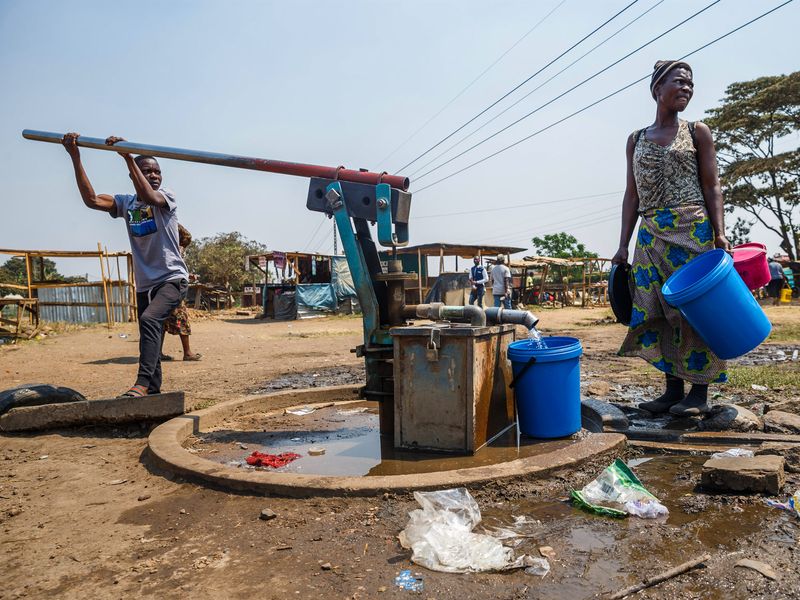
As water supplies in Ghana’s capital grew increasingly erratic, Beatrice Kabuki stopped customers from using her grocery store’s bathrooms and installed a plastic storage tank at her home.

“The taps flow once a week and usually at night, so we stay awake to fetch what we can store,” Kabuki, 35, said in an interview in Accra. “We mostly augment by buying water from tankers.”

AlsoRead

Nigeria’s Equities Market Reels as Foreign Investment Plummets Amid Global Tensions

Eurobond Market Wavers Amid U.S. Downgrade and OPEC+ Speculation

Unveiling Hidden Truths: US Hidden Financial Interest in the Niger War.

Beatrice Kabuki
Photographer: Ekow Dontoh/Bloomberg

Cities and towns in several other African nations including Mozambique, Zimbabwe and Ivory Coast have been plagued by similar water shortages in recent months, manifestations of a global supply squeeze brought on by drought, population growth, urbanization and insufficient investment in dams and other infrastructure.

Water use has risen about 1 percent a year since the 1980s and more than 2 billion people now live in countries experiencing high water stress, the United Nations said in its World Water Development Report released in Geneva on Tuesday. It projects demand will grow as much as 30 percent by 2050.

“Stress levels will continue to increase as demand for water grows and the effects of climate change intensify,” the UN said in the report.

Population Surge

The number of people living in Africa could swell to 4.5 billion by 2100


Source: United Nations Population Division


Financing Gap

The scourge is set to become exponentially worse in Africa — the UN expects the population of the world’s poorest continent to almost double to 2.5 billion by 2050, and that 59 percent will reside in urban areas by then, up from 43 percent now. A massive increase in agricultural production will be required to feed everyone, compounding the pressures caused by surging household demand for water.

Even nations with plentiful water resources may be unable to build sufficient dams, pipelines, pumping stations and purification plants to ensure adequate supply.

A study published by the African Development Bank last year found the continent needs to spend at least $130 billion to address an infrastructure backlog, including as much as $66 billion on providing universal access to water and sanitation, but faces a financing gap of $68 billion to $108 billion.

Large up-front investments, short-term political considerations and government-borrowing constraints impede infrastructure construction, with the problem particularly acute in Africa, according to the Global Infrastructure Hub, which was set up by the Group of 20 developed nations to promote development. The benefits the projects deliver to society at large may also outstrip the returns operators earn on them, a likely deterrent to private investment, it said.

Water Rationing

Crumbling infrastructure has compounded the effect of a crippling drought in cash-strapped Zimbabwe, resulting in water rationing in its two largest cities, Harare and Bulawayo. In Maputo, Mozambique’s capital, supply has been cut off on alternating days since January after dam levels fell to less than a quarter of their capacity.

Taps in Cape Town, South Africa’s tourist mecca, came close to running dry last year before good winter rains brought respite from the region’s worst drought on record. The nightmare of running out of water became a reality last year in Bouake, Ivory Coast’s second-largest city, when rains failed. The government was forced to use tankers to truck in emergency supplies, while thousands of people temporarily relocated.

Water shortages in Accra, which mostly gets regular rainfall, are mainly attributed to its inadequate and poorly maintained pipes, pumping stations and purification plants. About 4.9 million people live in the city and its surrounds, including the port city of Tema.

Two-Year Outage


Joyce Ayitey, 42, who sells plastic cups, tissues and sweets from a wooden stall in front of the home she shares with her husband and three daughters in Diabolo in the eastern part of city, has experienced the extremity of the problem. When her taps ran dry more than two years ago, the water utility company blamed road builders who destroyed its main pipelines and said the outage would be addressed within weeks, but nothing was done.

“We don’t have the money to buy bulk water from tankers so we walk almost every day to buy water and carry it on our heads for use,” she said. “The water fetching is so tiring. We always wish for rain so we can harvest every drop for storage. It gives us such huge respite.’’

Ghana Water Co., the state-owned utility, is aware that some Accra neighborhoods have erratic water supply or are struggling with low pressure, but faces an uphill battle to tackle the problems because new neighborhoods are being developed faster than it can provide the infrastructure, spokesman Stanley Martey said by phone.

Kabuki, the storekeeper, can no longer stomach being unable to flush her toilets when her stockpiled water runs out and has run out of patience with the authorities.

“You want to know how frustrating it is?” she asked. “It is very unpleasant and dehumanizing for me as a woman. I am actually planning to relocate to a house with a guaranteed water supply.”
Tags: Bloomberg
Previous Post

Shareholders to access N100b unclaimed dividends

Next Post

FG to redeem N139.6bn Treasury bills, bonds …as CBN auctions N48.6bn T-bills this week

Related News

Leading Banks Struggle with Capital Deficits: Zenith Bank and Others Strive to Meet CBN Standards

Nigeria’s Equities Market Reels as Foreign Investment Plummets Amid Global Tensions

by Rate Captain
May 26, 2025
0

In April 2025, Nigeria’s equities market faced a stark reality check as foreign portfolio investment (FPI) cratered by 92.39%, plunging...

Ghana Reaches Agreement on Eurobond Restructuring: Key Details Explained

Eurobond Market Wavers Amid U.S. Downgrade and OPEC+ Speculation

by Rate Captain
May 26, 2025
0

The Eurobond market kicked off the week on shaky ground, rattled by a rare U.S. government downgrade that sent ripples...

Unveiling Hidden Truths: US Hidden Financial Interest in the Niger War.

Unveiling Hidden Truths: US Hidden Financial Interest in the Niger War.

by Stephen Akudike
September 12, 2023
0

Amid the tumultuous currents of global politics, stories that often go unnoticed can hold profound implications. One such tale is...

The role of technology in transforming the entrepreneurial landscape.

The role of technology in transforming the entrepreneurial landscape.

by Rate Captain
May 22, 2023
0

In today's rapidly evolving world, technology has become a driving force behind transformative changes in various industries. One area where...

Next Post

FG to redeem N139.6bn Treasury bills, bonds …as CBN auctions N48.6bn T-bills this week

Leave a Reply Cancel reply

Your email address will not be published. Required fields are marked *

Recommended

Nigeria’s Stock Market Records N1.81 Trillion Gain in July.

NGX Kicks Off 2026 Trading Week with N745 Billion Surge as Bulls Charge Back

January 13, 2026
Fuel Subsidy Removal Negatively Impacts 90% of Nigerian Businesses

Nigeria’s Fuel Import Bill Plunges 54% in Two Years as Domestic Refining Gains Ground

January 13, 2026

Popular Story

  • Dollar Index Loses Steam as Treasury Yields Drift Back to 4.8%

    Naira Kicks Off 2026 with First Weekly Gain as CBN Boosts Liquidity

    0 shares
    Share 0 Tweet 0
  • Nigeria’s Fuel Import Bill Plunges 54% in Two Years as Domestic Refining Gains Ground

    0 shares
    Share 0 Tweet 0
  • NGX Kicks Off 2026 Trading Week with N745 Billion Surge as Bulls Charge Back

    0 shares
    Share 0 Tweet 0
  • Nigeria’s Statistics Bureau to Brief Stakeholders Ahead of Key December Inflation Data

    0 shares
    Share 0 Tweet 0
  • Naira Appreciates by 7% at Official Window as Reserves Grow in First Week of 2026

    0 shares
    Share 0 Tweet 0
RateCaptain

RateCaptain

We bring you the most accurate in new and market data. Check our landing page for details.

  • Home
  • About Us
  • Privacy Policy
  • Terms & Conditions
  • Disclaimer
  • Cookie Policy
  • Contact Us

Copyright © 2022 RateCaptain - All rights reserved by RateCaptain.

No Result
View All Result
  • Home
    • About Us
    • Contact Us
  • FX Rates
  • Money Market
  • Cryptocurrency
  • Commodities
  • Corporates

Copyright © 2022 RateCaptain - All rights reserved by RateCaptain.

RateCaptain
Manage Cookie Consent
To provide the best experiences, we use technologies like cookies to store and/or access device information. Consenting to these technologies will allow us to process data such as browsing behavior or unique IDs on this site. Not consenting or withdrawing consent, may adversely affect certain features and functions.
Functional Always active
The technical storage or access is strictly necessary for the legitimate purpose of enabling the use of a specific service explicitly requested by the subscriber or user, or for the sole purpose of carrying out the transmission of a communication over an electronic communications network.
Preferences
The technical storage or access is necessary for the legitimate purpose of storing preferences that are not requested by the subscriber or user.
Statistics
The technical storage or access that is used exclusively for statistical purposes. The technical storage or access that is used exclusively for anonymous statistical purposes. Without a subpoena, voluntary compliance on the part of your Internet Service Provider, or additional records from a third party, information stored or retrieved for this purpose alone cannot usually be used to identify you.
Marketing
The technical storage or access is required to create user profiles to send advertising, or to track the user on a website or across several websites for similar marketing purposes.
  • Manage options
  • Manage services
  • Manage {vendor_count} vendors
  • Read more about these purposes
View preferences
  • {title}
  • {title}
  • {title}
?>