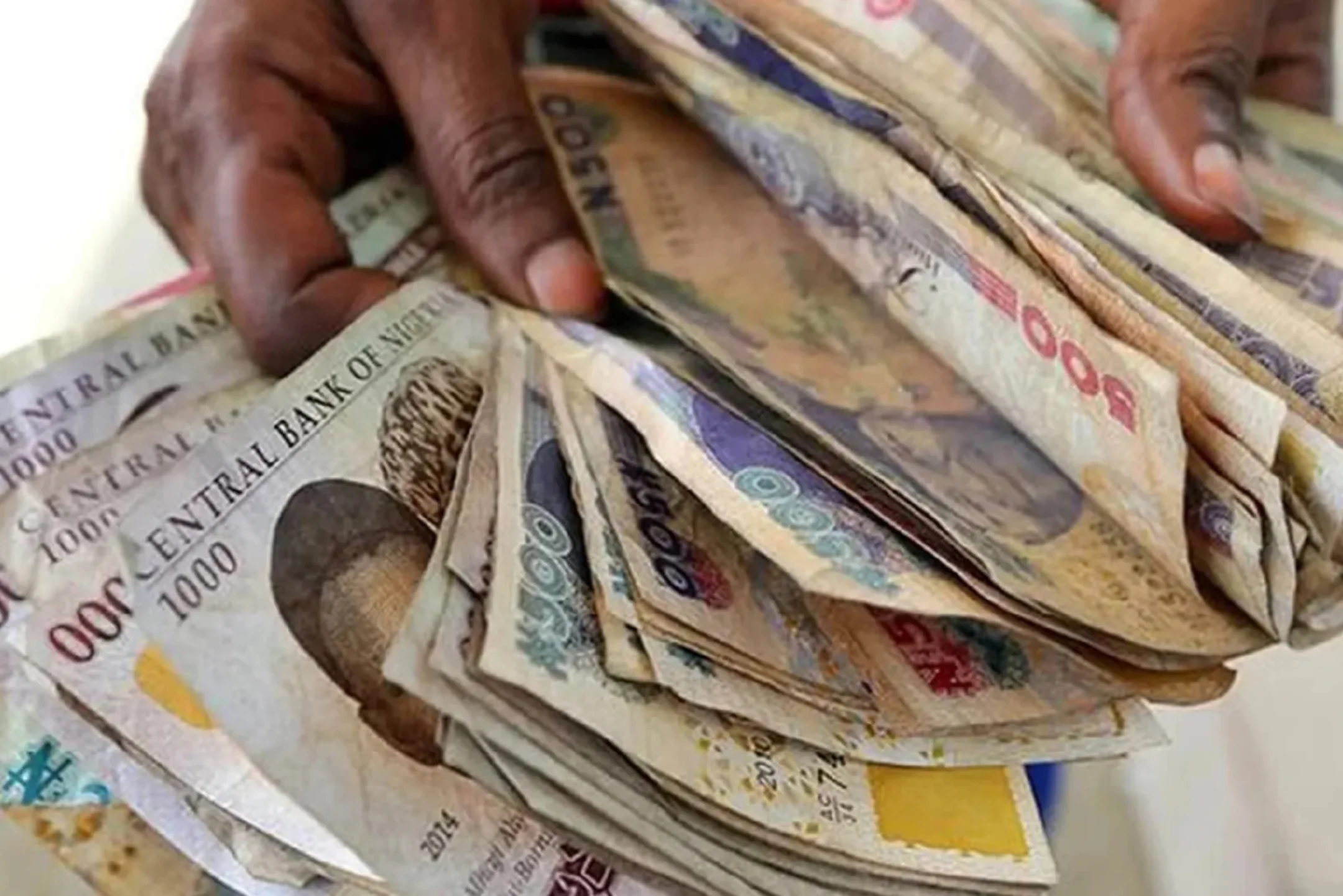
Currency held outside Nigeria’s banking system fell sharply by N197.68 billion in January 2026, declining to N5.21 trillion from N5.41 trillion in December 2025, according to the latest Money and Credit Statistics released by the Central Bank of Nigeria (CBN).
The reduction came as total currency in circulation edged down slightly by N1.74 billion to N5.731 trillion from N5.732 trillion the previous month. Despite the monthly improvement, a substantial 90.91% of physical cash remained outside deposit money banks in January down from 94.33% in December but still indicating that more than nine out of every ten naira notes were kept outside the formal banking system.
On an annual basis, however, cash outside banks grew significantly. In January 2025, the figure stood at N4.74 trillion, meaning a year-on-year increase of N473 billion. Currency in circulation also expanded over the 12-month period, rising N495.68 billion from N5.24 trillion to N5.73 trillion, with the outside-bank share ticking up marginally from 90.48% to 90.91%.
The data points to persistent cash hoarding habits among households and businesses, even as digital payment adoption continues to grow. The modest monthly shift back into the banking system may reflect seasonal factors or improved confidence in bank deposits following recent policy measures, though the overall structure of cash usage remains heavily tilted toward non-bank holdings.
Broader money supply also contracted in January. Broad money (M3) which captures cash in circulation, demand deposits, time deposits, and other near-money assets dropped N1.05 trillion to N123.36 trillion from N124.41 trillion in December 2025. The decline was primarily driven by a N1.90 trillion fall in net foreign assets of the banking system, which slid to N29.61 trillion from N31.51 trillion.
Net foreign assets, comprising foreign reserves, foreign currency deposits, and other overseas holdings minus external liabilities, reflect the banking sector’s external position. The reduction contributed to the liquidity squeeze, aligning with the CBN’s ongoing efforts to manage excess cash and anchor inflation expectations.
Despite the monthly contraction, M3 showed robust year-on-year growth, expanding **N12.26 trillion** from **N111.11 trillion** in January 2025, underscoring the longer-term expansion of liquidity in the economy.
Analysts view the January figures as consistent with the central bank’s tighter monetary stance earlier in the year, including liquidity mop-ups and interest rate adjustments aimed at curbing inflationary pressures. The drop in cash outside banks and the contraction in broad money suggest some success in reining in excess liquidity, though high cash retention outside the system remains a structural feature of Nigeria’s economy.
The CBN has not commented directly on the latest release, but the data will likely inform ongoing discussions around currency management, digital payment promotion, and reserve adequacy as policymakers balance growth support with price stability.