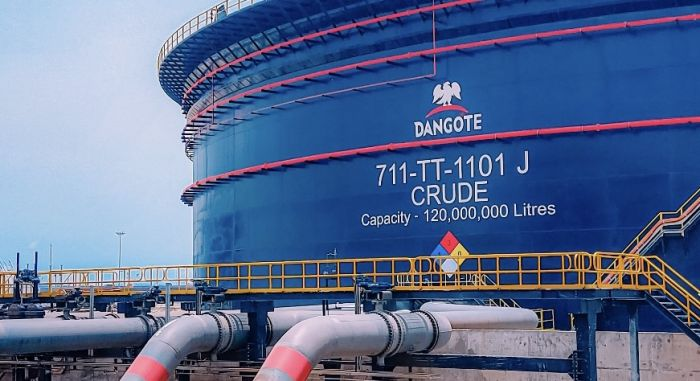
Dangote Petroleum Refinery & Petrochemicals has lowered its ex-depot (gantry) price for Premium Motor Spirit (petrol) to N1,200 per litre, while setting the coastal price at N1,153 per litre.
The price adjustment was announced on March 26, 2026, by the Dangote Group’s spokesperson, Anthony Chiejina, who described it as a downward review in the refinery’s pricing template in response to developments in the global oil market influenced by ongoing geopolitical tensions in the Middle East.
“This adjustment marks a downward review in the refinery’s pricing structure and is expected to influence fuel supply costs across distribution channels, including depots and retail outlets,” Chiejina stated.
With the new gantry price of N1,200 per litre, marketers sourcing petrol directly from the refinery are expected to see a reduction in their landing costs compared with recent levels. The coastal price of N1,153 per litre is also anticipated to benefit distributors using marine routes to supply southern depots.
The reduction comes after several upward adjustments triggered by the escalation of the US-Iran conflict since late February. Prior to the conflict, the gantry price stood at N840 per litre. It later climbed to an average of N1,300 at the pump, with the latest cut from N1,275 bringing ex-depot pricing down to N1,200. This is expected to translate into a marginal easing of pump prices, potentially bringing them below the recent N1,300 average.
The price review occurs against the backdrop of challenges in crude supply to the refinery. A senior management source at Dangote revealed that between October 2025 and mid-March 2026, the facility experienced a shortfall of approximately 79.53 million barrels of crude oil. The refinery requires about 19.77 million barrels monthly to operate at full capacity, but actual deliveries were significantly lower: 4.55 million barrels in October, 6.45 million in November, 4.30 million in December, 5.65 million in January, 4.66 million in February, and only 3.6 million barrels in the first half of March.
Despite the naira-for-crude policy introduced by the Federal Government, the refinery continues to source a substantial portion of its feedstock from international markets. Energy analysts have criticised the slow implementation of the policy, noting that it has not significantly improved domestic crude supply or translated into lower pump prices for consumers.
The latest price cut by Africa’s largest single-train refinery is expected to ease some pressure on marketers and end-users in the short term. However, sustained relief will depend on improved crude supply arrangements, stable global oil prices, and the refinery’s ability to operate closer to full capacity in the coming months.