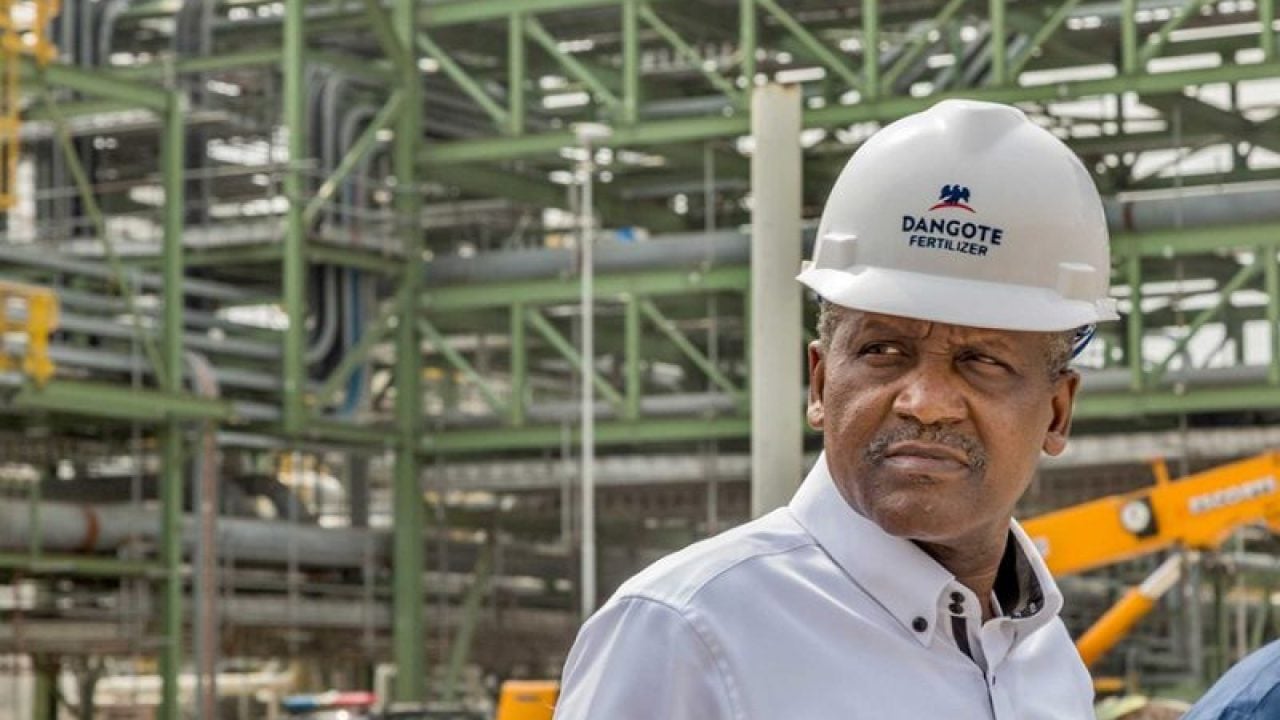
The Dangote Petroleum Refinery has exported approximately 1.35 billion litres of Premium Motor Spirit (PMS) globally over the past 50 days, marking a significant milestone for Nigeria’s energy sector. Aliko Dangote, President of the Dangote Group, announced at the Global Commodity Insights Conference on West African Refined Fuel Markets, hosted by the Nigerian Midstream and Downstream Petroleum Regulatory Authority (NMDPRA) and S&P Global Insights, that the refinery shipped out 1 million metric tonnes of petrol between June and July 2025.
Dangote highlighted Nigeria’s emergence as a net exporter of refined products, stating, “In just 50 days, we’ve exported about 1 million tonnes of PMS, showcasing our capacity to contribute to global markets.” However, Nigeria continues to rely heavily on imported fuel, with the NMDPRA reporting that 69% of West Africa’s gasoline supply, averaging 2.05 million metric tonnes monthly, comes from overseas. Recent data from the Nigerian Ports Authority indicates that 231.88 million litres of PMS were imported through Apapa, Tincan, and Calabar ports in the last eight days alone, equivalent to 172,917 metric tonnes.
Despite its export success, the Dangote Refinery faces accusations of seeking to dominate the downstream sector, which Dangote refuted, saying, “Rather than criticizing, those with means should invest in Nigeria’s growth instead of abroad.” President Bola Tinubu supported this view, emphasizing the need for Africa to move away from being a passive price taker in global energy markets. In a post on X, Tinubu stated, “Nigeria is collaborating with regional partners to create an integrated market that reflects our production realities, secures energy access, and fosters cross-border prosperity.”
The NMDPRA’s Farouk Ahmed noted that while Dangote’s exports are a step forward, the region’s heavy reliance on imports underscores the need for enhanced local refining capacity. Tinubu echoed this, advocating for transparent benchmarks to protect African economies and boost local production. As Nigeria balances its export achievements with import challenges, stakeholders are pushing for stronger regional integration to bolster energy security and economic growth.