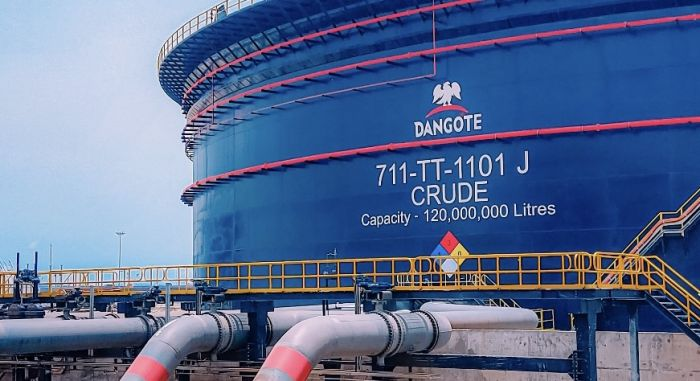
Dangote Petroleum Refinery has increased its gantry prices for Premium Motor Spirit (petrol) and diesel, citing the impact of rising global crude oil prices driven by ongoing geopolitical tensions in the Middle East.
A senior official at the refinery confirmed the adjustment on Tuesday, April 7, 2026, stating that petrol now sells at N1,275 per litre up N75 from the previous N1,200 while diesel has been raised by N200 to N1,950 per litre.
The official explained that the revision was necessary due to developments in the international oil market. “The adjustment is in line with global market trends. You are aware of the ongoing tensions in the Middle East and how they have impacted crude oil prices. These are external factors that directly influence refined product pricing,” the source said.
Market data from Petroleumprice.ng corroborated the new prices, showing a 5.02% increase at the gantry level for petrol.
The latest hike comes barely a month after the refinery reduced its petrol price to N1,200 per litre. Industry observers note that diesel is now approaching the N2,000 per litre threshold at the pump, which could further intensify cost pressures on transportation, manufacturing, and household budgets.
The price adjustment reflects Nigeria’s continued exposure to global oil price movements, despite the presence of Africa’s largest single-train refinery. Although the Dangote facility has significantly improved domestic fuel availability, analysts say local pricing remains tied to international crude benchmarks, exchange rates, and logistics costs.
The escalation of conflict in the Middle East has kept Brent crude prices elevated in recent weeks, creating upward pressure on refined product costs worldwide. Any sustained disruption to supply routes, particularly through key chokepoints, tends to amplify these effects.
Stakeholders had hoped that increased local refining capacity would help moderate and stabilise domestic fuel prices. However, experts caution that as long as crude procurement and pricing are influenced by global markets, Nigerian consumers will continue to feel the impact of international developments.
The new prices are expected to filter through to retail outlets in the coming days, potentially triggering another round of increases at the pump and adding to existing inflationary pressures across the economy.
The development underscores the delicate balance between local refining gains and Nigeria’s vulnerability to external oil price shocks, even as efforts continue to boost domestic crude supply to the refinery.