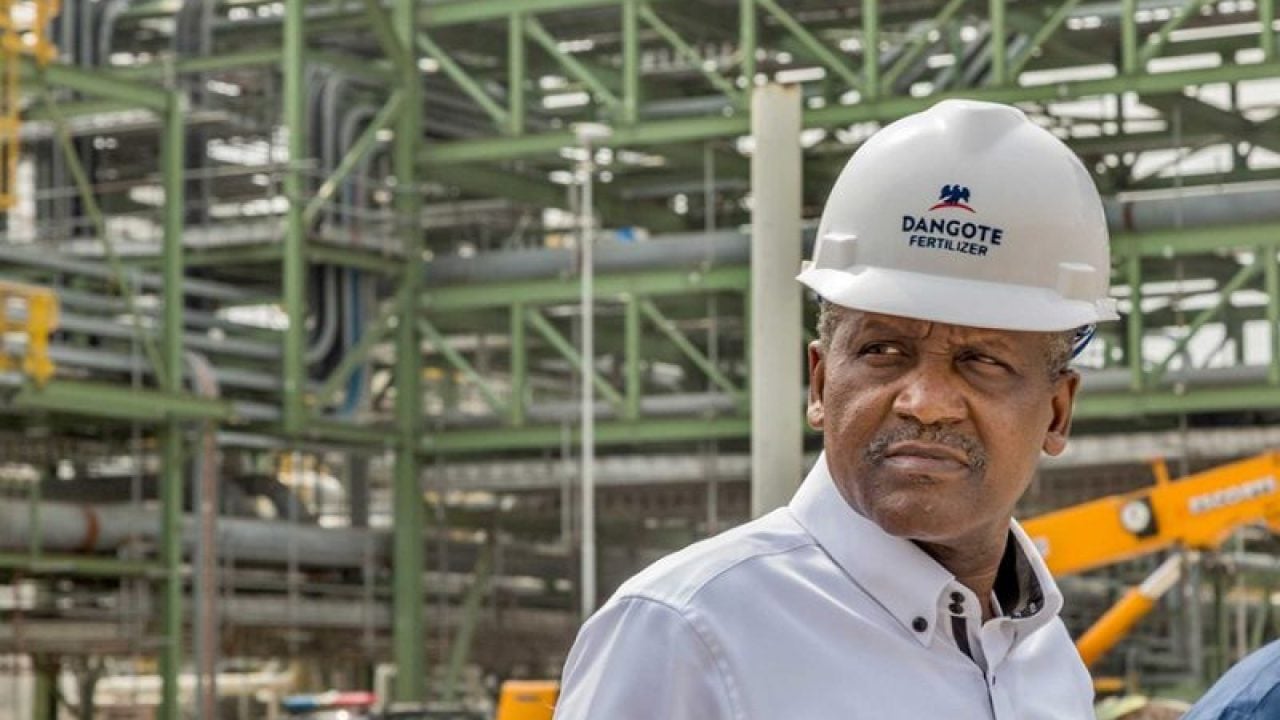
Aliko Dangote, President and Chairman of Dangote Industries Limited, has called on the Federal Government to immediately organise a national retreat to decisively tackle Nigeria’s chronic electricity shortages, warning that persistent power outages threaten to derail the country’s industrialisation ambitions and long-term economic progress.
Speaking at the official launch of the National Industrial Policy 2025 in Abuja on February 18, 2026, under the theme “From Policy to Productivity: Implementing Nigeria’s Industrial Future,” Dangote emphasised that reliable electricity is the foundation of job creation, manufacturing expansion, and sustainable growth.
Addressing Vice President Kashim Shettima, who represented President Bola Tinubu at the event attended by senior government officials, industry leaders, and development partners, Dangote stated: “Power means growth. No power, no growth. We must make sure that we tackle this issue.” He proposed convening a focused one- or two-day national forum dedicated solely to resolving the electricity challenge, a suggestion met with applause from participants.
While commending the government’s policy framework—including incentives designed to attract investment—Dangote stressed that such measures alone cannot deliver results without addressing infrastructure bottlenecks, particularly power. He noted that Nigeria’s large domestic market and potential to serve other African countries remain underutilised due to these constraints.
The industrialist highlighted the crippling impact of unreliable grid supply on manufacturers, many of whom now incur higher costs generating electricity through diesel-powered plants than on actual production. “Some factories spend more money generating electricity than producing goods,” he said, describing the situation as unsustainable and counterproductive.
Dangote also criticised excessive importation, arguing it undermines local industries, exports jobs, and imports poverty. He insisted that even generous incentives—such as zero-interest loans or free land—would fail without adequate protection for domestic producers against unfair foreign competition.
Reflecting on the broader economic landscape, Dangote pointed out that Nigeria’s private sector dominates the economy, contributing nearly 90% to GDP compared to the government’s 10%. He advocated for stronger public-private collaboration, urging businesses to fulfil tax obligations while calling on government to create an enabling environment for expansion and prosperity.
He acknowledged recent economic reforms for boosting investor confidence and currency stability, noting that manufacturers are increasingly optimistic. Dangote suggested that reducing reliance on imports through greater local production could further strengthen the naira and generate substantial employment.
The remarks come against the backdrop of a recent nationwide power disruption from February 12 to 15, 2026, triggered by scheduled gas supply maintenance at a major Seplat Energy facility, which forced seven power plants offline and led to widespread load shedding. The incident has intensified calls from the organised private sector for urgent, comprehensive solutions to grid instability, gas constraints, and transmission challenges.
Dangote’s intervention reinforces long-standing industry concerns that Nigeria’s power woes—despite an installed capacity far exceeding current output—continue to impose heavy financial burdens, fuel inflation through elevated production costs, and hinder the realisation of national industrial and developmental goals. As the government advances its industrial policy agenda, stakeholders will be watching closely for concrete steps to translate policy commitments into reliable electricity supply.