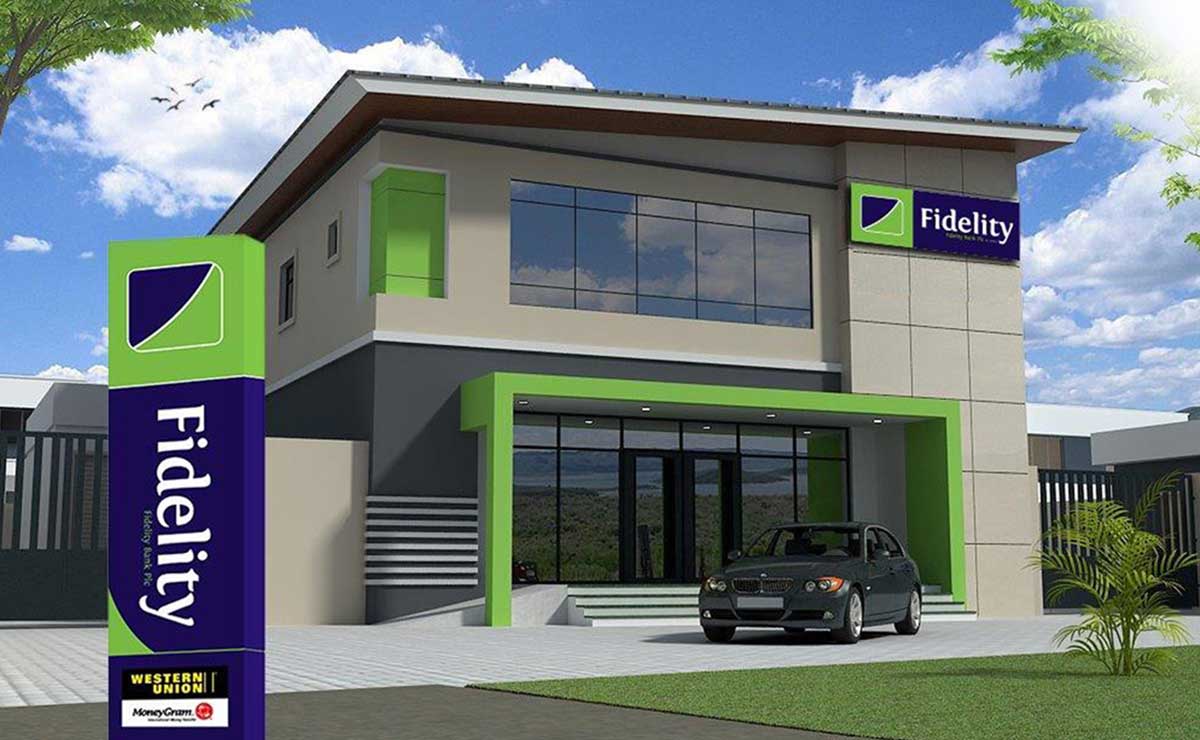
In a market where capital raises often crawl across weeks or months, Fidelity Bank has pulled off a feat that has caught the attention of investors and regulators alike. In a single-day private placement on December 31, 2025, the lender secured between ₦250 billion and ₦270 billion, vaulting comfortably above the Central Bank of Nigeria’s new ₦500 billion minimum capital requirement.
The speed of the transaction was as striking as its size. With existing share capital and premium of about ₦306 billion, the fresh equity injection pushed Fidelity well past the regulatory threshold—nearly three months ahead of the March 31, 2026 deadline. Market participants describe the exercise as one of the fastest large-scale capital raises ever seen in Nigeria’s banking sector.
Unlike many recent recapitalisation efforts that have been slowed by volatile market conditions, Fidelity’s offer was snapped up almost instantly. Sources say the placement was limited to a carefully selected group of investors, a strategy that not only reduced execution risk but also signalled strong institutional interest, including from offshore players impressed by the bank’s fundamentals.
The successful raise places Fidelity firmly among Nigeria’s top-tier banks, alongside names such as Access Holdings, Zenith Bank and First Bank, all of which have already crossed the CBN’s capital bar. More importantly, it underscores growing investor confidence in Fidelity’s transformation story—one that has seen the bank rebound strongly from the pressures of recent years.
Analysts say the milestone marks a turning point. Financial analyst Osas Igho described the achievement as proof that Fidelity has “earned its place” among the country’s most credible lenders, noting that the bank’s trajectory has begun to attract global attention. That sentiment is echoed by rating agency Fitch, which recently reaffirmed Fidelity’s Long-Term Issuer Default Rating at ‘B’ while upgrading its National Long-Term Rating to ‘A+(nga)’, citing stronger capital buffers, improved profitability and scale.
Beyond meeting a regulatory benchmark, the capital raise opens the door to deeper, long-term institutional funding. Private placements of this nature often bring more than money—they can strengthen governance, broaden expertise and support expansion plans in an increasingly competitive financial landscape.
Fidelity’s success also comes at a time of renewed optimism in Nigeria’s banking stocks. In 2025, the sector’s combined market capitalisation surged to ₦16.14 trillion, adding about ₦7.5 trillion in value and accounting for over 16 per cent of the Nigerian Exchange Group’s total market capitalisation.
As banks race to shore up their balance sheets ahead of the recapitalisation deadline, Fidelity Bank’s one-day blitz stands out as a statement of intent. It suggests a lender not merely complying with regulation, but confidently positioning itself for the next phase of growth in Nigeria’s evolving banking industry.