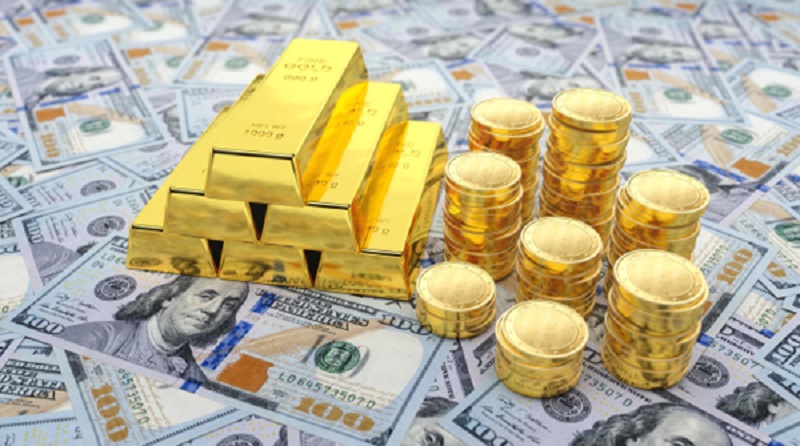
Gold prices have skyrocketed to unprecedented levels, exceeding $3,500 per ounce in 2025, defying traditional market dynamics. Despite expectations that gold typically thrives when interest rates decline, the precious metal has continued its upward trajectory even as major central banks, including the U.S. Federal Reserve, maintain steady rates. At the Comercio Partners H2 Economic Outlook Forum in Lagos, financial experts attributed this surge to a confluence of geopolitical instability, robust central bank demand, and persistent inflationary pressures, reinforcing gold’s status as a premier safe-haven asset.
Geopolitical Tensions Fuel Gold’s Appeal
Zeal Akaraiwe, CEO of Graeme Blaque Advisory, pointed to geopolitical risks as a primary driver of gold’s rally. He highlighted how political decisions, particularly in the United States, are increasingly impacting global financial systems. “The ability to conduct international transactions is now subject to political choices in the U.S., which creates uncertainty for other nations,” Akaraiwe explained. This vulnerability has spurred central banks worldwide to reduce their reliance on the U.S. dollar, a trend known as de-dollarization. Gold, with its intrinsic value and independence from fiat currency fluctuations, has emerged as a preferred alternative. According to the World Gold Council, central banks purchased over 1,000 tonnes of gold in 2024, a trend that has continued into 2025 as nations seek to bolster their reserves.
Central Banks and Economic Stability
Professor Joseph Nnanna, Chief Economist at the Development Bank of Nigeria, emphasized gold’s role as a reliable store of value in turbulent times. “Gold remains a cornerstone of financial security,” he said. “Its consistent appreciation, especially as the U.S. dollar weakens, makes it an essential component of any central bank’s portfolio.” Nnanna noted that the Central Bank of Nigeria (CBN), which holds 687,402 troy ounces of gold valued at N2.77 trillion in 2024, has benefited from the metal’s price surge. However, he cautioned against over-reliance on traditional reserve currencies like the dollar and the Chinese renminbi, advocating for a diversified portfolio that includes gold and emerging assets like cryptocurrencies.
Nnanna also highlighted gold’s potential to drive economic growth beyond its financial value. By sourcing gold domestically, central banks can stimulate industries across the mining value chain, from extraction to refining to manufacturing. “Investing in local gold production can spark industrialization, creating jobs in sectors like jewelry and electronics,” he said. This approach could strengthen Nigeria’s economy, which is heavily reliant on oil, by fostering new revenue streams and reducing dependence on volatile commodities.
Inflation and Currency Volatility
The experts also pointed to inflationary pressures as a key factor in gold’s rise. With global inflation remaining elevated—projected to exceed 3% in major economies like the U.S. in 2025—investors and central banks are turning to gold to preserve value. The U.S. dollar index (DXY) has weakened, dropping from 100 to 97 in recent months, further enhancing gold’s appeal as a hedge against currency depreciation. Nnanna urged the CBN to expand its reserve management strategy to include modern assets like stablecoins, which could provide additional protection against economic shocks. “Diversification isn’t just a precaution; it’s a necessity for long-term stability,” he stated.
A Strategic Imperative for Nigeria
The forum underscored the urgency of adapting to a rapidly evolving financial landscape. Akaraiwe emphasized that the global shift toward decentralized and digital assets, coupled with geopolitical uncertainties, requires central banks to rethink traditional strategies. “Gold is a proven safe haven, but we must also explore emerging assets to stay ahead,” he said. For Nigeria, this means not only increasing gold reserves but also leveraging its regulatory advancements in cryptocurrencies. The Investments and Securities Act (ISA) 2024, which classifies digital assets as securities, has positioned Nigeria to integrate cryptocurrencies into its financial system, potentially attracting tech-savvy investors and fostering innovation.
As gold prices continue to climb, the CBN faces a critical opportunity to strengthen its reserves and drive economic growth. By prioritizing domestic gold production and exploring digital assets, Nigeria can enhance its financial resilience and position itself as a leader in the global shift toward diversified reserve management.