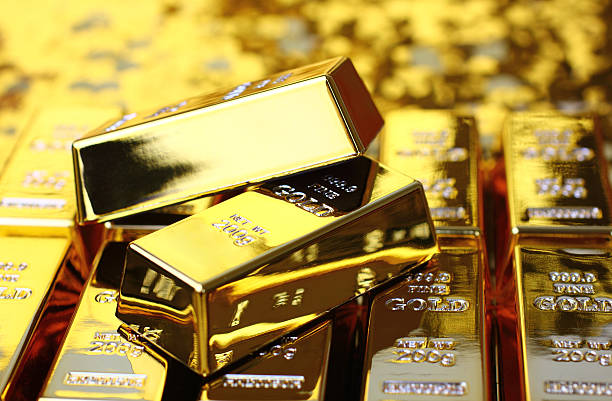
Gold prices staged a strong recovery on Wednesday, climbing nearly 2.9% to reclaim levels above $5,000 per ounce for the second consecutive day, erasing much of last week’s sharp pullback from record highs.
The precious metal’s resurgence follows a dramatic sell-off that saw gold suffer its largest single-day drop since 2013 and silver experience its biggest daily decline on record. The rebound coincides with a weaker US dollar and renewed safe-haven demand amid persistent geopolitical tensions, particularly escalating friction between the United States and Iran after the US Navy downed an Iranian drone.
President Donald Trump has sought to temper concerns, stating that diplomatic channels remain open. Still, the risk of broader conflict in the Middle East continues to underpin gold’s appeal as a hedge against uncertainty.
Daniel Ghali, senior commodity strategist at TD Securities, noted that “forced sales in precious metals have likely run their course,” suggesting the recent liquidation phase may be nearing an end. Retail investors, however, have largely stepped back after last week’s volatility, limiting upside from that segment.
Despite the correction — which shaved about 10% off gold’s January 29 peak — the metal remains up 17% year-to-date. Fundamentals that drove the earlier rally remain intact: geopolitical risks, concerns over Federal Reserve independence, and central bank buying.
Fidelity Fund, which trimmed its gold position before the drop, is now actively seeking re-entry points, according to portfolio manager George Efstathopoulos. Major banks are also optimistic. Deutsche Bank maintains a bullish outlook, while Goldman Sachs analysts continue to highlight “significant upside risk” to their year-end forecast of $5,400 per ounce.
Silver joined the advance, while platinum and palladium also posted gains. The Bloomberg Dollar Spot Index remained steady after falling 0.3% in the previous session, providing additional tailwind for precious metals priced in dollars.
Bank of America’s head of EMEA commodities trading, Niklas Westermark, emphasised that gold retains a stronger long-term investment case than silver. While short-term volatility is expected to persist, institutional interest in gold as a portfolio diversifier and inflation hedge shows no signs of fading.
The latest price action reflects a market recalibrating after heavy leveraged positioning unwound rapidly. Mainland China’s four largest gold-backed ETFs saw near-record outflows of nearly $1 billion on Tuesday, underscoring the scale of the prior liquidation.
As geopolitical headlines and monetary policy uncertainty continue to dominate sentiment, gold’s ability to rebound quickly reinforces its status as a go-to asset in turbulent times. Traders will now monitor US-Iran developments, Fed commentary, and any fresh central bank buying for the next directional cues in the precious metals complex.