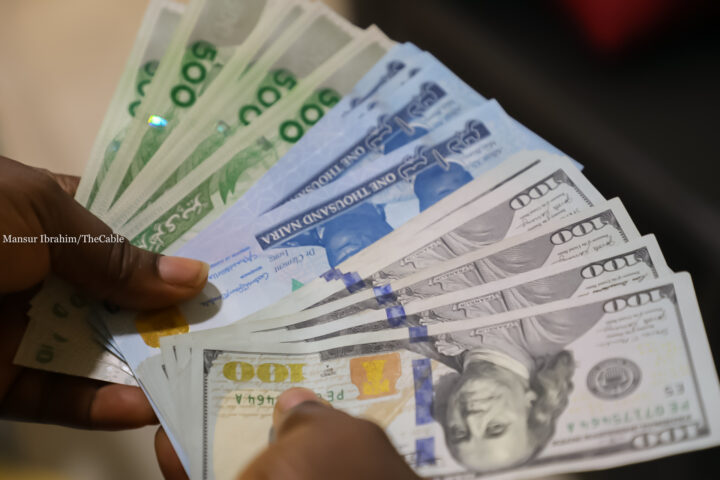
The gap between Nigeria’s official and parallel (black market) exchange rates has widened to over 6%, reviving fears of renewed arbitrage opportunities and speculative pressure on the naira.
According to Central Bank of Nigeria (CBN) data and parallel market surveys compiled by Nairametrics, the official rate strengthened to N1,359 per US dollar on Wednesday, while the parallel market traded at N1,453.13 per dollar producing a premium of N94, or roughly 6.4%.
The disparity briefly exceeded N100 toward the end of January before narrowing slightly, but the persistence of a 6%+ spread continues to highlight ongoing liquidity frictions and challenges in achieving full market convergence.
The official market has shown relative stability in recent sessions, with the naira appreciating from N1,384.5/$ at the start of the week. However, the parallel segment has been slower to follow, reflecting unmet demand outside regulated channels and continued distortions in the multi-tiered FX system.
The widening premium raises concerns among market participants and policymakers:
– It creates potential arbitrage opportunities that could encourage speculative activity
– It signals lingering supply constraints for end-users unable to access sufficient FX through official windows
– It undermines efforts to fully align pricing and reduce informal market influence
Despite the divergence, Nigeria’s external reserves remain supportive, standing at $46.59 billion as of February 2, 2026. The CBN has repeatedly stated that ongoing FX reforms including improved transparency, better liquidity management, and the Electronic Foreign Exchange Matching System are expected to sustain stability and gradually narrow the gap.
Earlier progress was notable: the premium between the official Nigerian Foreign Exchange Market (NFEM) and Bureau de Change (BDC) rates had fallen to 2.11% as of December 9, 2025 down from 62.23% in May 2023 before reforms began. The current 6.4% spread, while elevated, is still well below the extreme levels seen in 2023–2024.
Analysts say the recent widening may reflect short-term demand pressures (corporate obligations, seasonal FX needs, and election-related spending) outpacing supply in the informal segment. Sustained reserve growth, higher oil receipts, and continued portfolio inflows are expected to help moderate the premium over time.
The CBN’s macroeconomic outlook for 2026 projects broad exchange-rate stability, supported by rising diaspora remittances, stronger oil revenues, and investor confidence. Reserves are forecast to reach $51.04 billion by year-end, while the planned expansion of Dangote Refinery capacity could further reduce import dependence and bolster external balances.
For importers, businesses, and households, the current 6.4% gap translates to higher costs in the parallel market for FX needs outside official channels. The divergence serves as a key barometer of FX market health and a reminder that while official stability is improving, full convergence remains a work in progress. Market watchers will monitor whether the premium narrows further or widens again in the weeks ahead.