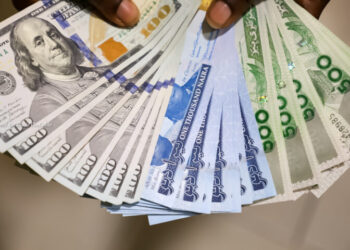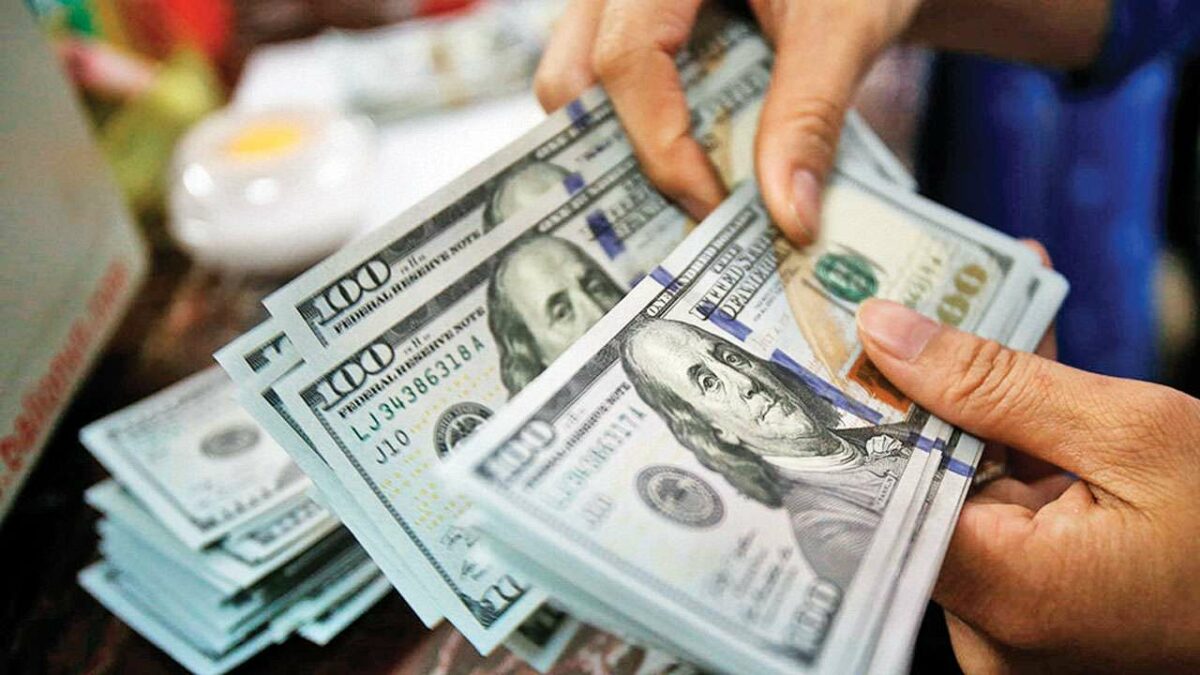
The naira has started the new year on a positive note, posting its first weekly appreciation of 2026 at the official foreign exchange window, thanks to stepped-up interventions by the Central Bank of Nigeria (CBN) that improved dollar supply and market confidence.
Data from the FMDQ Securities Exchange shows the naira strengthened by about 0.5% week-on-week, closing the official Nigerian Foreign Exchange Market (NFEM) at N1,423.16 per dollar on Friday a gain of N7.68 from the previous week’s N1,430.84. Day-to-day, it edged up 0.2% from Thursday’s N1,419.71, while the week’s overall movement saw the currency climb from Monday’s N1,429.30, delivering a solid N6.14 improvement.
This rebound follows a 38% month-on-month surge in total foreign exchange inflows during December 2025, reaching $2.8 billion — a sharp recovery from November’s steep 67% contraction. While December’s supply remains among the weakest in the past 16 months, the uptick was largely fueled by the CBN’s more active role in the market.
The apex bank’s foreign exchange sales doubled to $654 million in December from $318 million the previous month, providing much-needed liquidity at a time when offshore investor participation stayed subdued due to typical year-end caution, profit-taking, and portfolio rebalancing. Foreign portfolio inflows rose modestly by 7% to $632 million, a far cry from October’s $3.5 billion peak.
Domestic sources also contributed positively: inflows from exporters and individuals jumped significantly, while foreign direct investment made a strong comeback, surging over 380% to $50.1 million. Only corporate domestic inflows dipped slightly by 5% to $420 million.
Supporting the stability, Nigeria’s external reserves ticked higher to $45.66 billion as of January 7, 2026, up 0.4% from $45.50 billion at the end of December, giving the CBN more room to manage volatility through interventions.
In the parallel (black) market, however, the naira held steady, trading flat around N1,490–N1,505 per dollar in recent sessions, according to reports from BDC operators in major cities like Lagos, Abuja, and Kano. This leaves a persistent premium of roughly 5–6% over the official rate, as informal demand from small importers, travelers, and individuals continues amid post-holiday adjustments.
Analysts at FBNQuest attribute the official market’s steadiness to the CBN’s deliberate efforts to shore up liquidity, especially with limited foreign investor appetite. They remain optimistic that attractive domestic yields could lure back offshore capital in the coming months, potentially sustaining the momentum.
For ordinary Nigerians, the official gain offers some relief on import costs, but the stubborn parallel premium means everyday dollar needs — school fees abroad, online shopping, or small business restocking still carry a higher price tag.
As the CBN keeps a firm hand on the wheel, the naira’s early-2026 dance suggests a cautious optimism: liquidity is returning, reserves are building, but true stability will depend on consistent inflows and sustained reforms. For now, the first weekly win feels like a welcome step forward.