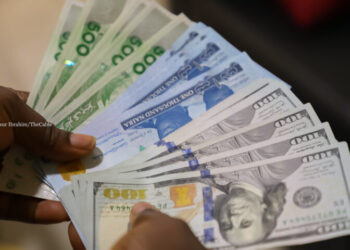
The Nigerian naira is on the verge of breaking below the critical N1,500/$ resistance level in the official market, trading at N1,528/$ on Friday, July 4, 2025, slightly weaker than the previous day’s close. The currency’s strengthening fundamentals are driven by resumed international transactions using naira debit cards and positive remarks from the International Monetary Fund (IMF) on Nigeria’s monetary policies, signaling growing confidence in the naira’s stability.
Banking Reforms Boost Naira Transactions
Major Nigerian banks, including Guaranty Trust Bank (GTBank), United Bank for Africa (UBA), Wema Bank, and Stanbic IBTC, have reinstated foreign currency transactions for naira debit cardholders, enhancing the currency’s accessibility for global payments. GTBank announced that customers can now use naira cards for international transactions up to a $1,000 quarterly limit, covering $500 for ATM withdrawals and $1,000 for online and point-of-sale purchases. UBA confirmed that its Premium Naira Cards, including Gold, Platinum, and World variants, are fully operational for global transactions, improving banking convenience.
These reforms have facilitated smoother foreign exchange access, supporting the naira’s firmness in the official market. The move aligns with the Central Bank of Nigeria’s (CBN) efforts to enhance liquidity and stabilize the currency.
IMF Backs CBN’s Tight Monetary Policy
The IMF’s 2025 Article IV Consultation Report, released on July 2, 2025, praised the CBN’s tight monetary policy as “appropriate and necessary” for curbing inflation and strengthening Nigeria’s macroeconomic framework. The CBN maintained its Monetary Policy Rate (MPR) at 27.5%, with a Cash Reserve Ratio of 50% for commercial banks and 16% for merchant banks, as decided in its May 2025 meeting. The IMF also commended the CBN’s shift away from deficit monetization, a practice that previously fueled inflation, and its focus on improving governance and transparency in the monetary system.
The IMF’s endorsement has bolstered investor confidence, contributing to the naira’s recent gains against the US dollar, with the currency appreciating significantly in both official and parallel markets.
Global Context and Dollar Dynamics
The US dollar weakened globally on Friday, with the Dollar Index falling 0.2% to 96.605, despite a 0.4% gain the previous day driven by strong US jobs data. The data delayed expectations of Federal Reserve rate cuts, but looming high tariffs, set to take effect on July 9, 2025, shifted focus to US trade negotiations. President Donald Trump’s announcement of tariff letters to multiple countries, moving away from individual trade agreements, has heightened global market uncertainty.
Federal Reserve Chairman Jerome Powell, speaking at the European Central Bank’s Sintra Forum, expressed concerns about potential inflation spikes due to tariffs but hinted at possible rate cuts in the coming months to maintain a “healthy economy.” In Europe, the EUR/USD pair rose 0.1% to 1.1774, while German industrial orders fell 1.4% in May, exceeding expectations. The European Central Bank, having cut rates eight times in the past year, signaled a pause in further reductions.
Naira’s Outlook
The naira’s proximity to the N1,500/$ level reflects Nigeria’s ongoing efforts to stabilize its currency amid global economic shifts. The reinstatement of international naira card transactions and the CBN’s disciplined monetary policies have strengthened market fundamentals. However, analysts caution that global trade tensions and domestic challenges, such as forex liquidity, could influence the naira’s trajectory. For now, the currency’s resilience signals a positive step toward economic stability.