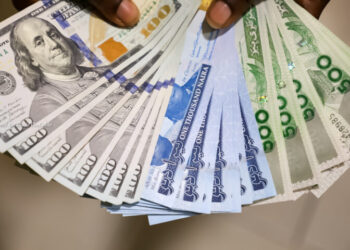
The Nigerian naira extended its recent rally on Thursday, closing at N1,385 per US dollar in the official foreign exchange market its strongest level in recent months as the US dollar continued to weaken globally.
Data from the Central Bank of Nigeria (CBN) showed the naira appreciating significantly in the Nigerian Foreign Exchange Market (NFEM), with intraday trading reaching as strong as N1,367 per dollar before settling near N1,385 a gain from Wednesday’s close of N1,394 per dollar.
The performance reflects a combination of improved domestic FX liquidity and supportive global conditions. The US dollar faced sustained pressure earlier in the week, driven by easing expectations around Federal Reserve rate hikes, optimism that the US government could avoid a shutdown, and speculation over President Donald Trump’s potential nominee to lead the Fed.
Softer inflation data from major economies, including Japan, further shifted investor sentiment away from the dollar, benefiting emerging market currencies like the naira. While the dollar staged a modest rebound later in the week, the broader tone remained tilted toward a weaker greenback.
In Nigeria, the naira’s strength has been underpinned by:
– Increased dollar supply from exports, remittances, and other inflows
– Rising external reserves, strengthening the CBN’s capacity to manage volatility
– Ongoing reforms, including the Electronic Foreign Exchange Matching System, which has improved transparency and narrowed the gap between official and parallel rates
The parallel market also showed improvement, though at a slower pace, with rates firming slightly in recent sessions. Analysts say the convergence between official and informal rates signals better FX availability and reduced arbitrage opportunities.
The appreciation offers relief to importers, businesses, and households reliant on foreign exchange for goods, education, healthcare abroad, and raw materials. A stronger naira also helps moderate imported inflation and supports the CBN’s efforts to anchor price expectations.
While the recent gains are encouraging, sustainability will depend on consistent inflows, oil price stability, and continued policy discipline. Analysts remain cautiously optimistic, noting that the naira’s performance in early 2026 builds on momentum established last year and could extend further if global dollar weakness persists and domestic reforms maintain traction.
The CBN continues to monitor developments closely, with rising reserves and improved liquidity providing a stronger foundation to manage volatility. For now, Thursday’s close at N1,385 per dollar underscores a period of relative stability a welcome development after prolonged pressures in 2025.