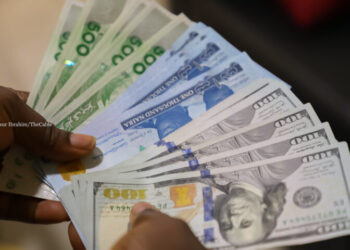
The Nigerian naira appreciated significantly on Monday, closing at N1,497.46/$ in the official market, a 0.27% gain from N1,501.49/$, marking its first dip below N1,500/$ since early March 2025, according to Central Bank of Nigeria (CBN) data. The currency also strengthened in the parallel market, gaining 0.33% to settle at N1,535/$, as reported by CardinalStone Research.
The naira’s recovery follows a week of testing the N1,500/$ threshold, with a week-on-week gain of 0.98% in the official window and a 2.23% premium over the parallel market, per the Coronation Weekly Update. Total foreign exchange inflows reached $550.9 million last week, slightly down from $567.2 million, with Foreign Portfolio Investments (FPIs) leading at $303.8 million (55.15%), followed by exporters (17.61%), non-bank corporates (17.57%), and smaller contributions from Foreign Direct Investments, the CBN, and individuals.
Analysts attribute the naira’s strength to robust FPI inflows, rising external reserves, and CBN policy interventions. AIICO Capital noted that ample dollar liquidity from FPIs, oil exporters, and offshore flows sustained market stability last week. Cowry Asset Management Limited echoed this, citing steady dollar inflows and stronger reserves, which reached $41.69 billion by Friday, reflecting consistent daily increases. These factors have enhanced market confidence and supported the CBN’s efforts to stabilize the currency.
However, experts caution that speculative activity could trigger volatility if inflows slow or demand surges ahead of the festive season. Coronation analysts project the naira will trade within a narrow band in the near term, supported by reserves and inflows, but stress the need for structural reforms and diversified FX sources, particularly more stable Foreign Direct Investments, to sustain gains. The recent 90% surge in auto imports and a projected single-digit inflation rate signal economic optimism, but challenges remain.
The naira’s return below N1,500/$ reflects growing market confidence, aligning with CBN’s ongoing reforms and fiscal measures. As Nigeria navigates global economic pressures, the coming weeks will test the currency’s resilience against potential demand spikes and external uncertainties.