“Unlike in the brazen looting days of the Peoples Democratic Party, the borrowings are designed to finance the deficit in the 2021 budget to enable the realisation of the Nigerian Economic Sustainability Plan that touches key sectors such as infrastructure development, boosting healthcare services, strengthening agriculture to deepen food security, more energy generation and continued tackling of the ravaging COVID-19 global pandemic.
“From the foregoing, it is abundantly clear that the borrowing is hinged on genuine needs and based on the necessity to strengthen the foundation of the national economy and achieve the desired primary purpose of the government of uplifting the living standard of the citizens.
“It was in the PDP’ era that loans to fund power generation, purchase arms and ammunition to fight a raging insurgency were misappropriated and diverted to fund PDP activities; and the borrowed money ultimately found its way to the pockets of cronies, friends and family members of administration officials. Nigeria is still servicing a $460m loan taken from China to fund a phony Abuja closed-circuit television contract awarded in August 2010.”
The party urged Nigerians to recall that the PDP had in its 16 years of alleged misrule pushed the country into a dark ditch of insolvency, and a period in which most state governments could not pay workers’ salaries, not even the minimum wage, or settle contractors’ bills and cater for patients in hospitals, to name a few.
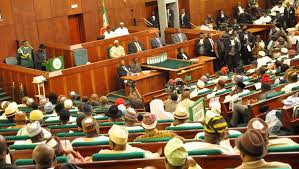
Akpanidoedehe welcomed the bi-partisan support the President was receiving from the National Assembly.
APC borrowing to finance corrupt lifestyles of its leaders and their cronies, alleges PDP
In response, the National Publicity Secretary of the PDP, Kola Ologbondiyan, in an interview , said, “For us in the PDP, the APC has simply confirmed what we have always known since 2014. The APC can only function in opposition. It simply lacks what it takes to provide leadership.
“This regime is the least qualified to talk about corruption. It is simply borrowing to finance the corrupt lifestyles of its party leaders and their cronies. The money borrowed since 2015 has ended up in private pockets. This explains the various financial scandals in FIRS (Federal Inland Revenue Service) , NPA (Nigerian Ports Authority), NHIS (National Health Insurance Scheme), NCC (Nigerian Communications Commissions) and several government parastatals under their watch. Nigerians have started a countdown to 2023.”
CBN monetary committee member expresses concern about mounting debts
Meanwhile, a member of the federal monetary committee, who spoke on the condition of anonymity, said, “I think we get to a level where we should be concerned. Yes, every country takes loans, but what do you use the loans for? How productive are the loans, especially how productive are the previous loans you have taken?
“In a situation where your debt servicing ratio to revenue ratio is getting out of hand, very soon every kobo you make will be expended on servicing debt. So, we can fall into a debt trap, which is avoidable. If you look at our Gross Domestic Product, a lot of our GDP is informal. They don’t pay tax. Using a very high GDP ratio, which includes agriculture, informal sector, services, industry that hardly pays any tax, there may be a disturbance in the case of Nigeria.
“You can use a high GDP ratio in countries where every sector is formalised, and tax avoidance is extremely low. But in reality, comparing our tax revenue, we should be borrowing in a relevant way. It should remind us of how serious this problem is.
“As a country, we should be looking at how to resolve our revenue problem. And how can the government transfer some of its commitments to public private partnership. There are a lot of developmental projects that the government may want to do that we should actually explore other ways of funding them. It doesn’t have to be through the government’s budget. They can be through private-public participation or other arrangements that we can make. Once we create an environment that is attractive that has a framework that makes it possible, the private sector will bring in money. Local and foreign. This is what we should be exploring.
The Head of Economics Department, Pan-Atlantic University Lagos, Dr Olalekan Aworinde, told that deficit financing was not a big issue, adding that it was common all over the world.
He, however, added, “If Nigeria is having a lot of deficits, meaning that we are borrowing, the question we should be asking the government is what the deficit financing is being used for? Is it being used to accelerate the level of growth? Or to reduce the level of unemployment.”