Since the 1980’s, the UK has seen considerable change in relation to driver technologies and practices, whether by introduction of and greater reliance upon telematics and ‘black box’ systems, to more recently the use of semi-autonomous and self-braking vehicles. Innovation and tech certainly appear to be creating a shift change, in terms of how duty holders and organisations are seeking to manage and control its work-related road risk (“WRRR”).
The Law
Importantly, the legal framework surrounding ‘on-the-road’ work activities and health and safety (“H&S”) has not changed. Since 1974, employers have had to pro-actively ensure the health, safety and welfare of its employees at work and non-employees, so far as is reasonably practicable. ‘So far as reasonably practicable’ means balancing the level of risk against money, time or resource needed to implement measures that the eliminate or control the risk. This applies to WRRR activities in the same way, as well as any other work-related activity.
Notably, what is ‘reasonably practicable’ can change. As understanding of a risk increases, the ways in which risk can be managed improves and the costs to do so decrease, what may have been considered impracticable 10 years ago now becomes possible. Employers are duty bound to regularly review their policies and procedures to ensure control measures remain adequate, and where necessary can take account of relevant advances in technology and practices.
Yet the number of work-related deaths in the UK involving moving vehicles, remain the second highest reported by the Health and Safety Executive (HSE) in their most recently published statistics. More than a quarter of all road traffic incidents also involve somebody driving as part of their work (published Department for Transport (“DfT”) figures.) Therefore, this begs the question: are the modern-day advancements in driving/driver safety working? Do they have a place in 2021 and beyond?
The analysis from, Emma Evans, Glen Ridgway, Jon Cowlan, Dr Jim Golby, below, seeks to consider these questions in more detail.
Relevant Guidance
In 2014, the HSE and DfT issued joint guidance ‘INDG 382: Driving for Work’ to help duty holders manage WRRR. INDG 382 has, for several years served as a useful aid to employers whose employees drive for work (including ‘grey fleet’ users) and those who are responsible for overall fleet management.
Positive compliance with INDG382 would help demonstrate an employer has discharged their legal obligations pursuant to Health and Safety at Work etc. Act 1974 (HSWA), as well as the Management of Health and Safety at Work Regulations 1999 (MHSWR). INDG 382 encourages the ‘Plan, Do Check, Act’ approach to managing WRRR (the same as for other H&S risks).
Unfortunately, there are some fundamental issues in still applying this approach. These include:
A failure to recognise that driving is a key ‘work-related’ risk, or to recognise that an ‘at work journey’ is defined as ANY journey for business that is not to and from a normal place of work (be this driving from London to Glasgow or just popping down to the post office);
A failure to consider ‘human factors’ such as driver attitude, organisational culture, time pressures etc. when developing plans;
Inadequate resources to ensure that any plans that are in place are properly established;
Inadequate resources to monitor whether policies and procedures are being followed and having a positive benefit on driver safety;
A failure to keep up to date with changes in technology and innovation that may improve the safety of their drivers.
 Most drivers openly admit that they regularly exceed the speed limit with reasons quoted as being “They were in a hurry”, “They generally enjoy driving fast” or “They were bored”. But exceeding the posted speed limit is only part of the problem!
 A recent consultation by HSE into INDG382, considered issues including what were the main distractions for drivers were whilst driving; what guidance duty holders currently use to help manage WRRR; what format would duty holders like to see guidance in the future (including options for digital content, websites, videos etc); what methods duty holders use to manage WRRR as well as trying to understand some of the barriers to managing WRRR. The latter includes employee attitude, financial pressure, culture and time pressure, for example.
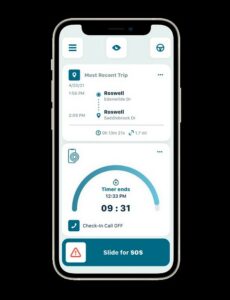 An example of this is ‘Applied Companion’ from Applied Driving Techniques.