RateCaptain
  • Home
    • About Us
    • Contact Us
  • FX Rates
  • Money Market
  • Cryptocurrency
  • Commodities
  • Corporates
No Result
View All Result
Subscribe
  • Home
    • About Us
    • Contact Us
  • FX Rates
  • Money Market
  • Cryptocurrency
  • Commodities
  • Corporates
No Result
View All Result
RateCaptain
No Result
View All Result
Home Energy

Nigeria to suffer drop in oil demand as EU plans to Ban Petrol, Diesel Vehicles by 2035.

Rate Captain by Rate Captain
February 17, 2023
in Energy
Reading Time: 3 mins read
A A
0
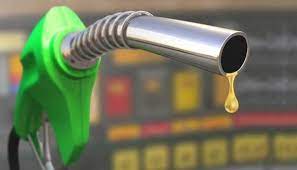
Fuel scarcity bites harder in Lagos.
Share on FacebookShare on TwitterShare on WhatsappShare on Telegram

Nigeria and other major oil-producing countries could lose major markets in Europe after the European Parliament approved a law to ban the sale of new petrol and diesel vehicles across European Union (EU) nations by 2035.

The continent is aiming to ramp up the production of electric cars to combat the climate change crisis which many countries have pledged various actions to tackle. Nigeria has promised net-zero by 2060.
When the newly approved law comes into effect, European countries like Spain, Italy, France, Netherlands, Portugal and several other major Nigeria’s customers would be unable to buy the commodity from the country.
The oil sector in Nigeria accounts for up to 95 per cent of the country’s export earnings, according to data from the National Bureau of Statistics (NBS).

AlsoRead

Nigeria Champions $2 Trillion Commonwealth Trade Goal at IMF, World Bank Meetings

Petrol Pump Manipulation Surges in Nigeria, Cheating Consumers Nationwide

FG Reserves NNPCL Tax Credit Road Contracts Under N20 Billion for Local Firms

But for the landmark EU rules, it will require that by 2035 carmakers must achieve a 100 per cent cut in CO2 emissions from new cars sold, which would make it impossible to sell new fossil fuel-powered vehicles in the 27-country bloc.
The law will also set a 55 per cent cut in CO2 emissions for new cars sold from 2030 versus 2021 levels, much higher than the existing target of a 37.5 per cent.
“The operating costs of an electric vehicle are already lower than the operating costs of a vehicle with an internal combustion engine,” the parliament’s lead negotiator on the rules, Jan Huitema, said.

He added that it was crucial to bring more affordable electric vehicles to consumers as per a Reuters report.
 Huitema, a member of the European Parliament, stated that the targets were crucial for Europe if it wants to achieve climate neutrality by 2050.
“These targets create clarity for the car industry and stimulate innovation and investments for car manufacturers,” he stressed.
“Purchasing and driving zero-emission cars will become cheaper for consumers, and a second-hand market will emerge more quickly. It makes sustainable driving accessible to everyone,” the chief negotiator assured.

Chairman of The Transport Committee,  Karima Delli, stressed that the law was a win for the planet and its people. “Today’s vote is a historic vote for the ecological transition … it is a victory for our planet and our populations,”  Karima said.
EU countries agreed the deal with lawmakers last October, but still need to formally rubber stamp the rules before they can take effect. Final approval is expected in March.
New vans must comply with a 100 per cent CO2 cut by 2035, and a 50 per cent cut by 2030, compared with 2021 levels. Many carmakers in Europe have announced investments in electrification.

Volkswagen Chief Executive, Thomas Schaefer, said last year that from 2033 the brand will only produce electric cars in Europe.
Still, the EU law met resistance from some industry and countries when it was proposed in July 2021. As a result, the final deal includes some flexibilities including that small carmakers producing less than 10,000 vehicles per year can negotiate weaker targets until 2036.
The car CO2 law is part a broader package of tougher EU climate policies, designed to deliver the bloc’s targets to slash greenhouse gas emissions this decade.

The law passed in Strasbourg aims to give European automakers a clear time frame to switch to production of electric vehicles and counter competition from China and the United States.
“Let me remind you that between last year and the end of this year, China will bring 80 models of electric cars to the international market,” EU Vice President Frans Timmermans, said.
“These are good cars. These are cars that will be more and more affordable, and we need to compete with them. We don’t want to give up this essential industry to outsiders,” he added.

Meanwhile, some automakers have already started preparing for the transition to electric vehicles. Aside Volkswagen which last year said it will produce only electric vehicles in Europe by 2033, Audi also assured it would cease producing diesel and petrol cars by 2033.

Previous Post

Supreme Court Adjourns naira redesign policy for February 22

Next Post

Buhari extends validity of old 200 naira notes till April 10

Related News

FG Allocates N5.1 Billion for Presidential Yacht and N5.5 Billion For Student Loans

Nigeria Champions $2 Trillion Commonwealth Trade Goal at IMF, World Bank Meetings

by Victoria Attah
October 14, 2025
0

Nigeria has aligned with fellow Commonwealth nations to advocate for a $2 trillion trade initiative aimed at boosting economic collaboration,...

Petrol Pump Manipulation Surges in Nigeria, Cheating Consumers Nationwide

by Akpan Edidong
September 15, 2025
0

Petrol attendants across Nigeria are increasingly manipulating fuel pumps to shortchange consumers, costing the nation millions of liters of Premium...

NNPCL Reports Record Profit of N2.548tn, Uncovers 52 Illegal Refineries

FG Reserves NNPCL Tax Credit Road Contracts Under N20 Billion for Local Firms

by Akpan Edidong
September 10, 2025
0

The Federal Government has implemented a new policy under its “Nigeria First” initiative, restricting NNPCL Tax Credit road contracts valued...

Petrol Consumption in Nigeria Drops 28% as CNG Gains Traction

by Akpan Edidong
September 1, 2025
0

Nigeria’s petrol consumption has plummeted by 28% over the past two years, with daily volumes falling from 68.353 million litres...

Next Post
Buhari extends validity of old 200 naira notes till April 10

Buhari extends validity of old 200 naira notes till April 10

Leave a Reply Cancel reply

Your email address will not be published. Required fields are marked *

Recommended

2024 Budget Outline: Oil Price Set at $77.96, Naira Stands at 750 Against the Dollar

Nigeria and UAE Sign Landmark Trade Deal to Eliminate Tariffs on Thousands of Products

January 27, 2026
 Top Story: Central Bank Raises MPR by 200 Basis Points to 24.75%

National Grid Collapses Again, Plunging Nigeria into Nationwide Blackout

January 27, 2026

Popular Story

  • 2024 Budget Outline: Oil Price Set at $77.96, Naira Stands at 750 Against the Dollar

    Nigeria and UAE Sign Landmark Trade Deal to Eliminate Tariffs on Thousands of Products

    0 shares
    Share 0 Tweet 0
  • Dangote Refinery Suspends Petrol Sales and Cancels Contracts as Crude Supply Issues Bite

    0 shares
    Share 0 Tweet 0
  • US Records $1.45 Billion Trade Surplus with Nigeria in First 10 Months of 2025 as Exports Surge 60%

    0 shares
    Share 0 Tweet 0
  • Nigeria Customs Service Surpasses N7.2 Trillion Revenue Target in 2025

    0 shares
    Share 0 Tweet 0
  • National Grid Collapses Again, Plunging Nigeria into Nationwide Blackout

    0 shares
    Share 0 Tweet 0
RateCaptain

RateCaptain

We bring you the most accurate in new and market data. Check our landing page for details.

  • Home
  • About Us
  • Privacy Policy
  • Terms & Conditions
  • Disclaimer
  • Cookie Policy
  • Contact Us

Copyright © 2022 RateCaptain - All rights reserved by RateCaptain.

No Result
View All Result
  • Home
    • About Us
    • Contact Us
  • FX Rates
  • Money Market
  • Cryptocurrency
  • Commodities
  • Corporates

Copyright © 2022 RateCaptain - All rights reserved by RateCaptain.

RateCaptain
Manage Cookie Consent
To provide the best experiences, we use technologies like cookies to store and/or access device information. Consenting to these technologies will allow us to process data such as browsing behavior or unique IDs on this site. Not consenting or withdrawing consent, may adversely affect certain features and functions.
Functional Always active
The technical storage or access is strictly necessary for the legitimate purpose of enabling the use of a specific service explicitly requested by the subscriber or user, or for the sole purpose of carrying out the transmission of a communication over an electronic communications network.
Preferences
The technical storage or access is necessary for the legitimate purpose of storing preferences that are not requested by the subscriber or user.
Statistics
The technical storage or access that is used exclusively for statistical purposes. The technical storage or access that is used exclusively for anonymous statistical purposes. Without a subpoena, voluntary compliance on the part of your Internet Service Provider, or additional records from a third party, information stored or retrieved for this purpose alone cannot usually be used to identify you.
Marketing
The technical storage or access is required to create user profiles to send advertising, or to track the user on a website or across several websites for similar marketing purposes.
  • Manage options
  • Manage services
  • Manage {vendor_count} vendors
  • Read more about these purposes
View preferences
  • {title}
  • {title}
  • {title}
?>