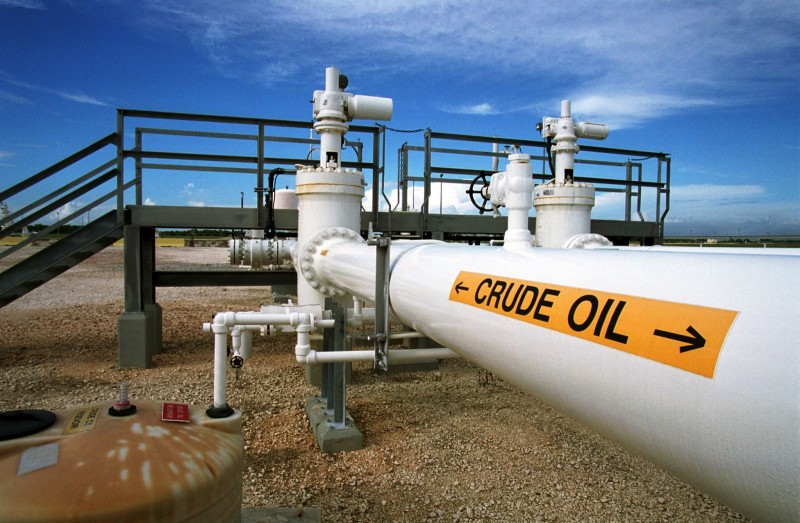
Nigeria’s crude oil production increased to 1.459 million barrels per day (bpd) in January 2026, according to the latest Monthly Oil Market Report (MOMR) released by the Organisation of the Petroleum Exporting Countries (OPEC) on Wednesday.
The figure represents a modest month-on-month gain of 37,000 bpd from December 2025’s 1.422 million bpd, as reported through direct communication between OPEC and Nigerian authorities. Secondary sources cited in the report placed the output slightly higher at 1.47 million bpd.
Despite the improvement, Nigeria Africa’s largest oil producer — once again fell short of its OPEC-assigned quota of 1.5 million bpd, missing the target by about 41,000 bpd (or roughly 50,000 bpd per direct communication data). This marks the sixth consecutive month that Nigeria has produced below its quota, with the last compliance recorded in July 2025.
Libya ranked second in Africa with 1.37 million bpd in January.
The persistent shortfall has been attributed to a combination of longstanding challenges:
– Oil theft and pipeline vandalism in the Niger Delta
– Years of underinvestment in upstream infrastructure
– Operational disruptions and maintenance issues at key facilities
These factors have constrained the country’s ability to ramp up output quickly, even as global oil prices remain supportive.
OPEC’s broader report showed total crude production by Declaration of Cooperation (DoC) countries averaging 42.45 million bpd in January — a month-on-month decline of 439,000 bpd as member nations continued to manage supply in line with market stabilisation efforts.
For Nigeria, the January increase offers a small positive signal amid ongoing reforms aimed at curbing theft, improving security in producing areas, and attracting fresh investment into upstream operations. However, industry stakeholders stress that sustained output growth will require accelerated action on infrastructure rehabilitation, enhanced surveillance, and resolution of joint-venture funding disputes.
With the Dangote Refinery now operating at full 650,000 bpd capacity and plans for further expansion, higher domestic crude utilisation could help offset some of the quota shortfall’s fiscal impact. Still, closing the production gap remains critical for maximising revenue, strengthening external reserves, and supporting the naira amid Nigeria’s oil-dependent economy.
Analysts will be watching February’s figures closely to determine whether January’s modest uptick signals the beginning of a more consistent recovery or remains an outlier in a pattern of persistent underperformance.