RateCaptain
  • Home
    • About Us
    • Contact Us
  • FX Rates
  • Money Market
  • Cryptocurrency
  • Commodities
  • Corporates
No Result
View All Result
Subscribe
  • Home
    • About Us
    • Contact Us
  • FX Rates
  • Money Market
  • Cryptocurrency
  • Commodities
  • Corporates
No Result
View All Result
RateCaptain
No Result
View All Result
Home Currencies

Nigeria’s Money Supply Falls to N119 Trillion in May 2025 Amid Tightening Policies

Stephen Akudike by Stephen Akudike
July 1, 2025
in Currencies, Economy, Money Market
Reading Time: 1 min read
A A
0
Naira Strengthens as Anticipation Mounts for $10 Billion Forex Inflows
Share on FacebookShare on TwitterShare on WhatsappShare on Telegram

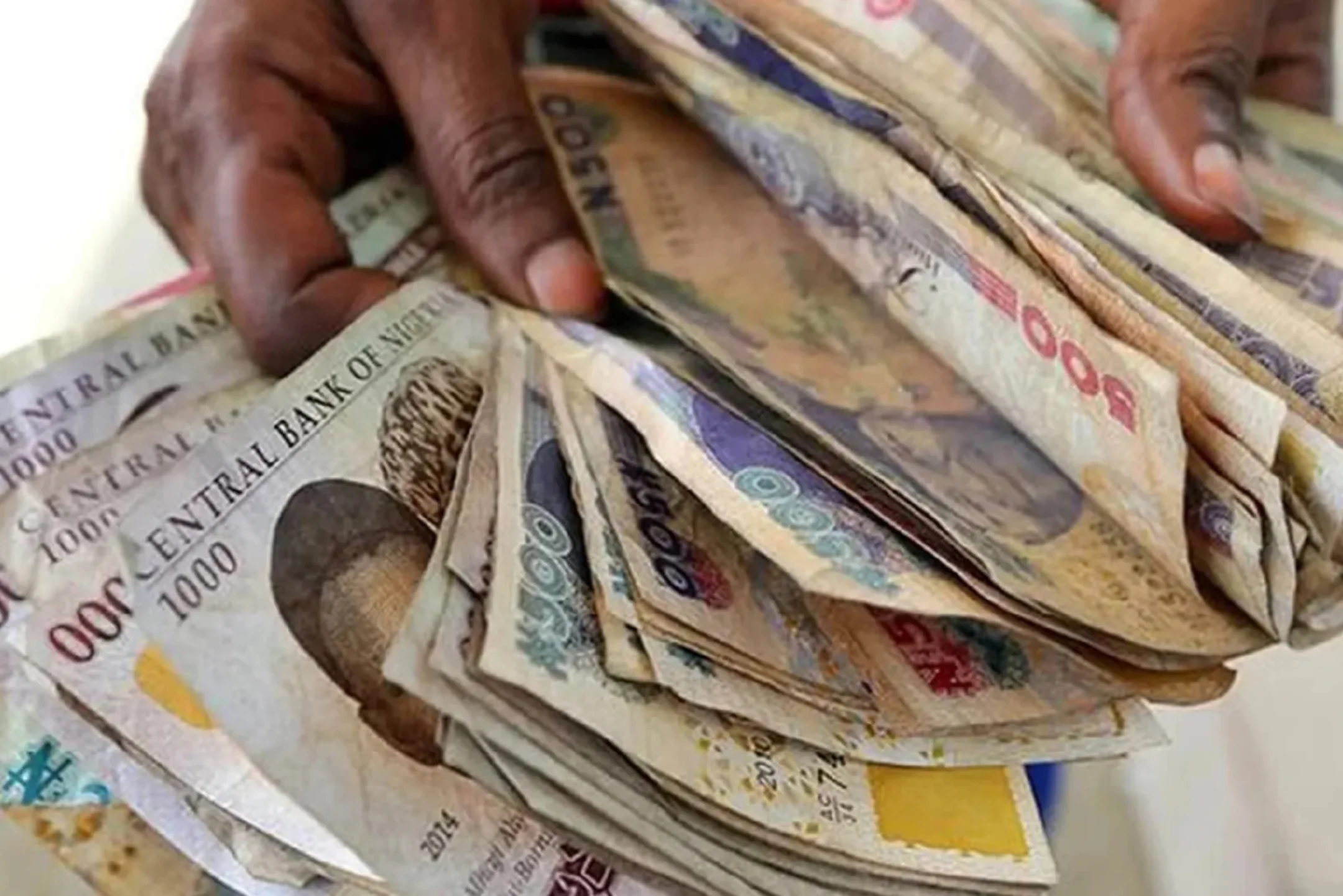
Nigeria’s money supply contracted for the second time in 2025, dipping to N119.01 trillion in May from N119.30 trillion in April, a decline of N292.75 billion or 0.25%, according to the Central Bank of Nigeria (CBN). This follows a similar drop in February, signaling tighter monetary conditions as the CBN intensifies efforts to curb inflation and stabilize the economy.

Despite the monthly decline, the broad money supply (M3) has grown significantly year-on-year, rising 19.9% from N99.24 trillion in May 2024, driven by a surge in net foreign assets from N15.34 trillion to N45.81 trillion. This near-tripling of foreign assets reflects stronger oil revenues and external financing. However, a 12.8% drop in net domestic assets to N73.19 trillion suggests reduced domestic liquidity, likely due to the CBN’s high Monetary Policy Rate and aggressive open market operations.

AlsoRead

Dangote Refinery Fires Back at Importers: “Go Import from Iran If You Can” 

Private Sector Credit Dips to N75.24 Trillion in January 2026 as Banks Stay Cautious

China’s Exports to Nigeria Hit Record $24.9 Billion in 2025, Widening Trade Imbalance

Narrower measures also declined, with M2 falling to N118.99 trillion and M1 (cash and demand deposits) dropping 1.5% to N40.38 trillion, indicating reduced cash availability. While liquidity remains high compared to last year’s N33.38 trillion M1, these trends highlight the CBN’s balancing act between controlling inflation and supporting growth. Economists warn that sustained tightening could strain credit access, urging careful calibration to avoid stifling economic activity.


 

Tags: Naira
Previous Post

Nigeria Faces Heavy Cost in Servicing First Domestic Dollar Bond

Next Post

US-Africa Summit Secures $2.5 Billion in Trade Agreements

Related News

Dangote Refinery Set to Drive Further Fuel Price Hike in Nigeria.

Dangote Refinery Fires Back at Importers: “Go Import from Iran If You Can” 

by Akpan Edidong
March 6, 2026
0

As the escalating US-Iran conflict sends global oil prices soaring past $80 per barrel and triggers fuel shortages and long...

South Africa Poised to Surpass Nigeria as Africa’s Largest Economy

Private Sector Credit Dips to N75.24 Trillion in January 2026 as Banks Stay Cautious

by Jide Omodele
March 6, 2026
0

Nigerian banks extended N75.24 trillion in credit to the private sector in January 2026, marking a decline of about N590...

China-Nigeria Collaboration Set to Showcase Nigerian Products in Chinese Markets

China’s Exports to Nigeria Hit Record $24.9 Billion in 2025, Widening Trade Imbalance

by Stephen Akudike
March 6, 2026
0

Bilateral trade between China and Nigeria reached new heights in 2025, with Chinese exports to Africa's most populous nation surging...

CBN’s Recapitalization Budget of $1 Trillion Sparks Debate Among Industry Stakeholders

CBN Reforms Push Reserves to 13-Year High of $50.45bn.

by Stephen Akudike
March 5, 2026
0

Nigeria's foreign exchange reforms under the Central Bank of Nigeria (CBN) are starting to deliver tangible results, pushing gross external...

Next Post
IMF Lists Top 10 African Nations with Highest Debt Burdens

US-Africa Summit Secures $2.5 Billion in Trade Agreements

Leave a Reply Cancel reply

Your email address will not be published. Required fields are marked *

Recommended

Dangote Refinery Set to Drive Further Fuel Price Hike in Nigeria.

Dangote Refinery Fires Back at Importers: “Go Import from Iran If You Can” 

March 6, 2026
South Africa Poised to Surpass Nigeria as Africa’s Largest Economy

Private Sector Credit Dips to N75.24 Trillion in January 2026 as Banks Stay Cautious

March 6, 2026

Popular Story

  • kms tools office 2024 ✓ Activate Microsoft Office Easily ➔ Step-by-Step Guide

    0 shares
    Share 0 Tweet 0
  • China’s Exports to Nigeria Hit Record $24.9 Billion in 2025, Widening Trade Imbalance

    0 shares
    Share 0 Tweet 0
  • Showmax  to be shut down by MultiChoice after 11 years.

    0 shares
    Share 0 Tweet 0
  • Apple’s Unveiling of iPhone 15 Set for September 12.

    0 shares
    Share 0 Tweet 0
  • Private Sector Credit Dips to N75.24 Trillion in January 2026 as Banks Stay Cautious

    0 shares
    Share 0 Tweet 0

RateCaptain

We bring you the most accurate in new and market data. Check our landing page for details.

  • Home
  • About Us
  • Privacy Policy
  • Terms & Conditions
  • Disclaimer
  • Cookie Policy
  • Contact Us

Copyright © 2022 RateCaptain - All rights reserved by RateCaptain.

No Result
View All Result
  • Home
    • About Us
    • Contact Us
  • FX Rates
  • Money Market
  • Cryptocurrency
  • Commodities
  • Corporates

Copyright © 2022 RateCaptain - All rights reserved by RateCaptain.

RateCaptain
Manage Cookie Consent
To provide the best experiences, we use technologies like cookies to store and/or access device information. Consenting to these technologies will allow us to process data such as browsing behavior or unique IDs on this site. Not consenting or withdrawing consent, may adversely affect certain features and functions.
Functional Always active
The technical storage or access is strictly necessary for the legitimate purpose of enabling the use of a specific service explicitly requested by the subscriber or user, or for the sole purpose of carrying out the transmission of a communication over an electronic communications network.
Preferences
The technical storage or access is necessary for the legitimate purpose of storing preferences that are not requested by the subscriber or user.
Statistics
The technical storage or access that is used exclusively for statistical purposes. The technical storage or access that is used exclusively for anonymous statistical purposes. Without a subpoena, voluntary compliance on the part of your Internet Service Provider, or additional records from a third party, information stored or retrieved for this purpose alone cannot usually be used to identify you.
Marketing
The technical storage or access is required to create user profiles to send advertising, or to track the user on a website or across several websites for similar marketing purposes.
  • Manage options
  • Manage services
  • Manage {vendor_count} vendors
  • Read more about these purposes
View preferences
  • {title}
  • {title}
  • {title}
?>