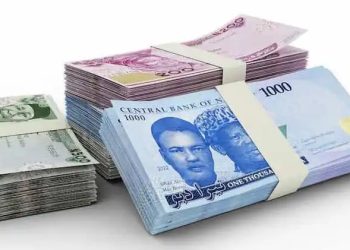
You might have heard terms like Retail Forex & currency exchange rates when you visit your Bank or Western Union, while travelling abroad or when you are sending money to your Family members living in another country. These terms might be more familiar to Nigerians living abroad who often have to visit Western Union to exchange currency.
Whenever you are exchanging your currency for another currency, for example converting Naira to dollar, you are actually trading in the Forex Market.
To put in simple words, Retail forex trading is buying and selling of currencies with an aim to make a profit. Like any other investment, Forex Traders speculate whether the exchange rates of a currency pair would go up or down.
Let’s say, if a trader thinks that the value of US Dollar is going to go up against the Naira in the next few months, then they will buy USD & sell it in a few months when the price is higher, to make a profit.
Trading in the Forex market can be done through a bank or a Forex broker.
Why Retail Traders are growing in Nigeria?
Although there is no way to tell the actual number, but some statistics say that there may be as many as 200,000 forex traders in Nigeria, or even more.
So what exactly is making forex trading so popular in Nigeria?
The first major factor for the popularity of Forex Trading in Nigeria could be the rising unemployment. Nigeria has the highest youth population in Africa, and most of whom are under the age of 25 years, but in many cases good employment opportunities for them are limited.
So, many Nigerians have been turning to self-employment. Different ways of making money on the internet have become a potential source of income for the youth; and one such way that has attracted their attention is online trading in stocks, forex & cryptocurrency.
Another factor contributing to the growth has been the increased Internet penetration. Forex Trading for retail traders has been around for over a decade now, but it wasn’t that popular in Nigeria back then, due to very low internet penetration.
But the availability of easily accessible internet connectivity & cheap data in the last few years has made Online Investing & Trading more accessible to individual investors, unlike never before.
Individuals can now open a trading account with brokers within minutes & start trading through mobile or PC or Laptop.
Massive Marketing by brokers has attracted the masses.
New traders are often attracted to trading when they see advertisements on the internet & other media, promoting “financial freedom”.
Major brokers sponsor big name football players, teams & leagues; thus attracting a lot of attention from the masses. Holding of contests by Brokers for new traders is common, where expensive prizes & rewards are offered to the traders.
Many foreign regulated forex brokers have opened their offices in Nigeria, and they also recruit local agents as IBs (Introductory brokers) to promote their services in various local regions.
Some ‘bad’ unregulated Brokers falsely promote forex & cryptocurrency as a low investment & high returns income scheme, some even showcase the lavish lifestyle of the traders trading with them.
The result is many Nigerians are turning to Forex Trading for income.
Common Scams
With the rise of Forex Trading & online investing, there has also been increasing number of scams relating to investment: fake investment schemes, fake traders, unregulated brokers; all of them taking away money from the investors.
According to Akin from ForexTrading.NG, you should watch out for bucket shops & ‘unregulated brokers’. An estimated 75 percent of retail traders lose, and brokers know this fact. So many ‘unregulated’ brokers bet against their own clients by taking the opposite side of their position, instead of actually passing the orders in the Forex market.
Unregulated brokers often maintain an internal list of orders placed by their clients, and take on their own clients by counter bidding against them; because they are aware that most traders are pre-programmed to fail. The high leverage offered by these brokers increases the risk even more for their clients.
Akin further advised that trading with regulated forex brokers could protect Nigerian investors from such bad practices since regulated brokers have to follow the strict standards set by the regulatory frameworks. Understanding the bad practices of unregulated brokers, reading the reviews of other traders and always checking the broker’s regulations before opening an account with them can reduce the risk.
Don’t fall for Ponzi Schemes promising High Returns
There is also an increasing number of fake investment schemes that promise unbelievably high returns through forex, stock & cryptocurrency market.
They often come up with schemes like “30% monthly returns asking for upfront money like N100,000 and promising guaranteed return of N400,000 at the end of 6 month period”.
Such returns are not possible through any investment instrument. The lure is so convincing that investors are often convinced to part away with their money.
Nigerians should stay away from any such schemes.
Need for Local Regulations
All the major Forex Brokers operating in Nigeria are currently registered with European (FCA, CySEC) or South African (FSCA) Regulatory authorities, as there is no local regulation for Forex Brokers in Nigeria.
The purpose of a Regulatory authority/body is to provide investor protection and ensure that brokers or independent investors follow the standards put in place by them. These safeguards traders against any malpractices by the Broker like stop loss hunting, constant re-quotes etc and also help them in case of any dispute with the Forex Broker.
There has been an announcement in 2018 by the Nigerian lawmaker Securities and Exchange Commission (SEC) that indicates that we could see some local frameworks for regulated Forex Trading in the near future. This would create a more secure trading environment for Nigerian Traders.
But for now, Nigerian Investors would have to get in touch with the Foreign Regulators in case of any disputes or complaints against the Brokers.
There is an urgent need for local regulation in Nigeria for Forex Trading, that can safeguard local investors and also put in place quick & easy dispute resolution framework against any bad practices by brokers in the Nigerian market.
Is forex trading right investment for you?
Forex Trading like any other investment is very risky. The high leverage offered by forex brokers amps up the risk even more.
You should only invest through a Regulated Broker after you have gained proper education on forex investment basics like leverage, position size calculation, risk management, and how forex market works.
Beware that Forex trading is not a get rich quick scheme that can guarantee you good returns in no time; you are bound to lose money in any investment market if you invest without proper knowledge, or use too much margin.
Educate yourself before getting into any investment and only invest what you are willing to lose.