RateCaptain
  • Home
    • About Us
    • Contact Us
  • FX Rates
  • Money Market
  • Cryptocurrency
  • Commodities
  • Corporates
No Result
View All Result
Subscribe
  • Home
    • About Us
    • Contact Us
  • FX Rates
  • Money Market
  • Cryptocurrency
  • Commodities
  • Corporates
No Result
View All Result
RateCaptain
No Result
View All Result
Home Commodities

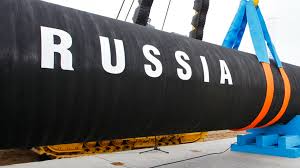
Russian Government Eases Fuel Export Ban Amidst Growing Domestic Concerns

Akpan Edidong by Akpan Edidong
September 25, 2023
in Commodities, Markets
Reading Time: 2 mins read
A A
0
Russian Government Eases Fuel Export Ban Amidst Growing Domestic Concerns
Share on FacebookShare on TwitterShare on WhatsappShare on Telegram

The Russian government has decided to modify its fuel export ban, signaling a shift in its export policy. The decision, outlined in an official government document released on Monday, outlines several key changes to the export restrictions, aimed at addressing the growing concerns related to fuel shortages and price spikes within the country.

One of the significant changes involves lifting the export restrictions on fuel used as bunkering for select vessels. Additionally, diesel with a high sulfur content is no longer subject to export limitations. These amendments are expected to provide some relief to certain sectors reliant on these types of fuel.

AlsoRead

Investors Pocket N1.7 Trillion as NGX Banking and Industrial Stocks Rally

NGX All-Share Index Breaks 190,000 Barrier, Market Cap Surges by N5.1 Trillion in Single-Day Rally

Nigeria’s DMO Targets N800 Billion in February Bond Auction as Yields Hover Near 20%

Furthermore, the government has also revoked restrictions on the export of fuel that had already been accepted for export by two prominent entities, Russian Railways and Transneft, before the initial export ban was announced last week. This move is seen as an effort to minimize disruptions in ongoing export contracts and trade agreements.

However, it’s important to note that despite these adjustments, the ban on all types of gasoline and high-quality diesel remains firmly in place. This indicates that the government remains committed to addressing the ongoing fuel crisis within the country.

The fuel export ban was initially introduced last Thursday, encompassing gasoline and diesel exports to all countries outside a specific group of four ex-Soviet states. The primary objective behind this decision was to stabilize the domestic fuel market, which has been grappling with shortages in recent months.

Wholesale fuel prices had experienced a sharp increase, raising concerns among both consumers and policymakers. To mitigate the impact on consumers, retail fuel prices were capped to align with official inflation rates. However, these measures were insufficient to address the underlying supply issues.

The fuel shortage crisis has had particularly severe consequences in Russia’s southern agricultural regions, often referred to as the country’s “breadbasket.” In these areas, a steady supply of fuel is essential for agricultural operations, including the gathering of the harvest. Any prolonged crisis in these regions could have far-reaching implications, especially as Russia approaches a significant event: the presidential election scheduled for March.

The Russian government’s decision to modify its fuel export ban reflects the delicate balance between domestic economic concerns and international trade interests. While these adjustments may provide some relief to critical sectors, they also underscore the challenges faced by the Kremlin as it navigates a complex energy market landscape amidst political and economic uncertainties.

Tags: BunkeringDieselDomestic Marketeconomic challengesExport RestrictionsFuel Export Banfuel shortagesGasolineInternational Tradepresidential electionPrice SpikesRussiaRussian RailwaysTransneft
Previous Post

India’s Government Considers Selling More Wheat to Stabilize Grain Prices

Next Post

 NNPCL Exchanges Crude Oil Worth N2.6tn for Refined Products in 2021

Related News

Nigerian Stock Market Witnesses N35 Billion Dip in Market Cap as Key Stocks Decline

Investors Pocket N1.7 Trillion as NGX Banking and Industrial Stocks Rally

by Stephen Akudike
February 20, 2026
0

The Nigerian Exchange Limited (NGX) extended its bullish run on Thursday, February 19, 2026, with investors realising gains of approximately...

Nigerian Equity Market Sees Impressive N1.08tn Wealth Gain Amidst Bullish Trading.

NGX All-Share Index Breaks 190,000 Barrier, Market Cap Surges by N5.1 Trillion in Single-Day Rally

by Jide Omodele
February 17, 2026
0

The Nigerian Exchange Limited (NGX) recorded one of its strongest single-day performances on Monday, February 17, 2026, as the benchmark...

Ghana Reaches Agreement on Eurobond Restructuring: Key Details Explained

Nigeria’s DMO Targets N800 Billion in February Bond Auction as Yields Hover Near 20%

by Stephen Akudike
February 17, 2026
0

The Debt Management Office (DMO) has announced intentions to raise N800 billion from the domestic market through a Federal Government...

OPEC – Nigeria’s oil production decreases to 972 tb/d

Nigeria’s Crude Oil Output Rises to 1.459 Million bpd in January 2026, Still Below OPEC Quota

by Akpan Edidong
February 12, 2026
0

Nigeria’s crude oil production increased to 1.459 million barrels per day (bpd) in January 2026, according to the latest Monthly...

Next Post
NNPC’s $3 Billion Loan Deal: Nigeria’s Economic Rollercoaster Ride

 NNPCL Exchanges Crude Oil Worth N2.6tn for Refined Products in 2021

Leave a Reply Cancel reply

Your email address will not be published. Required fields are marked *

Recommended

Dangote Refinery Set to Drive Further Fuel Price Hike in Nigeria.

Dangote Refinery Fires Back at Importers: “Go Import from Iran If You Can” 

March 6, 2026
South Africa Poised to Surpass Nigeria as Africa’s Largest Economy

Private Sector Credit Dips to N75.24 Trillion in January 2026 as Banks Stay Cautious

March 6, 2026

Popular Story

  • Dollar Index Loses Steam as Treasury Yields Drift Back to 4.8%

    Naira Rebounds Month-on-Month in February as Reserves Hit 13-Year High.

    0 shares
    Share 0 Tweet 0
  • Dangote Refinery Fires Back at Importers: “Go Import from Iran If You Can” 

    0 shares
    Share 0 Tweet 0
  • CBN Pulls N13.41 Trillion Out of Banking System in January 2026 as Tightening Bites

    0 shares
    Share 0 Tweet 0
  • CBN Reforms Push Reserves to 13-Year High of $50.45bn.

    0 shares
    Share 0 Tweet 0
  • Showmax  to be shut down by MultiChoice after 11 years.

    0 shares
    Share 0 Tweet 0

RateCaptain

We bring you the most accurate in new and market data. Check our landing page for details.

  • Home
  • About Us
  • Privacy Policy
  • Terms & Conditions
  • Disclaimer
  • Cookie Policy
  • Contact Us

Copyright © 2022 RateCaptain - All rights reserved by RateCaptain.

No Result
View All Result
  • Home
    • About Us
    • Contact Us
  • FX Rates
  • Money Market
  • Cryptocurrency
  • Commodities
  • Corporates

Copyright © 2022 RateCaptain - All rights reserved by RateCaptain.

RateCaptain
Manage Cookie Consent
To provide the best experiences, we use technologies like cookies to store and/or access device information. Consenting to these technologies will allow us to process data such as browsing behavior or unique IDs on this site. Not consenting or withdrawing consent, may adversely affect certain features and functions.
Functional Always active
The technical storage or access is strictly necessary for the legitimate purpose of enabling the use of a specific service explicitly requested by the subscriber or user, or for the sole purpose of carrying out the transmission of a communication over an electronic communications network.
Preferences
The technical storage or access is necessary for the legitimate purpose of storing preferences that are not requested by the subscriber or user.
Statistics
The technical storage or access that is used exclusively for statistical purposes. The technical storage or access that is used exclusively for anonymous statistical purposes. Without a subpoena, voluntary compliance on the part of your Internet Service Provider, or additional records from a third party, information stored or retrieved for this purpose alone cannot usually be used to identify you.
Marketing
The technical storage or access is required to create user profiles to send advertising, or to track the user on a website or across several websites for similar marketing purposes.
  • Manage options
  • Manage services
  • Manage {vendor_count} vendors
  • Read more about these purposes
View preferences
  • {title}
  • {title}
  • {title}
?>