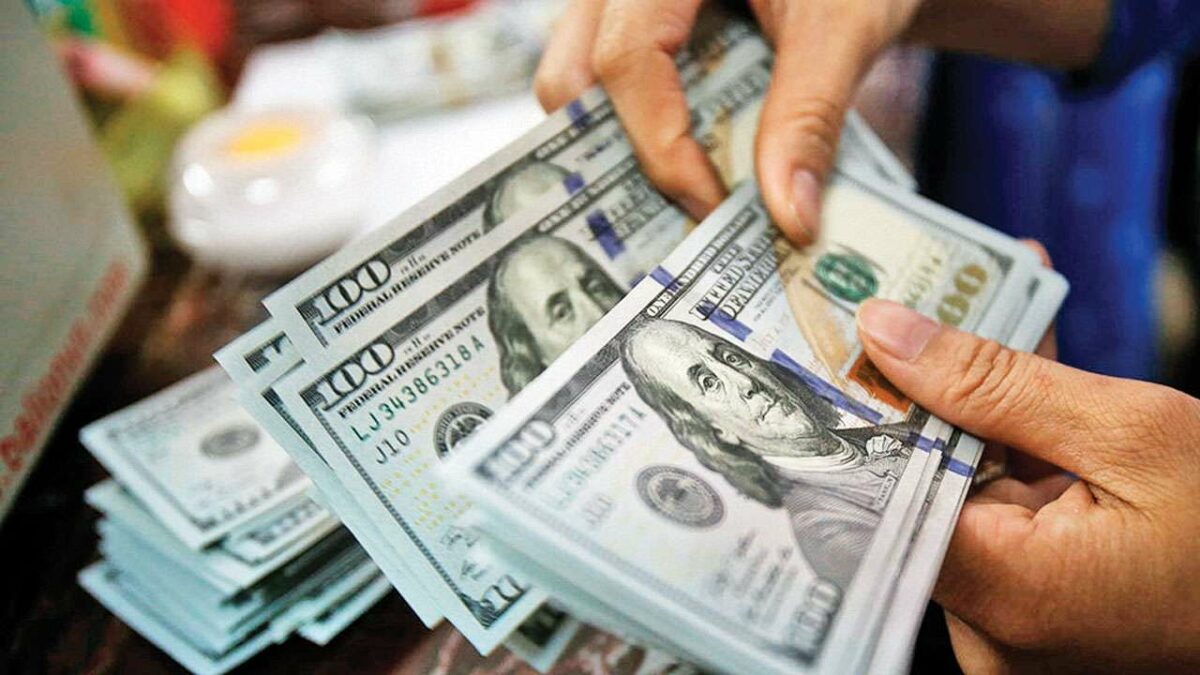
The US dollar remained under pressure on Thursday, March 26, 2026, as investors weighed the durability of a fragile two-week ceasefire between the United States and Iran amid ongoing regional tensions.
The ceasefire appeared shaky, with Israel continuing military operations against the Iran-aligned Hezbollah in Lebanon, while Tehran accused both Israel and the US of violating the agreement and warned that proceeding with peace talks would be “unreasonable.”
The Strait of Hormuz remained closed to vessels without a permit, pushing oil prices higher and adding to uncertainty in global energy markets. Sho Suzuki, a market analyst at Matsui Securities, noted that doubts were emerging over whether the ceasefire could hold or even be finalised. “There are probably some doubts emerging over whether the ceasefire expectations can really be sustained,” he said.
The dollar index, which measures the greenback against a basket of major currencies including the yen and the euro, fell 0.01% to 99.05. The euro edged up 0.01% to $1.1663, while sterling gained 0.01% to $1.3393. The Japanese yen surrendered some of its previous gains, weakening 0.13% to 158.8 per dollar.
Suzuki pointed out that prolonged Middle East tensions could push fiscal policy toward expansion, contributing to yen weakness. The overnight indexed swap (OIS) market indicated a 55% probability of a Bank of Japan interest rate hike in April, according to Tokyo Tanshi data. A collapse of the ceasefire could reduce these expectations and further weaken the yen.
BOJ Governor Kazuo Ueda was scheduled to appear in parliament at 0415 GMT on Thursday.
The dollar had strengthened during the height of the Iran conflict because the United States is a net energy exporter, insulating it from shocks that heavily affected oil-dependent economies like Japan and parts of Europe. The five-week conflict disrupted global oil and gas supplies, eroding investor confidence in riskier assets.
Analysts said the uneasy truce has increased Iran’s leverage over shipping through the Strait of Hormuz. President Donald Trump had backed off his threats to attack Iranian civilian infrastructure, leaving Iran with stronger bargaining power.
The US was scheduled to release February personal spending and the PCE deflator data on Thursday. Despite some improved sentiment following the ceasefire, the dollar-yen pair was expected to remain range-bound in Tokyo, although strong US data could trigger a rebound, according to Akihiko Yokoo of Mitsubishi UFJ Bank.
Elsewhere, the Australian dollar fell 0.13% to $0.7033, while the New Zealand dollar rose 0.07% to $0.5826. In cryptocurrencies, Bitcoin dropped 0.61% to $70,944.20 and Ethereum fell 1.35% to $2,180.21.
The dollar’s performance this week highlights the market’s sensitivity to geopolitical developments and shifting expectations around global monetary policy. A sustained ceasefire could support riskier assets and weaken the dollar further, while any breakdown in talks may prompt a return to safe-haven flows.