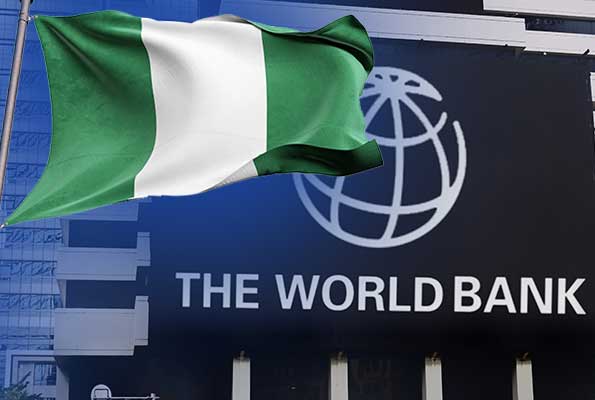
The World Bank has revised downward its economic growth projection for Nigeria in 2026 to 4.1%, citing a combination of external shocks and domestic structural constraints.
In its April 2026 Africa Economic Update titled “Making Industrial Policy Work in Africa,” the global lender lowered its earlier forecast of 4.4% for both 2026 and 2027. The projection for 2027 has now been adjusted to 4.2%, while growth for 2028 is expected to reach 4.3%.
The bank attributed the more modest outlook to more stable macroeconomic conditions and a gradual recovery in investment. However, it noted that structural challenges continue to limit faster expansion. The services sector particularly ICT, finance, and real estate is expected to remain the primary engine of growth, while agriculture and industry are projected to expand more slowly due to persistent constraints.
Inflation is forecast to decline from 23% in 2025 to 14.9% in 2026, and further to 10.7% by 2028, reflecting the lagged effects of policy tightening and improving supply conditions. Nevertheless, the World Bank warned that rising fuel prices linked to the Middle East conflict could slow poverty reduction and exert additional pressure on household incomes.
“Although poverty remains elevated, it is expected to decline gradually as inflation eases, albeit more slowly due to higher fuel prices linked to the Middle East conflict,” the report stated.
Rising oil prices could support fiscal and external balances, but this may be partly offset by capital flow volatility amid global uncertainty. The bank cautioned that business sentiment and reform momentum could be dampened by commodity price volatility, tighter global financial conditions, security concerns, and policy uncertainty ahead of the 2027 elections.
At the regional level, economic activity in sub-Saharan Africa is projected to grow by 4.1% in 2026 — unchanged from 2025 — but the forecast has been revised downward by 0.3 percentage points compared with the October 2025 projection. About 60% of countries in the region, including Nigeria, Angola, Kenya, Mozambique, Senegal, South Africa, and Zambia, saw their 2026 growth forecasts lowered.
Despite the downgrades, the World Bank acknowledged that economic activity across the region has been supported by improved macroeconomic stabilisation, including better inflation control, stronger domestic currencies, and easing fuel and food prices.
The latest assessment underscores the need for Nigeria to accelerate structural reforms, enhance agricultural productivity, and improve the investment climate to achieve more inclusive and resilient growth in the coming years.