RateCaptain
  • Home
    • About Us
    • Contact Us
  • FX Rates
  • Money Market
  • Cryptocurrency
  • Commodities
  • Corporates
No Result
View All Result
Subscribe
  • Home
    • About Us
    • Contact Us
  • FX Rates
  • Money Market
  • Cryptocurrency
  • Commodities
  • Corporates
No Result
View All Result
RateCaptain
No Result
View All Result
Home News

Zimbabwe ends decade of dollarisation in new currency reform

Rate Captain by Rate Captain
June 25, 2019
in News
Reading Time: 2 mins read
A A
0
Share on FacebookShare on TwitterShare on WhatsappShare on Telegram

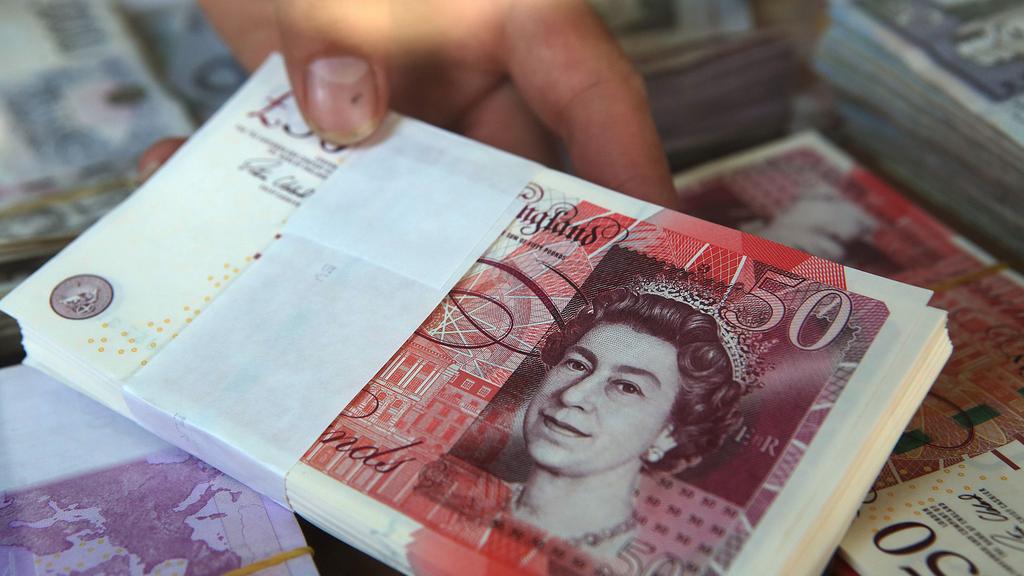
Zimbabwe made its interim currency the country’s sole legal tender on Monday, ending a decade of dollarisation and taking a another step towards relaunching the Zimbabwean dollar.

People walk past the Reserve Bank of Zimbabwe building in Harare, Zimbabwe, February 25, 2019. REUTERS/Philimon Bulawayo/File Photo

AlsoRead

How I Lost N200 Billion”: Femi Otedola Reflects on His Biggest Financial Setback

EFCC Arraigns Precious Williams for Alleged N13.8 Billion Ponzi Scheme Fraud

Kenya to Relocate Health Data from U.S. Servers After Trump’s USAID Funding Cuts

The central bank also hiked its overnight lending rate to 50% from 15% as a part of a set of measures to protect the RTGS dollar introduced in February.

“The march towards full currency reform is part of our transitional stabilisation programme,” Finance Minister Mthuli Ncube said in a video posted on Twitter.

“This move is really beginning to restore full monetary policy.”

Zimbabwean President Emmerson Mnangagwa, who replaced longtime leader Robert Mugabe after an army coup in November 2017, is trying to repair an economy ruined by hyperinflation and a long succession of failed economic interventions.

But a hoped-for economic turnaround is yet to materialise, and many Zimbabweans are distrustful of Mnangagwa’s promises.

Mnangagwa’s government last month agreed a staff-monitored programme with the International Monetary Fund (IMF) whereby the fund will help Zimbabwe implement coherent economic policies.

Analysts are sceptical that the latest currency reforms will be a quick fix for the deep problems that have constrained economic growth in the southern African country.

“Zimbabwe will have to show results before people are convinced,” said Jee-A Van Der Linde, an economist at South Africa-based NKC African Economics.

Van Der Linde said banning the use of currencies such as the U.S. dollar and South African rand could create panic since Zimbabwe did not have large foreign-currency reserves to back the RTGS dollar.

There was nothing standing in the way of the Zimbabwean central bank printing money as it had done in the past, he added.

INFLATION

The central bank said in a statement on Monday that it had put in place letters of credit worth $330 million to secure imports for important goods such as fuel.

It would also try to boost liquidity on the interbank forex market by removing a cap on margins for banks and making sure that more than 50% of the foreign currency that Zimbabwean companies have to surrender ends up on the interbank market.

Zimbabwe abandoned its own dollar in 2009 after years of hyperinflation had destroyed trust in the local unit.

Mnangagwa said this month that Zimbabwe must reintroduce its own currency by the end of the year.

The IMF has said Zimbabwe should quickly allow the RTGS dollar to float freely, allow exporters to sell dollars at the interbank rate rather than surrender them to the central bank, and raise interest rates to curb inflation.

The RTGS dollar has been hitting new lows on the black market in recent days.

It was trading between 11 and 12 against the U.S. dollar on the unofficial market on Monday versus a level of around 6 on the official interbank market.

Many Zimbabweans complain that goods and services are still priced in other currencies.

While more than 80% of Zimbabweans earn RTGS dollars, goods ranging from bricks to groceries have their prices pegged in U.S. dollars.

Inflation raced to 97.85% in May, eroding salaries and savings and causing Zimbabweans to fear a return to the hyperinflation era a decade ago.

Tags: Reuters
Previous Post

Arnergy raises $9m for renewable energy

Next Post

Forte Oil Shares Rise as Adeosun is Appointed Chief Operating Officer

Related News

Otedola acquires 5.52% of Transcorp Plc.

How I Lost N200 Billion”: Femi Otedola Reflects on His Biggest Financial Setback

by Rate Captain
August 22, 2025
0

In a rare moment of vulnerability, billionaire businessman Femi Otedola has shared the story of how he lost nearly N200...

EFCC Launches Task Force to Combat Naira Mutilation and Dollarization

EFCC Arraigns Precious Williams for Alleged N13.8 Billion Ponzi Scheme Fraud

by Victoria Attah
June 17, 2025
0

The Economic and Financial Crimes Commission (EFCC) has charged Precious Williams, a director of Glossolalia Nigeria Ltd and Pelegend Nigeria...

Kenya to Relocate Health Data from U.S. Servers After Trump’s USAID Funding Cuts

by Victoria Attah
June 4, 2025
0

Kenya’s Ministry of Health announced plans to relocate critical health data hosted in the United States to local servers, following...

Leading Banks Struggle with Capital Deficits: Zenith Bank and Others Strive to Meet CBN Standards

Nigeria’s Equities Market Reels as Foreign Investment Plummets Amid Global Tensions

by Rate Captain
May 26, 2025
0

In April 2025, Nigeria’s equities market faced a stark reality check as foreign portfolio investment (FPI) cratered by 92.39%, plunging...

Next Post

Forte Oil Shares Rise as Adeosun is Appointed Chief Operating Officer

Leave a Reply Cancel reply

Your email address will not be published. Required fields are marked *

Recommended

$26 Billion for unidentified source passed through Binance-Cardoso

CBN Auctions N1.15 Trillion in Treasury Bills as Investors Eye Higher Yields

January 22, 2026
CBN Allows Oil Companies to Resume Dollar Sales to Banks in Effort to Boost Supply.

Five MPC Members Pushed for 50bps Rate Cut in November 2025, CBN Minutes Reveal

January 22, 2026

Popular Story

  • Grab opportunities in Africa, AfDB urges investors

    0 shares
    Share 0 Tweet 0
  • Debt Servicing and Salaries Dominate Nigeria’s 2025 Budget with N24.8 Trillion Allocation

    0 shares
    Share 0 Tweet 0
  • CBN Survey Shows Improved Credit Access in Q4 2025 Amid Rising Loan Defaults

    0 shares
    Share 0 Tweet 0
  • CBN Confirms 20 Banks Meet New Recapitalisation Requirements as March Deadline Looms

    0 shares
    Share 0 Tweet 0
  • New AI Undressing Tool Raises Concerns About Privacy and Regulation.

    0 shares
    Share 0 Tweet 0
RateCaptain

RateCaptain

We bring you the most accurate in new and market data. Check our landing page for details.

  • Home
  • About Us
  • Privacy Policy
  • Terms & Conditions
  • Disclaimer
  • Cookie Policy
  • Contact Us

Copyright © 2022 RateCaptain - All rights reserved by RateCaptain.

No Result
View All Result
  • Home
    • About Us
    • Contact Us
  • FX Rates
  • Money Market
  • Cryptocurrency
  • Commodities
  • Corporates

Copyright © 2022 RateCaptain - All rights reserved by RateCaptain.

RateCaptain
Manage Cookie Consent
To provide the best experiences, we use technologies like cookies to store and/or access device information. Consenting to these technologies will allow us to process data such as browsing behavior or unique IDs on this site. Not consenting or withdrawing consent, may adversely affect certain features and functions.
Functional Always active
The technical storage or access is strictly necessary for the legitimate purpose of enabling the use of a specific service explicitly requested by the subscriber or user, or for the sole purpose of carrying out the transmission of a communication over an electronic communications network.
Preferences
The technical storage or access is necessary for the legitimate purpose of storing preferences that are not requested by the subscriber or user.
Statistics
The technical storage or access that is used exclusively for statistical purposes. The technical storage or access that is used exclusively for anonymous statistical purposes. Without a subpoena, voluntary compliance on the part of your Internet Service Provider, or additional records from a third party, information stored or retrieved for this purpose alone cannot usually be used to identify you.
Marketing
The technical storage or access is required to create user profiles to send advertising, or to track the user on a website or across several websites for similar marketing purposes.
  • Manage options
  • Manage services
  • Manage {vendor_count} vendors
  • Read more about these purposes
View preferences
  • {title}
  • {title}
  • {title}
?>