RateCaptain
  • Home
    • About Us
    • Contact Us
  • FX Rates
  • Money Market
  • Cryptocurrency
  • Commodities
  • Corporates
No Result
View All Result
Subscribe
  • Home
    • About Us
    • Contact Us
  • FX Rates
  • Money Market
  • Cryptocurrency
  • Commodities
  • Corporates
No Result
View All Result
RateCaptain
No Result
View All Result
Home Economy

Capital Market’s GDP Contribution Surges to 33% as Market Cap Hits N123.93 Trillion

Jide Omodele by Jide Omodele
February 24, 2026
in Economy
Reading Time: 2 mins read
A A
0
Multinationals Exit Nigeria, Posing Threat to $1 Trillion Economy Goal
Share on FacebookShare on TwitterShare on WhatsappShare on Telegram

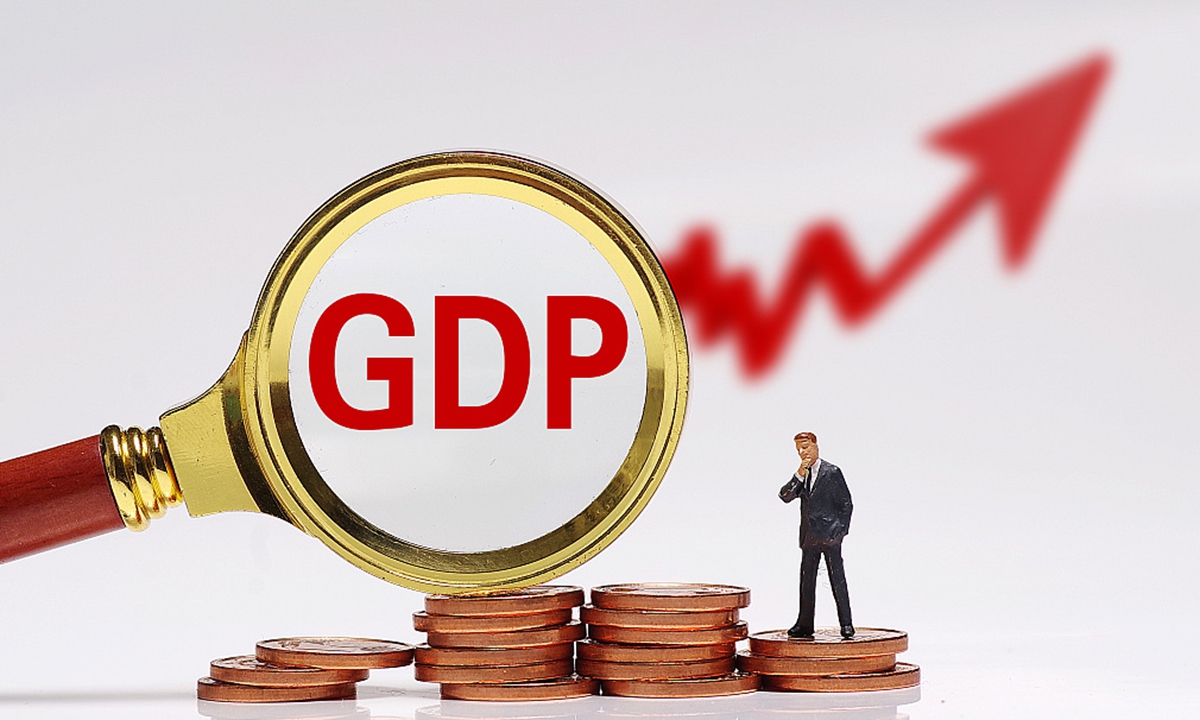
The Nigerian capital market has dramatically expanded its economic footprint, with its contribution to the country’s Gross Domestic Product rising from 13% in April 2024 to approximately 33% as of February 2026, according to Dr Emomotimi Agama, Director-General of the Securities and Exchange Commission (SEC).

In a statement released on February 23, 2026, Agama highlighted that total market capitalisation has more than doubled—from around N55 trillion in April 2024 to over N123.93 trillion by mid-February 2026—representing a remarkable 125% appreciation in less than two years.

AlsoRead

CBN Unveils Revised Foreign Exchange Manual, Set to Take Effect June 1

Nigeria’s Inflation Edges Higher to 15.69% in April 2026

Dangote Rejects NNPC Bid to Increase Stake in Refinery, Eyes Public Listing

Agama made the disclosure during his inaugural address to the newly formed Capital Market Working Group on Market Liquidity at the SEC’s Lagos office. He described the figures as a testament to growing investor confidence and the market’s resilience under the current administration, while cautioning that size alone is insufficient without corresponding improvements in depth and liquidity.

“These are impressive numbers, but they only tell part of the story,” Agama said. “A capital market must be more than large—it must be liquid to accurately reflect economic health and fulfil its core role in capital formation.”

He identified persistent structural challenges hindering greater efficiency, including elevated transaction impact costs for institutional investors and heavy concentration of trading activity in a small number of large-cap stocks. This concentration, he noted, leaves much of the market relatively shallow, potentially deterring investors concerned about exit liquidity and price impact.

To tackle these issues head-on, the SEC has established a multi-stakeholder working group comprising representatives from exchanges, custodians, fund managers, dealing members, and other key operators. The committee’s primary mandate includes:

– Conducting a thorough review of trading and settlement infrastructure
– Identifying technical and structural barriers to faster, more efficient transactions
– Proposing measures to make Nigeria’s settlement cycle more competitive regionally
– Recommending strategies to broaden retail investor participation, targeting up to 20 million new investors through digital onboarding, dematerialisation of certificates, and fintech collaborations
– Accelerating product innovation, particularly in derivatives and other hedging instruments to deepen market activity

Agama also pointed to the recently enacted Investments and Securities Act 2025, which expands SEC oversight to digital assets. He expressed optimism that this framework could channel speculative interest into regulated, productive channels.

Emphasising the capital market’s broader developmental role, Agama stated: “This is not gambling—it is the engine of national development. It finances infrastructure, powers industries, and creates jobs.”

The SEC chief urged the working group to deliver bold, actionable recommendations that align with the Federal Government’s ambition to build a trillion-dollar economy. While celebrating recent gains, he stressed that the next phase of reform must focus on transforming the market into one that is not only substantial but also deep, inclusive, and globally competitive.

Responding on behalf of the committee, NGX Group Chief Executive Officer Temi Popoola thanked the SEC for the mandate and assured that the group would approach its task with candour—diagnosing constraints, aligning on practical reforms, and delivering measurable outcomes to enhance liquidity, restore confidence, and strengthen overall market resilience.

The surge in market capitalisation and GDP contribution underscores the capital market’s growing importance in Nigeria’s economic landscape. Sustained reforms to improve liquidity and broaden participation are now seen as critical to translating headline growth into long-term, inclusive development.
Tags: FGGDP
Previous Post

Debt Rises as 11 States and FCT Drive N373 Billion Increase in Nine Months

Next Post

FG’s Domestic Debt Surges to N77.81 Trillion as Bond Issuances Drive N7.4 Trillion Increase

Related News

CBN Allows Oil Companies to Resume Dollar Sales to Banks in Effort to Boost Supply.

CBN Unveils Revised Foreign Exchange Manual, Set to Take Effect June 1

by Jide Omodele
May 18, 2026
0

The Central Bank of Nigeria (CBN) has officially launched the fourth edition of its Foreign Exchange Manual, introducing updated guidelines...

Navigating Inflation Crossroads: Nigeria’s Economic Odyssey Amidst Global Trends

Nigeria’s Inflation Edges Higher to 15.69% in April 2026

by Jide Omodele
May 18, 2026
0

Nigeria’s headline inflation rate rose for the second consecutive month, climbing to 15.69% in April 2026 from 15.38% recorded in...

Dangote Cement Successfully Completes First Tranche of Share Buyback Program.

Dangote Rejects NNPC Bid to Increase Stake in Refinery, Eyes Public Listing

by Victoria Attah
May 14, 2026
0

Aliko Dangote, President of the Dangote Group, has turned down a request by the Nigerian National Petroleum Company Limited (NNPC)...

Nigeria’s Stock Market Records N1.81 Trillion Gain in July.

Equities Market Hits Fresh All-Time High as Bulls Maintain Dominance

by Jide Omodele
May 14, 2026
0

The Nigerian equities market continued its impressive run on Wednesday, setting a new record high as strong buying interest in...

Next Post
FG 2053 Bond Records $364 million Subscription as Investors Seek Record Yields

FG's Domestic Debt Surges to N77.81 Trillion as Bond Issuances Drive N7.4 Trillion Increase

Leave a Reply Cancel reply

Your email address will not be published. Required fields are marked *

Recommended

DMO offers two FGN savings bonds at N1000 per unit.

Highest Yields of 2026 Delivered in Q1 as 364-Day T-Bill Hits 18.47%

May 18, 2026
Liquidity Crunch: Banking Sector’s Borrowing from CBN Surges to N12 Trillion.

CBN’s 50% CRR Policy Costs Nigerian Banks N2.5 Trillion in Annual Earnings – Report

May 18, 2026

Popular Story

  • Nigeria’s Debt to China Surges by $800 Million in One Year

    31 Nigerian States Grapple with N2.57 Trillion Domestic Debt Amid No Foreign Inflows

    0 shares
    Share 0 Tweet 0
  • Dangote Rejects NNPC Bid to Increase Stake in Refinery, Eyes Public Listing

    0 shares
    Share 0 Tweet 0
  • CBN Unveils Revised Foreign Exchange Manual, Set to Take Effect June 1

    0 shares
    Share 0 Tweet 0
  • Sam Bankman Found Guilty on Multiple Counts with Possible 115-Year Prison Sentence

    0 shares
    Share 0 Tweet 0
  • Nigeria’s Inflation Edges Higher to 15.69% in April 2026

    0 shares
    Share 0 Tweet 0

RateCaptain

We bring you the most accurate in new and market data. Check our landing page for details.

  • Home
  • About Us
  • Privacy Policy
  • Terms & Conditions
  • Disclaimer
  • Cookie Policy
  • Contact Us

Copyright © 2022 RateCaptain - All rights reserved by RateCaptain.

No Result
View All Result
  • Home
    • About Us
    • Contact Us
  • FX Rates
  • Money Market
  • Cryptocurrency
  • Commodities
  • Corporates

Copyright © 2022 RateCaptain - All rights reserved by RateCaptain.

RateCaptain
Manage Cookie Consent
To provide the best experiences, we use technologies like cookies to store and/or access device information. Consenting to these technologies will allow us to process data such as browsing behavior or unique IDs on this site. Not consenting or withdrawing consent, may adversely affect certain features and functions.
Functional Always active
The technical storage or access is strictly necessary for the legitimate purpose of enabling the use of a specific service explicitly requested by the subscriber or user, or for the sole purpose of carrying out the transmission of a communication over an electronic communications network.
Preferences
The technical storage or access is necessary for the legitimate purpose of storing preferences that are not requested by the subscriber or user.
Statistics
The technical storage or access that is used exclusively for statistical purposes. The technical storage or access that is used exclusively for anonymous statistical purposes. Without a subpoena, voluntary compliance on the part of your Internet Service Provider, or additional records from a third party, information stored or retrieved for this purpose alone cannot usually be used to identify you.
Marketing
The technical storage or access is required to create user profiles to send advertising, or to track the user on a website or across several websites for similar marketing purposes.
  • Manage options
  • Manage services
  • Manage {vendor_count} vendors
  • Read more about these purposes
View preferences
  • {title}
  • {title}
  • {title}
?>