RateCaptain
  • Home
    • About Us
    • Contact Us
  • FX Rates
  • Money Market
  • Cryptocurrency
  • Commodities
  • Corporates
No Result
View All Result
Subscribe
  • Home
    • About Us
    • Contact Us
  • FX Rates
  • Money Market
  • Cryptocurrency
  • Commodities
  • Corporates
No Result
View All Result
RateCaptain
No Result
View All Result
Home Banking

CBN Mandates Approval from Central Bank for Acquiring 5% Stake in Nigerian Banks

Rate Captain by Rate Captain
July 14, 2023
in Banking, Economy
Reading Time: 2 mins read
A A
0
Key Takeaway from the CBN’s Newly Introduced Customer due Diligence Rules.
Share on FacebookShare on TwitterShare on WhatsappShare on Telegram

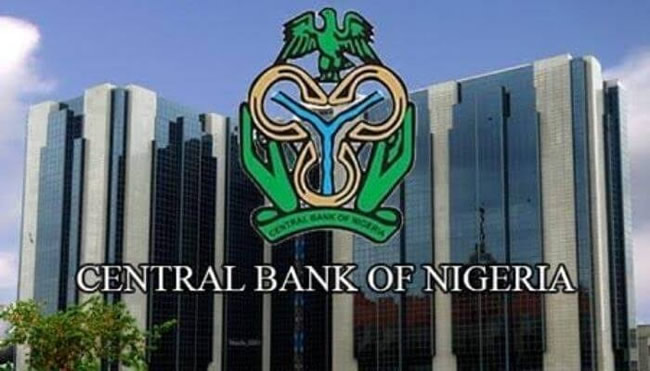
In a bid to enhance corporate governance and safeguard the interests of shareholders in Nigerian banks, the Central Bank of Nigeria (CBN) has implemented a new regulation. The regulation stipulates that any investor seeking to acquire up to 5% of a bank in Nigeria must obtain prior approval and a “no objection” from the central bank.

This new directive is outlined in section 20.2 of the recently released Corporate Governance Guidelines for Commercial, Merchant, Non-Interest, and Payment Service Banks in Nigeria. It aims to address recent events in the capital market that have impacted some commercial banks.

AlsoRead

NGX Market Capitalisation Drops N1.35 Trillion as Profit-Taking Triggers 0.86% Decline

Nigeria’s Passport Rises to 89th on Henley Index but Visa-Free Access Falls to 44 Destinations

Subnational External Debt Surges as 32 States, FCT Borrow Nearly $1 Billion in 2025

According to the regulation, individuals or entities intending to acquire shares in a bank, including through the capital market, must seek and obtain the CBN’s approval and no objection if such acquisition would result in an equity holding of 5% or more. Additionally, the regulation prohibits any individual, group, proxy, or corporate entity from owning a controlling interest in more than one bank, except with prior approval from the CBN.

Furthermore, the regulation requires that in cases where the central bank objects to any acquisition, the bank must be notified. The bank, in turn, has 48 hours to notify the investor(s) concerned. This ensures transparent communication and accountability in the acquisition process.

The protection of shareholders’ rights provision also extends to government ownership of banks. The regulation stipulates that the government’s direct and indirect equity holding in a bank should not exceed 10% (direct and indirect) for a maximum of five years. Furthermore, the government is required to divest its holdings to private investors within this five-year period. For existing investments that have surpassed the five-year mark, the CBN has granted a two-year grace period from the effective date of the Guidelines for compliance.

The regulation also addresses Financial Holding Companies (FHC) and activities related to mergers and acquisitions. It mandates that no director, shareholder, or agent of an FHC can change control of a bank without prior approval from the bank. Additionally, the transfer of 5% or more of a bank’s shares to any shareholder is not permitted without prior approval from the CBN.

The implementation of this new regulation by the CBN underscores its commitment to fostering a robust banking sector in Nigeria, promoting transparency, and protecting the interests of shareholders. By requiring prior approval and a “no objection” for the acquisition of 5% stakes in Nigerian banks, the central bank aims to ensure a sound and stable financial system in the country.


Tags: acquisition approvalbanking sectorCapital MarketCBNCentral Bank of NigeriaCorporate Governancedivestmentequity holdingsFinancial Holding Companiesfinancial regulationsgovernment ownershipinvestor guidelinesmergers and acquisitionsNigerian banksshareholder rightsstake acquisitiontransparency
Previous Post

President Tinubu Vows to Recover Nigeria from Vested Interests.

Next Post

CBN Revises Cash Reserve Ratio for Merchant Banks, Slashing it to 10%

Related News

Nigeria’s Stock Market Records N1.81 Trillion Gain in July.

NGX Market Capitalisation Drops N1.35 Trillion as Profit-Taking Triggers 0.86% Decline

by Jide Omodele
May 6, 2026
0

The Nigerian Exchange (NGX) came under significant selling pressure on Tuesday, May 6, 2026, as investors booked profits on major...

Nigerian Students Spend $340.84 Million on Foreign University Applications in the H1 of 2023

Nigeria’s Passport Rises to 89th on Henley Index but Visa-Free Access Falls to 44 Destinations

by Victoria Attah
May 6, 2026
0

Nigeria’s passport has recorded a modest improvement in global ranking, climbing to 89th position in the latest Henley Passport Index...

FG Allocates N5.1 Billion for Presidential Yacht and N5.5 Billion For Student Loans

Subnational External Debt Surges as 32 States, FCT Borrow Nearly $1 Billion in 2025

by Victoria Attah
May 4, 2026
0

Nigerian states and the Federal Capital Territory (FCT) significantly ramped up their foreign borrowing in 2025, with 32 states and...

Nigeria Plans New FX Rules, Targeting 750 Naira Exchange Rate

Naira Posts First April Appreciation as it hits ₦1,374/$ Since NAFEX Era

by Jide Omodele
May 4, 2026
0

The Nigerian naira recorded a month-on-month gain in April 2026, marking its first positive April performance since the introduction of...

Next Post
CBN Revises Cash Reserve Ratio for Merchant Banks, Slashing it to 10%

CBN Revises Cash Reserve Ratio for Merchant Banks, Slashing it to 10%

Leave a Reply Cancel reply

Your email address will not be published. Required fields are marked *

Recommended

Nigeria’s Stock Market Records N1.81 Trillion Gain in July.

NGX Market Capitalisation Drops N1.35 Trillion as Profit-Taking Triggers 0.86% Decline

May 6, 2026
Nigeria Plans New FX Rules, Targeting 750 Naira Exchange Rate

Naira Weakens as CBN Slashes FX Intervention by 83% in April

May 6, 2026

Popular Story

  • Nigeria’s Stock Market Records N1.81 Trillion Gain in July.

    NGX Market Capitalisation Drops N1.35 Trillion as Profit-Taking Triggers 0.86% Decline

    0 shares
    Share 0 Tweet 0
  • Nigeria’s Average Petrol Price Rises to N1,288.54 in March 2026, Anambra Pays Highest

    0 shares
    Share 0 Tweet 0
  • Nigeria’s External Reserves Drop by $731 Million in Early April

    0 shares
    Share 0 Tweet 0
  • Nigeria’s Passport Rises to 89th on Henley Index but Visa-Free Access Falls to 44 Destinations

    0 shares
    Share 0 Tweet 0
  • Nigeria Inflation Drops to 15.15% in December 2025

    0 shares
    Share 0 Tweet 0

RateCaptain

We bring you the most accurate in new and market data. Check our landing page for details.

  • Home
  • About Us
  • Privacy Policy
  • Terms & Conditions
  • Disclaimer
  • Cookie Policy
  • Contact Us

Copyright © 2022 RateCaptain - All rights reserved by RateCaptain.

No Result
View All Result
  • Home
    • About Us
    • Contact Us
  • FX Rates
  • Money Market
  • Cryptocurrency
  • Commodities
  • Corporates

Copyright © 2022 RateCaptain - All rights reserved by RateCaptain.

RateCaptain
Manage Cookie Consent
To provide the best experiences, we use technologies like cookies to store and/or access device information. Consenting to these technologies will allow us to process data such as browsing behavior or unique IDs on this site. Not consenting or withdrawing consent, may adversely affect certain features and functions.
Functional Always active
The technical storage or access is strictly necessary for the legitimate purpose of enabling the use of a specific service explicitly requested by the subscriber or user, or for the sole purpose of carrying out the transmission of a communication over an electronic communications network.
Preferences
The technical storage or access is necessary for the legitimate purpose of storing preferences that are not requested by the subscriber or user.
Statistics
The technical storage or access that is used exclusively for statistical purposes. The technical storage or access that is used exclusively for anonymous statistical purposes. Without a subpoena, voluntary compliance on the part of your Internet Service Provider, or additional records from a third party, information stored or retrieved for this purpose alone cannot usually be used to identify you.
Marketing
The technical storage or access is required to create user profiles to send advertising, or to track the user on a website or across several websites for similar marketing purposes.
  • Manage options
  • Manage services
  • Manage {vendor_count} vendors
  • Read more about these purposes
View preferences
  • {title}
  • {title}
  • {title}
?>