RateCaptain
  • Home
    • About Us
    • Contact Us
  • FX Rates
  • Money Market
  • Cryptocurrency
  • Commodities
  • Corporates
No Result
View All Result
Subscribe
  • Home
    • About Us
    • Contact Us
  • FX Rates
  • Money Market
  • Cryptocurrency
  • Commodities
  • Corporates
No Result
View All Result
RateCaptain
No Result
View All Result
Home Banking

Currency Circulation Outside Nigerian Banks Hits Record N3.71 Trillion in May 2024

Victoria Attah by Victoria Attah
July 9, 2024
in Banking, Currencies, Economy
Reading Time: 2 mins read
A A
0
Naira crashes to N742/$ in the parallel market
Share on FacebookShare on TwitterShare on WhatsappShare on Telegram

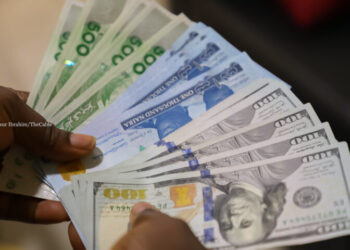
The amount of currency circulating outside the Nigerian banking system surged to a new peak of N3.71 trillion in May 2024, according to data from the Central Bank of Nigeria (CBN). This figure marks a significant increase and reflects both a decline in confidence in the banking system and a growing preference for cash transactions.

 Monthly and Yearly Growth

AlsoRead

FG Boosts NALDA Funding to N25 Billion in 2026 Budget, Tripling 2025 Allocation

FG Allocates Just 0.35% of 2026 Budget to Poverty Alleviation Programmes

Naira Slips to N1,490/$ in Parallel Market as Official-Parallel Gap Widens to 11-Month High

In May, the currency outside banks rose by N104.89 billion compared to the previous month, indicating a 3% month-on-month increase. This trend has been consistent over the past few months, with the amount rising from N3.28 trillion in January 2024 to N3.63 trillion in March, before a slight dip to N3.61 trillion in April. On a year-over-year basis, the currency outside banks increased by N1.53 trillion, representing a 70% rise from N2.18 trillion in May 2023.

 Cash Hoarding Behavior

A significant 93.56% of the total currency in circulation was held outside the banking sector in May 2024, up from 86.16% in the same month last year. This high percentage underscores a strong preference among Nigerians to keep cash outside the banks, a behavior that can be traced back to the severe cash scarcity experienced in 2023.

The cash shortages were largely due to the CBN’s problematic implementation of a naira redesign policy aimed at promoting a cashless economy and curbing financial crimes. The difficulties in accessing cash led to widespread economic disruption and diminished trust in the banking system, prompting many Nigerians to start hoarding cash.

Implications for the Economy

The persistent increase in currency outside banks has several implications for the Nigerian economy. It suggests a growing reliance on cash transactions over electronic payments, possibly driven by concerns about the reliability of banking services or a preference for tangible assets amid economic uncertainty.

This trend could also influence inflation rates and the effectiveness of monetary policy. A higher amount of cash in circulation outside the banking system can undermine the central bank’s control over the money supply.

Earlier reports from Nairametrics indicated that Nigeria’s money supply (M3) almost reached N100 trillion in May 2024, hitting a new peak of N99.24 trillion. This represented a 2% month-on-month increase from N96.97 trillion in April and a 78% year-on-year growth from N55.69 trillion in May 2023. The rise in net domestic assets was identified as a primary driver for the surge in M3.

Economic Activity and Inflation

While the increase in money supply and currency in circulation can stimulate consumer spending and economic activity, it also has the potential to drive up inflation. With Nigeria already grappling with high inflation rates—currently at 33.95%—further increases in the money supply without corresponding production growth could exacerbate inflationary pressures. This would erode purchasing power and significantly impact the cost of living, especially for lower-income households.

In summary, while the rise in currency outside banks indicates robust cash usage in the Nigerian economy, it also poses challenges for monetary policy and inflation control, necessitating vigilant economic management by the CBN and other financial authorities.
Tags: cash hoardingCBN policiesCurrency CirculationEconomic TrendsFinancial Analysisinflation impactNigerian banks
Previous Post

Nigerian Equity Market Starts the Week with N8bn Loss

Next Post

FG Initiates Measures to Reduce Food Prices, Removes Taxes on Food Imports

Related News

FG Records N13.33bn Revenue Shortfall from Gas Flaring Penalties

FG Boosts NALDA Funding to N25 Billion in 2026 Budget, Tripling 2025 Allocation

by Stephen Akudike
January 19, 2026
0

The National Agricultural Land Development Authority (NALDA) has received a major funding increase in the proposed 2026 federal budget, with...

2024 Budget Outline: Oil Price Set at $77.96, Naira Stands at 750 Against the Dollar

FG Allocates Just 0.35% of 2026 Budget to Poverty Alleviation Programmes

by Victoria Attah
January 19, 2026
0

The Federal Government has earmarked only N206.50 billion for poverty reduction initiatives in its proposed N58.47 trillion 2026 budget a...

Nigeria Plans New FX Rules, Targeting 750 Naira Exchange Rate

Naira Slips to N1,490/$ in Parallel Market as Official-Parallel Gap Widens to 11-Month High

by Stephen Akudike
January 19, 2026
0

The naira came under renewed pressure in the informal foreign exchange market over the past week, depreciating to N1,490 per...

GDP in Euro Area Declines by 0.1%, While EU Records a Modest 0.1% Increase

EU Delists Nigeria from High-Risk Jurisdictions for Money Laundering and Terrorism Financing

by Jide Omodele
January 16, 2026
0

In a major diplomatic and economic win for Nigeria, the European Union has officially removed the country from its list...

Next Post
What is Fueling the Surge in Food Prices in Africa?

FG Initiates Measures to Reduce Food Prices, Removes Taxes on Food Imports

Leave a Reply Cancel reply

Your email address will not be published. Required fields are marked *

Recommended

FG Records N13.33bn Revenue Shortfall from Gas Flaring Penalties

FG Boosts NALDA Funding to N25 Billion in 2026 Budget, Tripling 2025 Allocation

January 19, 2026
2024 Budget Outline: Oil Price Set at $77.96, Naira Stands at 750 Against the Dollar

FG Allocates Just 0.35% of 2026 Budget to Poverty Alleviation Programmes

January 19, 2026

Popular Story

  • Nigerian Equity Market Sees Impressive N1.08tn Wealth Gain Amidst Bullish Trading.

    NGX Caps Strong Week with 2.36% Rally, Market Cap Crosses N106 Trillion

    0 shares
    Share 0 Tweet 0
  • FG Boosts NALDA Funding to N25 Billion in 2026 Budget, Tripling 2025 Allocation

    0 shares
    Share 0 Tweet 0
  • Naira Slips to N1,490/$ in Parallel Market as Official-Parallel Gap Widens to 11-Month High

    0 shares
    Share 0 Tweet 0
  • FG Allocates Just 0.35% of 2026 Budget to Poverty Alleviation Programmes

    0 shares
    Share 0 Tweet 0
  • 31 Nigerian States Grapple with N2.57 Trillion Domestic Debt Amid No Foreign Inflows

    0 shares
    Share 0 Tweet 0
RateCaptain

RateCaptain

We bring you the most accurate in new and market data. Check our landing page for details.

  • Home
  • About Us
  • Privacy Policy
  • Terms & Conditions
  • Disclaimer
  • Cookie Policy
  • Contact Us

Copyright © 2022 RateCaptain - All rights reserved by RateCaptain.

No Result
View All Result
  • Home
    • About Us
    • Contact Us
  • FX Rates
  • Money Market
  • Cryptocurrency
  • Commodities
  • Corporates

Copyright © 2022 RateCaptain - All rights reserved by RateCaptain.

RateCaptain
Manage Cookie Consent
To provide the best experiences, we use technologies like cookies to store and/or access device information. Consenting to these technologies will allow us to process data such as browsing behavior or unique IDs on this site. Not consenting or withdrawing consent, may adversely affect certain features and functions.
Functional Always active
The technical storage or access is strictly necessary for the legitimate purpose of enabling the use of a specific service explicitly requested by the subscriber or user, or for the sole purpose of carrying out the transmission of a communication over an electronic communications network.
Preferences
The technical storage or access is necessary for the legitimate purpose of storing preferences that are not requested by the subscriber or user.
Statistics
The technical storage or access that is used exclusively for statistical purposes. The technical storage or access that is used exclusively for anonymous statistical purposes. Without a subpoena, voluntary compliance on the part of your Internet Service Provider, or additional records from a third party, information stored or retrieved for this purpose alone cannot usually be used to identify you.
Marketing
The technical storage or access is required to create user profiles to send advertising, or to track the user on a website or across several websites for similar marketing purposes.
  • Manage options
  • Manage services
  • Manage {vendor_count} vendors
  • Read more about these purposes
View preferences
  • {title}
  • {title}
  • {title}
?>