RateCaptain
  • Home
    • About Us
    • Contact Us
  • FX Rates
  • Money Market
  • Cryptocurrency
  • Commodities
  • Corporates
No Result
View All Result
Subscribe
  • Home
    • About Us
    • Contact Us
  • FX Rates
  • Money Market
  • Cryptocurrency
  • Commodities
  • Corporates
No Result
View All Result
RateCaptain
No Result
View All Result
Home

Fiscal Losses From Nigeria’s FX Policies Are Unsustainable

Rate Captain by Rate Captain
April 28, 2021
in Opinion
Reading Time: 3 mins read
A A
0
Share on FacebookShare on TwitterShare on WhatsappShare on Telegram

AlsoRead

Importance of Effective KYC Processes and Challenges in ID Verification for African Businesses

Has Inflation Rate Become Mere Numbers?

Nigeria’s Real GDP Growth in 2021 Creates Optimism for 2022

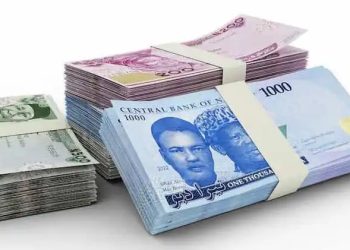
The sustained use of the Central Bank of Nigeria’s (CBN) official exchange rate, which is weaker than market rates, for government transactions hurts fiscal finances. This practice reduces potential revenues from FX denominated sources such as oil & gas revenues, customs revenues, and others.

Between 2017 and 2020, the official rate was pegged at N305/$ while the exchange rate at the Investors and Exporters’ (I&E) FX window (popularly known as the NAFEX rate) traded at N363/$, suggesting an 18.0% premium. This means that the Naira equivalent of government’s dollar revenues was 18.0% weaker than it should have been in those years. No lesson has been learned since then. Currently, the official rate is N379/$, which is 7.6% and 21.9% weaker than the NAFEX and parallel market rates respectively.

This is a very costly practice when you consider that governments in Nigeria (FG and States) cannot afford this FX subsidy due to weak revenues and growing debt. This subsidy affects a significant share of the government’s revenues as oil & gas revenues – denominated in dollars – averaged 56.3% of total revenues between 2015 and 2019. Taking this analysis further, I estimate that oil revenue should have been 23.7% higher on average every year based purely on the exchange rate difference between official and parallel markets. This implies a revenue loss of around N4.1trillion between 2015 and 2019 for governments (FG, States and LGs).

Considering that the two fiscal crises – where revenue has fallen significantly short of projections – of the past five years (2014-2016 and 2020) were driven by a decline in oil & gas exports, policymakers have failed to use a weaker exchange rate to the country’s benefit. This is even much worse considering that there are also non-oil sources of revenue that are dollar denominated.

There are many reasons why this system has persisted despite the negative implications. First, there is an obsession with a strong exchange rate in Nigeria. Policymakers, both fiscal and monetary, have managed to convince themselves that a strong exchange rate is good for the economy, even if most of the economy do not do business at that rate. That is why both the official and NAFEX rates trade at 21.9% and 15.5% discount to the parallel market rate today. Second, there is also the habit of keeping a strong exchange rate to subsidise the cost of certain imported products, such as petrol. This was the case when the exchange rates at the NAFEX and parallel market were uniform, but the official rate was fixed at a heavy discount to both. Third, Nigerian states have failed to come against this system even though they are most affected by weak revenues.

In the two years following the oil price crash of 2014, for instance, over 30 states in Nigeria owed salary arrears for many months. Meanwhile, the removal of the FX subsidy between 2015 and 2019 would have helped to generate around N2.0trillion (States & LGs) more in revenues.

This FX subsidy was not changed in 2020 even as COVID-19 accelerated reforms such as the removal of subsidy on petrol and higher electricity prices. This was also a year in which the FG had to borrow N6.1trilion to fund its expenditure. However, there appears to be a rethink in 2021. The media recently reported that Nigeria’s Finance Minister, Mrs. Zainab Ahmed, indicated that the NAFEX rate is now being used for transactions. This communication is still unclear as the agencies and revenue lines affected are unknown. The CBN was also quick to mention that the official rate remained in place. As the official rate is mainly for government transactions, one would wonder why it would remain in place despite the Finance Minister’s comments that it is not in use anymore.

Regardless of what is intended, it is clear that Nigeria’s fiscal pressures will continue to mount in 2021 due to weak oil production and rising expenditure. To avoid this unsustainable run of massive borrowing, which has created a situation where 82.9% of FG’s revenue was used to service its debt in 2020 alone, adopting a market-based FX rate will be helpful. This would mean that fiscal authorities at the FG and State level would put pressure on the CBN to return sanity to the FX markets.

Similarly, another useful policy to improve the FX markets is to ensure that oil & gas revenues are shared in dollars to the respective tiers of government. This will ensure that governments can sell their FX where they can receive the most value, thereby regaining control from the CBN. Professor Charles Chukwuma Soludo, a former CBN Governor, advocated for this system in 2007, it is better late than never to implement it.


Written by Akin Oladimeji

Previous Post

FG bans importation of refined sugar, its derivatives from Free Trade Zones

Next Post

Nigeria Air Force Investment Limited launches 2000 hectare farm in Benue

Related News

Importance of Effective KYC Processes and Challenges in ID Verification for African Businesses

Importance of Effective KYC Processes and Challenges in ID Verification for African Businesses

by Rate Captain
June 2, 2023
0

The global financial landscape's increased scrutiny and penalties for anti-money laundering (AML) failures highlight the importance of robust customer verification...

Has Inflation Rate Become Mere Numbers?

by Rate Captain
January 18, 2022
0

Inflation rate in Nigeria has been on an isogenous month on month decline since March 2021. However, according to the...

Nigeria’s Real GDP Growth in 2021 Creates Optimism for 2022

by Rate Captain
January 10, 2022
0

Over the years, Nigeria’s Gross Domestic Product (GDP) in real terms has been on an erratic trend growing and declining...

How Important is Money Supply as a Predictive Variable In Nigeria’s Economy ?

by Rate Captain
January 6, 2022
0

In the Nigerian economy, the gravitas of money supply as a predictive variable in determining key economic parameters has been...

Next Post

Nigeria Air Force Investment Limited launches 2000 hectare farm in Benue

Leave a Reply Cancel reply

Your email address will not be published. Required fields are marked *

Recommended

2024 Budget Outline: Oil Price Set at $77.96, Naira Stands at 750 Against the Dollar

Nigeria and UAE Sign Landmark Trade Deal to Eliminate Tariffs on Thousands of Products

January 27, 2026
 Top Story: Central Bank Raises MPR by 200 Basis Points to 24.75%

National Grid Collapses Again, Plunging Nigeria into Nationwide Blackout

January 27, 2026

Popular Story

  • 2024 Budget Outline: Oil Price Set at $77.96, Naira Stands at 750 Against the Dollar

    Nigeria and UAE Sign Landmark Trade Deal to Eliminate Tariffs on Thousands of Products

    0 shares
    Share 0 Tweet 0
  • Dangote Refinery Suspends Petrol Sales and Cancels Contracts as Crude Supply Issues Bite

    0 shares
    Share 0 Tweet 0
  • US Records $1.45 Billion Trade Surplus with Nigeria in First 10 Months of 2025 as Exports Surge 60%

    0 shares
    Share 0 Tweet 0
  • Nigeria Customs Service Surpasses N7.2 Trillion Revenue Target in 2025

    0 shares
    Share 0 Tweet 0
  • National Grid Collapses Again, Plunging Nigeria into Nationwide Blackout

    0 shares
    Share 0 Tweet 0
RateCaptain

RateCaptain

We bring you the most accurate in new and market data. Check our landing page for details.

  • Home
  • About Us
  • Privacy Policy
  • Terms & Conditions
  • Disclaimer
  • Cookie Policy
  • Contact Us

Copyright © 2022 RateCaptain - All rights reserved by RateCaptain.

No Result
View All Result
  • Home
    • About Us
    • Contact Us
  • FX Rates
  • Money Market
  • Cryptocurrency
  • Commodities
  • Corporates

Copyright © 2022 RateCaptain - All rights reserved by RateCaptain.

RateCaptain
Manage Cookie Consent
To provide the best experiences, we use technologies like cookies to store and/or access device information. Consenting to these technologies will allow us to process data such as browsing behavior or unique IDs on this site. Not consenting or withdrawing consent, may adversely affect certain features and functions.
Functional Always active
The technical storage or access is strictly necessary for the legitimate purpose of enabling the use of a specific service explicitly requested by the subscriber or user, or for the sole purpose of carrying out the transmission of a communication over an electronic communications network.
Preferences
The technical storage or access is necessary for the legitimate purpose of storing preferences that are not requested by the subscriber or user.
Statistics
The technical storage or access that is used exclusively for statistical purposes. The technical storage or access that is used exclusively for anonymous statistical purposes. Without a subpoena, voluntary compliance on the part of your Internet Service Provider, or additional records from a third party, information stored or retrieved for this purpose alone cannot usually be used to identify you.
Marketing
The technical storage or access is required to create user profiles to send advertising, or to track the user on a website or across several websites for similar marketing purposes.
  • Manage options
  • Manage services
  • Manage {vendor_count} vendors
  • Read more about these purposes
View preferences
  • {title}
  • {title}
  • {title}
?>