RateCaptain
  • Home
    • About Us
    • Contact Us
  • FX Rates
  • Money Market
  • Cryptocurrency
  • Commodities
  • Corporates
No Result
View All Result
Subscribe
  • Home
    • About Us
    • Contact Us
  • FX Rates
  • Money Market
  • Cryptocurrency
  • Commodities
  • Corporates
No Result
View All Result
RateCaptain
No Result
View All Result
Home Commodities

NNPCL Pledges 8 Million Barrels Monthly to Service $8.8 Billion Crude-for-Loan Debt

Akpan Edidong by Akpan Edidong
October 4, 2024
in Commodities, Markets, Money Market
Reading Time: 2 mins read
A A
0
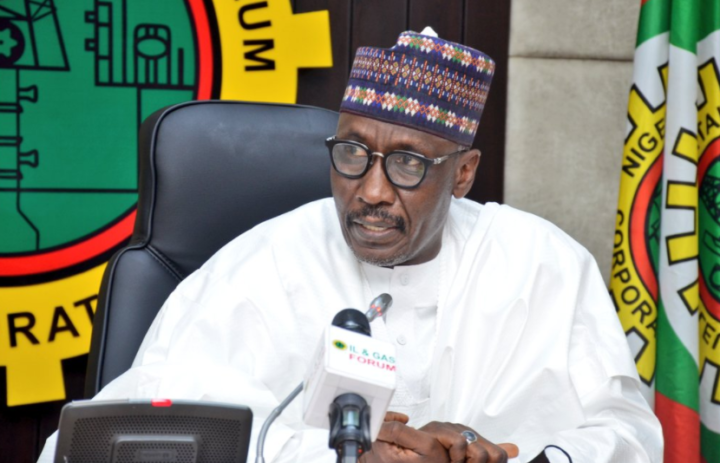
NNPC CEO Vows to Sustain Aggressive Gas Development for Affordable and Cleaner Energy
Share on FacebookShare on TwitterShare on WhatsappShare on Telegram

The Nigerian National Petroleum Company Limited (NNPCL) has committed 272,500 barrels of crude oil per day, amounting to 8.17 million barrels per month, as part of several crude-for-loan agreements worth a total of $8.86 billion. This arrangement is aimed at repaying outstanding debts and funding key national projects, according to reports from the Nigeria Extractive Industries Transparency Initiative (NEITI) and NNPC’s financial records.

 Loan Repayment and Ongoing Projects

AlsoRead

Dangote Cement Eyes London Stock Exchange Listing Before End of 2026

Nigeria’s Fixed Income Market Set for Massive N10.53 Trillion Liquidity Inflow in May

Naira Strengthens Further Against US Dollar, Approaches N1,350 Level

The crude-for-loan deals have enabled NNPCL to secure significant loans for various projects, including partnerships with international oil companies and banks. NNPCL has already repaid $2.61 billion, representing nearly 30% of the total loan, with $6.25 billion still outstanding.

Some notable projects under these deals include:
– **Project Panther**: A joint venture with Chevron Nigeria Limited that secured $1.4 billion. NNPC pledged 23,500 barrels per day to service this loan.
– **Project Bison**: Linked to NNPC’s acquisition of a 7.25% stake in the Dangote Refinery. A $1.04 billion loan was fully repaid in June 2024.
– **Project Eagle Export Funding**: A series of loans amounting to over $2 billion, serviced by 51,000 barrels per day.
– **Project Yield**: Focused on revitalizing the Port Harcourt Refinery, secured $950 million with 67,000 barrels per day pledged. However, fuel production at the refinery has yet to begin.

Crude Oil Theft and Declining Production

Despite these financial arrangements, Nigeria continues to face challenges in its oil production. NEITI’s 2022-2023 report reveals a significant decline in crude oil output, with 490.94 million barrels produced in 2022, down from a peak of 798.54 million barrels in 2014. Although production improved slightly in 2023 to 537.57 million barrels, it remains far below the country’s peak capacity.

Crude oil theft, operational inefficiencies, and deferred production are significant contributors to the shortfall. In 2023, Nigeria deferred the production of 110.66 million barrels due to unscheduled maintenance, theft, and sabotage. NEITI estimates that oil theft alone cost the country 5.25 million barrels in 2023.

Government and NNPCL’s Strategic Moves

To stabilize the country’s foreign exchange reserves and address its financial obligations, NNPC has entered several forward sale agreements, including **Project Gazelle**, which secured a $3 billion facility in 2023. This agreement involves pledging 90,000 barrels per day to meet future tax and royalty obligations.

Despite these efforts, the House of Representatives has recently called for a halt to further crude-for-loan agreements, following reports that NNPC is seeking an additional $2 billion to address outstanding debts owed to international oil traders.

Nigeria’s Oil Sector Outlook

As Nigeria grapples with the effects of crude theft, production inefficiencies, and financial strains, NNPC’s crude-for-loan deals have become a crucial element in maintaining oil output and managing the country’s debt obligations. However, operational challenges in the sector, coupled with ongoing underinvestment, threaten the long-term sustainability of these efforts.

President Bola Tinubu’s administration has been attempting to implement reforms, including the removal of fuel subsidies and aligning the naira with market rates, but these policies come with significant economic challenges for the Nigerian populace. Amid these dynamics, NNPC’s continued reliance on crude-backed loans reflects the broader struggle to boost oil production and manage financial liabilities effectively.


Tags: crude oil loansNigerian oil productionNNPCLoil theft
Previous Post

Total Crypto Market Cap Falls by 6% as Liquidations Hit $550 Million

Next Post

Naira Falls Behind as Report Reveals Africa’s 10 Strongest Currencies

Related News

Dangote: Cement Industry Contributes 7% to Global Emissions

Dangote Cement Eyes London Stock Exchange Listing Before End of 2026

by Jide Omodele
May 8, 2026
0

Africa’s largest cement producer, Dangote Cement Plc, is preparing for a secondary listing on the London Stock Exchange (LSE) later...

South Africa Poised to Surpass Nigeria as Africa’s Largest Economy

Nigeria’s Fixed Income Market Set for Massive N10.53 Trillion Liquidity Inflow in May

by Jide Omodele
May 8, 2026
0

Nigeria’s money market is expected to experience a significant surge in liquidity this month, with the Financial Markets Dealers Association...

Battered Commodity Currencies Gain Attention Amid Dollar’s Decline.

Naira Strengthens Further Against US Dollar, Approaches N1,350 Level

by Jide Omodele
May 8, 2026
0

The Nigerian naira continued its recent recovery against the US dollar in the official foreign exchange market on Wednesday, driven...

Leading Banks Struggle with Capital Deficits: Zenith Bank and Others Strive to Meet CBN Standards

Banks Post Record N26.3 Trillion Revenue in 2025, But Profits Decline on Loan Provisions

by Jide Omodele
May 8, 2026
0

Nigeria’s top commercial banks achieved strong top-line growth in 2025, driven by elevated interest rates, but after-tax profits came under...

Next Post
Naira Strengthens as Anticipation Mounts for $10 Billion Forex Inflows

Naira Falls Behind as Report Reveals Africa’s 10 Strongest Currencies

Leave a Reply Cancel reply

Your email address will not be published. Required fields are marked *

Recommended

Dangote: Cement Industry Contributes 7% to Global Emissions

Dangote Cement Eyes London Stock Exchange Listing Before End of 2026

May 8, 2026
South Africa Poised to Surpass Nigeria as Africa’s Largest Economy

Nigeria’s Fixed Income Market Set for Massive N10.53 Trillion Liquidity Inflow in May

May 8, 2026

Popular Story

  • Nigeria’s Stock Market Records N1.81 Trillion Gain in July.

    NGX Market Capitalisation Drops N1.35 Trillion as Profit-Taking Triggers 0.86% Decline

    0 shares
    Share 0 Tweet 0
  • Naira Strengthens Further Against US Dollar, Approaches N1,350 Level

    0 shares
    Share 0 Tweet 0
  • Nigeria’s Average Petrol Price Rises to N1,288.54 in March 2026, Anambra Pays Highest

    0 shares
    Share 0 Tweet 0
  • Banks Post Record N26.3 Trillion Revenue in 2025, But Profits Decline on Loan Provisions

    0 shares
    Share 0 Tweet 0
  • Nigeria’s Fixed Income Market Set for Massive N10.53 Trillion Liquidity Inflow in May

    0 shares
    Share 0 Tweet 0

RateCaptain

We bring you the most accurate in new and market data. Check our landing page for details.

  • Home
  • About Us
  • Privacy Policy
  • Terms & Conditions
  • Disclaimer
  • Cookie Policy
  • Contact Us

Copyright © 2022 RateCaptain - All rights reserved by RateCaptain.

No Result
View All Result
  • Home
    • About Us
    • Contact Us
  • FX Rates
  • Money Market
  • Cryptocurrency
  • Commodities
  • Corporates

Copyright © 2022 RateCaptain - All rights reserved by RateCaptain.

RateCaptain
Manage Cookie Consent
To provide the best experiences, we use technologies like cookies to store and/or access device information. Consenting to these technologies will allow us to process data such as browsing behavior or unique IDs on this site. Not consenting or withdrawing consent, may adversely affect certain features and functions.
Functional Always active
The technical storage or access is strictly necessary for the legitimate purpose of enabling the use of a specific service explicitly requested by the subscriber or user, or for the sole purpose of carrying out the transmission of a communication over an electronic communications network.
Preferences
The technical storage or access is necessary for the legitimate purpose of storing preferences that are not requested by the subscriber or user.
Statistics
The technical storage or access that is used exclusively for statistical purposes. The technical storage or access that is used exclusively for anonymous statistical purposes. Without a subpoena, voluntary compliance on the part of your Internet Service Provider, or additional records from a third party, information stored or retrieved for this purpose alone cannot usually be used to identify you.
Marketing
The technical storage or access is required to create user profiles to send advertising, or to track the user on a website or across several websites for similar marketing purposes.
  • Manage options
  • Manage services
  • Manage {vendor_count} vendors
  • Read more about these purposes
View preferences
  • {title}
  • {title}
  • {title}
?>