RateCaptain
  • Home
    • About Us
    • Contact Us
  • FX Rates
  • Money Market
  • Cryptocurrency
  • Commodities
  • Corporates
No Result
View All Result
Subscribe
  • Home
    • About Us
    • Contact Us
  • FX Rates
  • Money Market
  • Cryptocurrency
  • Commodities
  • Corporates
No Result
View All Result
RateCaptain
No Result
View All Result
Home Economy

From Crisis to Triumph: How Tinubu would address Nigeria’s Economic Challenges.

Rate Captain by Rate Captain
May 29, 2023
in Economy
Reading Time: 3 mins read
A A
0
Potential Protests and Economic Challenges Loom as Nigeria Prepares for Tinubu-Report.
Share on FacebookShare on TwitterShare on WhatsappShare on Telegram

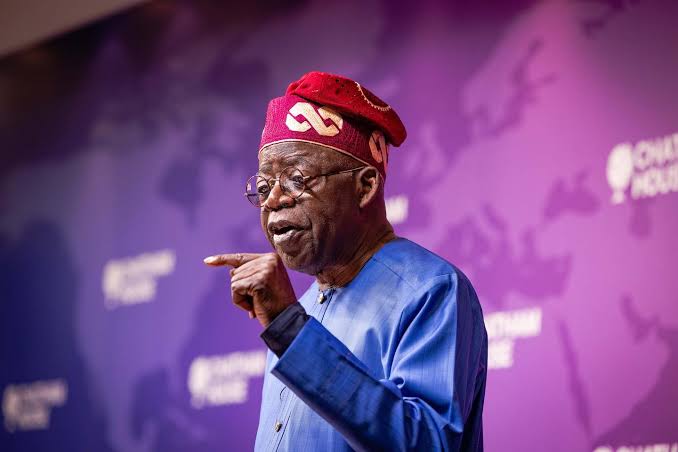
Nigeria, Africa’s largest economy, stands at a critical juncture as Bola Tinubu assumes the presidency, taking over from his predecessor, Muhammadu Buhari. With an economy marred by insecurity, corruption, and poor governance, Tinubu faces the daunting task of reviving Nigeria’s economic fortunes.

This blog explores the key economic indicators under Buhari’s administration and outlines the challenges and opportunities that lie ahead for Tinubu in his pursuit of economic growth, stability, and prosperity for Nigeria.

AlsoRead

NGX Market Capitalisation Drops N1.35 Trillion as Profit-Taking Triggers 0.86% Decline

Nigeria’s Passport Rises to 89th on Henley Index but Visa-Free Access Falls to 44 Destinations

Subnational External Debt Surges as 32 States, FCT Borrow Nearly $1 Billion in 2025

GDP: Fostering Sustainable Growth:

Nigeria’s GDP is a vital measure of economic performance. While Buhari’s administration witnessed a substantial increase in nominal GDP, the real growth rate remained sluggish. Tinubu must prioritize policies that promote diversification, support key sectors like agriculture, manufacturing, and services, and encourage entrepreneurship and innovation. By fostering sustainable growth, Nigeria can create jobs, attract investments, and propel the economy forward.

Inflation: Restoring Purchasing Power:
Persistent inflationary pressures have posed significant challenges to Nigeria’s economy. Tinubu must implement effective monetary policies, strengthen fiscal discipline, and promote price stability to tackle rising prices and restore purchasing power. This includes measures such as controlling the money supply, enhancing agricultural productivity, reducing import dependence, and fostering a competitive business environment.

Fiscal Deficit: Navigating Towards Sustainability:
Addressing the fiscal deficit is crucial for achieving fiscal sustainability. Buhari’s administration witnessed a significant increase in the fiscal deficit, primarily driven by large but unfunded budgeted expenditures. Tinubu must prioritize prudent fiscal policies aimed at reducing the deficit and ensuring fiscal sustainability. By striking a balance between revenue generation and expenditure, Nigeria can pave the way for long-term economic stability.

Public Debt: Managing the Burden:
Nigeria’s mounting public debt poses a serious risk to the economy, limiting the government’s ability to invest in crucial sectors and burdening future generations. Tinubu must prioritize effective debt management strategies, such as debt restructuring, increasing revenue generation, and improving fiscal discipline. By managing the debt burden, Nigeria can safeguard its long-term economic sustainability and create a conducive environment for growth.

Capital Importation: Fostering Investment:
Fostering capital importation is crucial for attracting domestic and foreign investors. Tinubu must work towards creating an attractive investment climate by implementing policies that enhance the ease of doing business, protect investor rights, and provide incentives for investment in strategic sectors. By fostering an environment conducive to investment, Nigeria can harness the power of capital inflows to drive economic growth and development.

External Reserves: Building Resilience:
Maintaining and expanding Nigeria’s external reserves is essential for economic stability and investor confidence. Tinubu must focus on strategies that bolster the country’s external reserves, such as diversifying revenue sources and reducing reliance on external loans. By building resilience in uncertain times, Nigeria can weather external shocks and instill confidence in investors.

Exchange Rate: Pursuing Stability:
Exchange rate stability is paramount for economic stability and investor confidence. Tinubu faces the challenge of promoting exchange rate stability and curbing volatility. By implementing prudent monetary policies, strengthening the foreign exchange market, and addressing the root causes of exchange rate pressures, Nigeria can foster an environment conducive to economic growth and stability.

All Share Index: Capitalizing on Market Momentum:
The Nigerian stock market has experienced significant growth under Buhari’s administration. Tinubu must capitalize on this momentum by implementing investor-friendly policies, strengthening market regulations, and promoting transparency and corporate governance. By nurturing a thriving stock market, Nigeria can attract domestic and foreign investors, drive economic growth, and create wealth for its people.

Corruption Perception: Enhancing

Transparency:
Tackling corruption is crucial for enhancing investor confidence, economic development, and governance. Tinubu must prioritize anti-corruption measures and initiatives to restore trust and enhance transparency in the Nigerian economy. Strengthening institutions responsible for combating corruption, implementing effective anti-corruption policies, and promoting accountability and integrity are key steps towards rebuilding trust.

Unemployment: Promoting Job Creation:
High unemployment rates pose significant challenges for Nigeria’s economy. Tinubu must foster a conducive environment for job creation by implementing policies that encourage investment, promote skill development, and support entrepreneurship. By addressing unemployment, Nigeria can reduce poverty, foster inclusive economic growth, and retain its talented workforce.

Bottomline

As Bola Tinubu assumes office as Nigeria’s president, he faces a multitude of economic challenges that require bold and decisive action. By focusing on policies that foster sustainable growth, address inflation, manage fiscal deficit and public debt, attract investment, maintain external reserves, stabilize the exchange rate, capitalize on the stock market’s momentum, tackle corruption, and promote job creation, Tinubu can set Nigeria on a path to prosperity. The road ahead will undoubtedly be arduous, but with careful planning, effective policies, and the support of the Nigerian people, Tinubu has the opportunity to steer Nigeria toward a brighter economic future.

Tags: #economy#inflation#Investment#NigeriaBola TinubuCapital ImportationCorruption Perceptioneconomic developmentEconomic ReformsExchange RateExternal ReservesFiscal DeficitGDPgovernancejob creationPublic DebtStock Marketsustainable growthtransparencyUnemployment
Previous Post

Nigeria’s Leading Crypto Marketplace Patricia Suffers Severe Security Breach

Next Post

Turkish Lira Plunges to Unprecedented Depths as Erdogan’s Power Grasp Shakes Economy to Its Core.

Related News

Nigeria’s Stock Market Records N1.81 Trillion Gain in July.

NGX Market Capitalisation Drops N1.35 Trillion as Profit-Taking Triggers 0.86% Decline

by Jide Omodele
May 6, 2026
0

The Nigerian Exchange (NGX) came under significant selling pressure on Tuesday, May 6, 2026, as investors booked profits on major...

Nigerian Students Spend $340.84 Million on Foreign University Applications in the H1 of 2023

Nigeria’s Passport Rises to 89th on Henley Index but Visa-Free Access Falls to 44 Destinations

by Victoria Attah
May 6, 2026
0

Nigeria’s passport has recorded a modest improvement in global ranking, climbing to 89th position in the latest Henley Passport Index...

FG Allocates N5.1 Billion for Presidential Yacht and N5.5 Billion For Student Loans

Subnational External Debt Surges as 32 States, FCT Borrow Nearly $1 Billion in 2025

by Victoria Attah
May 4, 2026
0

Nigerian states and the Federal Capital Territory (FCT) significantly ramped up their foreign borrowing in 2025, with 32 states and...

Nigeria Plans New FX Rules, Targeting 750 Naira Exchange Rate

Naira Posts First April Appreciation as it hits ₦1,374/$ Since NAFEX Era

by Jide Omodele
May 4, 2026
0

The Nigerian naira recorded a month-on-month gain in April 2026, marking its first positive April performance since the introduction of...

Next Post
Turkish Lira Plunges to Unprecedented Depths as Erdogan’s Power Grasp Shakes Economy to Its Core.

Turkish Lira Plunges to Unprecedented Depths as Erdogan's Power Grasp Shakes Economy to Its Core.

Leave a Reply Cancel reply

Your email address will not be published. Required fields are marked *

Recommended

Dangote: Cement Industry Contributes 7% to Global Emissions

Dangote Cement Eyes London Stock Exchange Listing Before End of 2026

May 8, 2026
South Africa Poised to Surpass Nigeria as Africa’s Largest Economy

Nigeria’s Fixed Income Market Set for Massive N10.53 Trillion Liquidity Inflow in May

May 8, 2026

Popular Story

  • Battered Commodity Currencies Gain Attention Amid Dollar’s Decline.

    Naira Strengthens Further Against US Dollar, Approaches N1,350 Level

    0 shares
    Share 0 Tweet 0
  • Banks Post Record N26.3 Trillion Revenue in 2025, But Profits Decline on Loan Provisions

    0 shares
    Share 0 Tweet 0
  • Nigeria’s Fixed Income Market Set for Massive N10.53 Trillion Liquidity Inflow in May

    0 shares
    Share 0 Tweet 0
  • Dangote Cement Eyes London Stock Exchange Listing Before End of 2026

    0 shares
    Share 0 Tweet 0
  • NGX Market Capitalisation Drops N1.35 Trillion as Profit-Taking Triggers 0.86% Decline

    0 shares
    Share 0 Tweet 0

RateCaptain

We bring you the most accurate in new and market data. Check our landing page for details.

  • Home
  • About Us
  • Privacy Policy
  • Terms & Conditions
  • Disclaimer
  • Cookie Policy
  • Contact Us

Copyright © 2022 RateCaptain - All rights reserved by RateCaptain.

No Result
View All Result
  • Home
    • About Us
    • Contact Us
  • FX Rates
  • Money Market
  • Cryptocurrency
  • Commodities
  • Corporates

Copyright © 2022 RateCaptain - All rights reserved by RateCaptain.

RateCaptain
Manage Cookie Consent
To provide the best experiences, we use technologies like cookies to store and/or access device information. Consenting to these technologies will allow us to process data such as browsing behavior or unique IDs on this site. Not consenting or withdrawing consent, may adversely affect certain features and functions.
Functional Always active
The technical storage or access is strictly necessary for the legitimate purpose of enabling the use of a specific service explicitly requested by the subscriber or user, or for the sole purpose of carrying out the transmission of a communication over an electronic communications network.
Preferences
The technical storage or access is necessary for the legitimate purpose of storing preferences that are not requested by the subscriber or user.
Statistics
The technical storage or access that is used exclusively for statistical purposes. The technical storage or access that is used exclusively for anonymous statistical purposes. Without a subpoena, voluntary compliance on the part of your Internet Service Provider, or additional records from a third party, information stored or retrieved for this purpose alone cannot usually be used to identify you.
Marketing
The technical storage or access is required to create user profiles to send advertising, or to track the user on a website or across several websites for similar marketing purposes.
  • Manage options
  • Manage services
  • Manage {vendor_count} vendors
  • Read more about these purposes
View preferences
  • {title}
  • {title}
  • {title}
?>