RateCaptain
  • Home
    • About Us
    • Contact Us
  • FX Rates
  • Money Market
  • Cryptocurrency
  • Commodities
  • Corporates
No Result
View All Result
Subscribe
  • Home
    • About Us
    • Contact Us
  • FX Rates
  • Money Market
  • Cryptocurrency
  • Commodities
  • Corporates
No Result
View All Result
RateCaptain
No Result
View All Result
Home Banking

Key Takeaway from the CBN’s Newly Introduced Customer due Diligence Rules.

Stephen Akudike by Stephen Akudike
September 13, 2023
in Banking
Reading Time: 2 mins read
A A
0
Key Takeaway from the CBN’s Newly Introduced Customer due Diligence Rules.
Share on FacebookShare on TwitterShare on WhatsappShare on Telegram

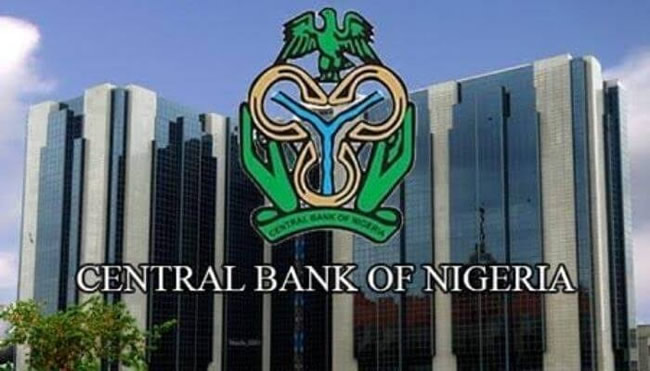
The Central Bank of Nigeria (CBN) has taken a significant step in its fight against financial crimes by introducing the new Customer Due Diligence Regulations 2023 for financial institutions under its purview. These new regulations, aimed at enhancing compliance with anti-money laundering and counter-terrorism financing provisions, align with international best practices in the banking sector.

The latest addition to the Know Your Customer (KYC) requirements is the inclusion of customers’ social media handles. This move by the CBN emphasizes the need for financial institutions to establish robust internal processes and procedures for carrying out customer due diligence measures for both potential and existing customers, as well as occasional customers.

AlsoRead

CBN Unveils Revised Foreign Exchange Manual, Set to Take Effect June 1

CBN Cautions Non-Interest Banks Against Governance and Compliance Weaknesses

Bad Loans Hits N2.36 Trillion in Nigeria’s Banking Sector

The new CBN customer due diligence rules applies to both individuals and legal entities.

Here are things to know about new CBN customer due diligence rules

  • Customer Due Diligence Regulations 2023 requires financial institutions to establish internal processes and procedures to carry out customer due diligence measures for potential and existing customers along with occasional customers.
  • The regulations apply to all financial institutions under the regulatory purview of the Central Bank of Nigeria.
  • Prohibition of opening anonymous accounts, numbered accounts, or accounts in fictitious names.
  • Financial institutions must conduct customer due diligence (CDD) measures when establishing business relationships or conducting certain types of transactions.
  • CDD measures include customer identification, verification of identity, understanding the nature and purpose of the business, understanding sources of funds, and ongoing due diligence.
  • Customers’ personal information, such as legal name, address, date of birth, identification numbers, occupation, and nationality, must be obtained.
  • Legal persons and arrangements must provide relevant documentation, including registration information, board resolutions, and identification of directors, shareholders, and beneficial owners.
  • Verification of customer identity must be done using reliable, independent sources.
  • Ongoing due diligence is required to monitor transactions and ensure consistency with customer information and risk profiles.

Non-compliance with the Customer Due Diligence Regulations 2023 may result in sanctions, highlighting the importance of adhering to these guidelines. It is crucial for financial institutions to retain records obtained through customer due diligence measures, account files, business correspondence, and analysis results for a minimum of five years after the termination or cessation of a business relationship or an occasional transaction.

Regular reviews of existing customer records are mandatory and should be based on risk categories. High-risk customers require annual reviews, medium-risk customers necessitate reviews every 18 months, and low-risk customers should be reviewed every three years.

The CBN emphasizes that the regulations are subject to potential amendments or revocation in the future, indicating a commitment to adapt and enhance the effectiveness of these measures.


Tags: amendmentsanti-money launderingbeneficial ownersCBNCentral Bank of Nigeriacompliancecounter-terrorism financingCustomer Due Diligence Regulationscustomer identificationFinancial institutionsinternational best practicesKYC requirementslegal personsongoing due diligencerecord retentionrisk categories.sanctionssources of fundsVerification
Previous Post

CBN increases Fines and Penalties for Non-Compliance of Customer Due Diligence Regulation.

Next Post

Nigeria Customs Service Increases Port Exchange Rate to N589.5/$.

Related News

CBN Allows Oil Companies to Resume Dollar Sales to Banks in Effort to Boost Supply.

CBN Unveils Revised Foreign Exchange Manual, Set to Take Effect June 1

by Jide Omodele
May 18, 2026
0

The Central Bank of Nigeria (CBN) has officially launched the fourth edition of its Foreign Exchange Manual, introducing updated guidelines...

CBN’s Recapitalization Budget of $1 Trillion Sparks Debate Among Industry Stakeholders

CBN Cautions Non-Interest Banks Against Governance and Compliance Weaknesses

by Jide Omodele
May 12, 2026
0

The Central Bank of Nigeria (CBN) has issued a strong warning to non-interest financial institutions to strengthen their governance and...

Leading Banks Struggle with Capital Deficits: Zenith Bank and Others Strive to Meet CBN Standards

Bad Loans Hits N2.36 Trillion in Nigeria’s Banking Sector

by Jide Omodele
May 11, 2026
0

Nigeria’s five largest banks, collectively known as FUGAZ, faced significant asset quality challenges in 2025, setting aside a massive N2.36...

Leading Banks Struggle with Capital Deficits: Zenith Bank and Others Strive to Meet CBN Standards

Banks Post Record N26.3 Trillion Revenue in 2025, But Profits Decline on Loan Provisions

by Jide Omodele
May 8, 2026
0

Nigeria’s top commercial banks achieved strong top-line growth in 2025, driven by elevated interest rates, but after-tax profits came under...

Next Post
Nigeria Customs Service Increases Port Exchange Rate to N589.5/$.

Nigeria Customs Service Increases Port Exchange Rate to N589.5/$.

Leave a Reply Cancel reply

Your email address will not be published. Required fields are marked *

Recommended

Exploring the data on multidimensional and monetary poverty in Nigeria.

Is the World Underestimating Nigeria?

May 21, 2026
Standard Chartered Bank Job Opening: Data Analyst

End Times : Standard Chartered to Cut Over 7,800 Jobs Worldwide Due to AI

May 21, 2026

Popular Story

  • Nigeria’s Debt to China Surges by $800 Million in One Year

    31 Nigerian States Grapple with N2.57 Trillion Domestic Debt Amid No Foreign Inflows

    0 shares
    Share 0 Tweet 0
  • UBA Earnings Hits N494bn, Records N106.8bn Profit

    0 shares
    Share 0 Tweet 0
  • Parallex Bank gets $10m trade finance facility from Afreximbank.

    0 shares
    Share 0 Tweet 0
  • CBN Suspends Charges on Cash Deposits Until September 30, 2024

    0 shares
    Share 0 Tweet 0
  • Naira Weakens in Nigerian FX Market as U.S. Fed Meeting Takes Center Stage

    0 shares
    Share 0 Tweet 0

RateCaptain

We bring you the most accurate in new and market data. Check our landing page for details.

  • Home
  • About Us
  • Privacy Policy
  • Terms & Conditions
  • Disclaimer
  • Cookie Policy
  • Contact Us

Copyright © 2022 RateCaptain - All rights reserved by RateCaptain.

No Result
View All Result
  • Home
    • About Us
    • Contact Us
  • FX Rates
  • Money Market
  • Cryptocurrency
  • Commodities
  • Corporates

Copyright © 2022 RateCaptain - All rights reserved by RateCaptain.

RateCaptain
Manage Cookie Consent
To provide the best experiences, we use technologies like cookies to store and/or access device information. Consenting to these technologies will allow us to process data such as browsing behavior or unique IDs on this site. Not consenting or withdrawing consent, may adversely affect certain features and functions.
Functional Always active
The technical storage or access is strictly necessary for the legitimate purpose of enabling the use of a specific service explicitly requested by the subscriber or user, or for the sole purpose of carrying out the transmission of a communication over an electronic communications network.
Preferences
The technical storage or access is necessary for the legitimate purpose of storing preferences that are not requested by the subscriber or user.
Statistics
The technical storage or access that is used exclusively for statistical purposes. The technical storage or access that is used exclusively for anonymous statistical purposes. Without a subpoena, voluntary compliance on the part of your Internet Service Provider, or additional records from a third party, information stored or retrieved for this purpose alone cannot usually be used to identify you.
Marketing
The technical storage or access is required to create user profiles to send advertising, or to track the user on a website or across several websites for similar marketing purposes.
  • Manage options
  • Manage services
  • Manage {vendor_count} vendors
  • Read more about these purposes
View preferences
  • {title}
  • {title}
  • {title}
?>