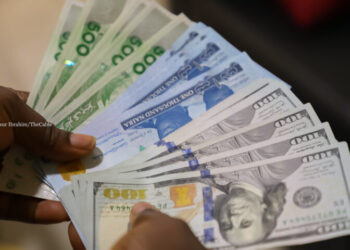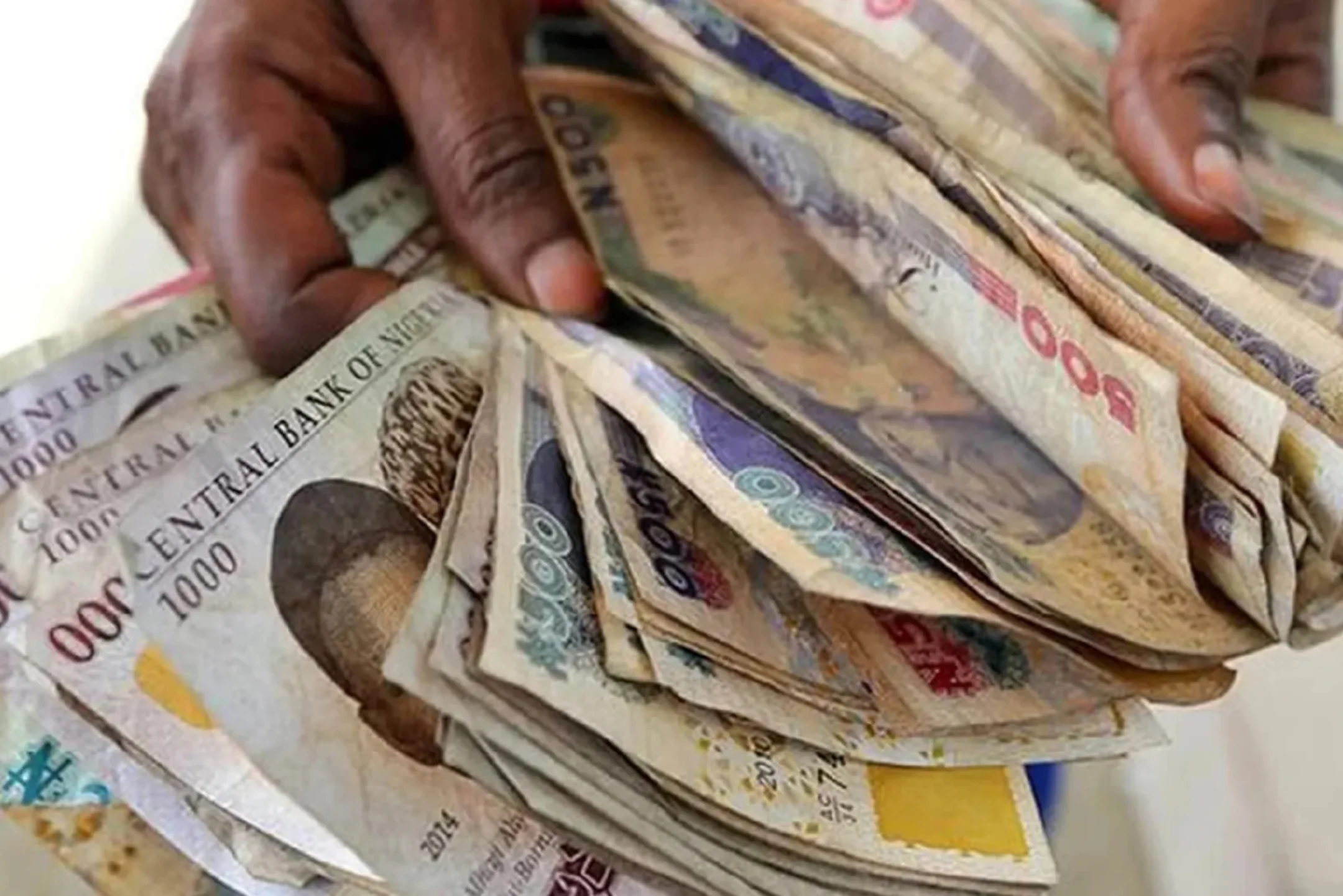
Foreign exchange traders have attributed the recent weakening of the naira to tight liquidity conditions in the currency market, compounded by softer-than-expected festive inflows and rising dollar demand toward year-end.
The naira closed weaker at the official foreign exchange window on Friday, December 19, 2025, trading at ₦1,466.5 to the dollar, compared with ₦1,454 earlier in the week. The decline marked five consecutive sessions of depreciation and pushed the currency to its lowest level in nearly two months, underscoring a return of volatility after a period of relative calm.
Market data indicate that the naira had traded around ₦1,446.9 to the dollar at the end of November, reflecting stronger performance before renewed pressure emerged in December. The recent weakness has coincided with a drop in Nigeria’s external reserves, which fell from about $45.47 billion on December 12 to $45.21 billion by December 19.
Currency dealers say liquidity constraints remain a key challenge. According to operators, some foreign portfolio investors are repatriating dividends and proceeds, while others are adopting a cautious stance toward new investments, adding to dollar demand. At the same time, speculative activities and the preference of some Nigerians to hold savings in foreign currency have further strained supply.
The President of the Association of Bureau De Change Operators of Nigeria (ABCON), Aminu Gwadebe, said anticipated inflows linked to the festive “Detty December” season have not materialized at expected levels. He explained that funds from diaspora Nigerians and visitors, which typically boost market liquidity at this time of year, are either lower than usual or flowing through informal and unregulated channels.
Gwadebe noted that limited supply has pushed exchange rates higher across segments of the market, including digital transfer platforms. He added that lingering confidence issues continue to encourage dollar hoarding, despite recent efforts to stabilize the currency.
Another bureau de change operator, Umar Badaru, said the current pressure reflects a widening gap between demand and supply. He cited increased year-end obligations, import payments, and speculative demand as major drivers, while inflows from exporters and portfolio investors remain subdued.
Although some spending associated with the festive season is evident, Badaru said much of the inflow is arriving through electronic transfers rather than physical cash, reducing its impact on street-level liquidity compared with previous years.
In response to the tightening conditions, the Central Bank of Nigeria recently injected $150 million into the foreign exchange market to support liquidity and curb excessive volatility. Market participants also welcomed the licensing of 82 new bureau de change operators, saying the move could improve access to foreign exchange at the retail end and reduce the dominance of unregulated operators.
Traders say sustained improvement in liquidity, stronger inflows, and restored confidence will be critical to easing pressure on the naira in the weeks ahead.