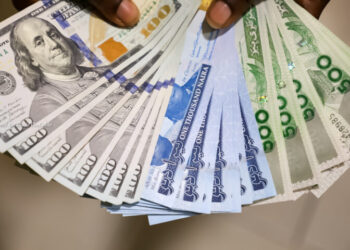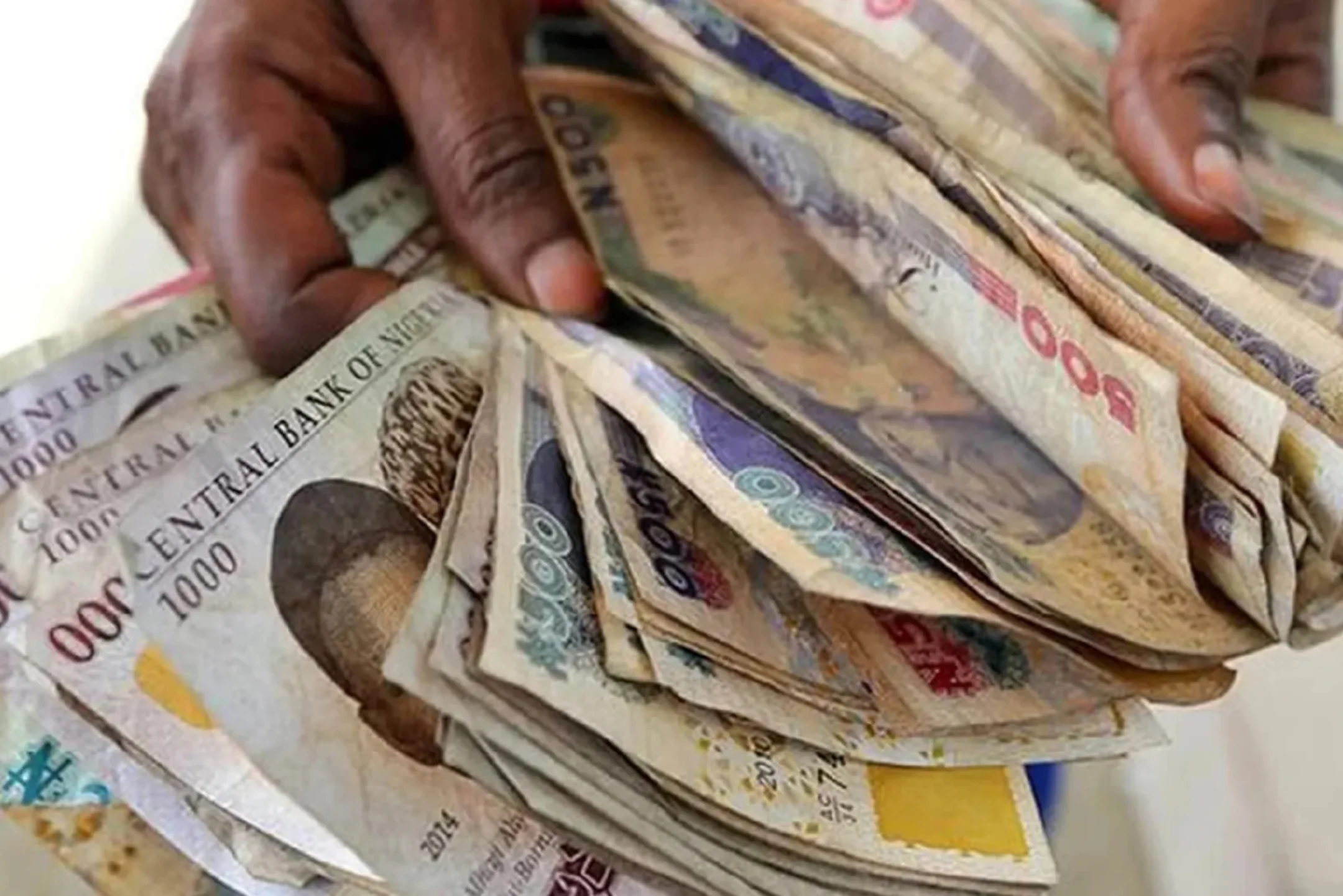
The Nigerian Naira experienced a slight depreciation in the official market this week, closing at N1,419 per U.S. dollar on Wednesday, January 8, 2026, according to data from the Central Bank of Nigeria (CBN).
The mid-week movement represents a modest shift from Tuesday’s close of N1,416 and Monday’s rate of N1,427. Despite the fluctuation, analysts note that trading remains within a narrow band, indicating reduced volatility compared to previous periods. This follows an initial weakening to N1,431 on the first trading day of the year, attributed to post-holiday demand and supply adjustments.
A more pronounced gap persists in the parallel market, where the dollar traded between N1,490 and N1,495 on Wednesday, widening from approximately N1,470 the previous day. This spread continues to reflect robust demand for foreign exchange for travel, imports, and other invisible transactions not fully met through official channels.
Nevertheless, financial observers point to stronger underlying fundamentals that are expected to bolster the currency’s stability throughout the year. Nigeria’s external reserves have shown incremental growth, rising to $45.62 billion as of Tuesday, providing a critical buffer. The CBN forecasts reserves could climb to approximately $51.04 billion in 2026, supported by anticipated higher oil revenues, sovereign bond issuances, and increased inflows from diaspora remittances.
Structural developments in the domestic energy sector are also seen as pivotal. The expansion of the Dangote Refinery’s capacity, with a medium-term target of 1.4 million barrels per day, is projected to drastically cut the nation’s refined fuel imports, thereby conserving foreign exchange and reinforcing the naira.
Dr. Muda Yusuf, Chief Executive Officer of the Centre for the Promotion of Private Enterprise (CPPE), expressed a positive outlook for the exchange rate. “The prospects for the stability of the naira are quite bright. This is largely because our foreign reserves are very strong, and reserves play a critical role in determining the strength and stability of any currency,” he stated.
This sentiment aligns with projections from financial research firm CardinalStone, which anticipates the naira could trade between N1,350 and N1,450 per dollar in 2026.
While short-term adjustments are expected to continue, economists conclude that improved reserve buffers, ongoing foreign exchange reforms, and structural economic improvements are laying a foundation for greater exchange rate stability in the medium to long term.