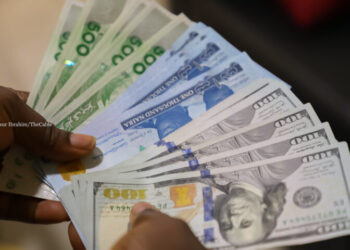
The Nigerian Naira kicked off the new month on a positive note, gaining ground against the US Dollar in the parallel market, often referred to as the black market or Aboki rates. According to real-time updates circulating on X (formerly Twitter), the Naira was exchanging at N1,483 per Dollar as of Tuesday morning, reflecting a modest appreciation from recent levels.
This comes after the currency’s official rate hovered around N1,485.5/$ in the Nigerian Foreign Exchange Market (NFEM) on Monday, amid a broader softening of the Dollar’s global value. The Naira’s resilience marks a departure from its 2025 low of N1,637/$, offering some relief to importers and consumers navigating volatile forex conditions.
Parallel Market Insights from X Updates
Social media platforms like X have become a go-to source for informal exchange rate tracking, with traders and analysts sharing live quotes from Lagos street markets. Recent posts highlighted the buying rate at N1,483/$ and selling at approximately N1,503/$, a slight narrowing of the spread compared to last week’s figures. One prominent update noted, “JUST IN: THE DOLLAR TO NAIRA EXCHANGE RATE HAS HIT 1483 NGN/USD,” underscoring the Naira’s upward momentum.
In the parallel segment, where demand for Dollars often outpaces supply, traders reported brisk activity tied to remittances and small-scale imports. However, experts caution that these rates can fluctuate rapidly based on cash availability and speculative flows.
Projections and Influencing Factors
Market observers anticipate the Naira to hold steady between N1,450 and N1,550/$ in the near term, provided crude oil prices remain above $70 per barrel—a key export driver for Nigeria. A dip below that threshold could trigger renewed pressure on the currency.
Several dynamics are bolstering the Naira’s performance. Notably, its appeal as a high-yield asset in carry trade strategies continues to draw foreign capital. With Nigeria’s benchmark interest rate steady above 27%—contrasting sharply with sub-5% rates in the US—investors are borrowing cheaply abroad to chase returns in Nigerian Treasury bills. Yet, this influx may wane following the Central Bank of Nigeria’s (CBN) recent 0.5% rate cut last week, with hints of further easing to stimulate growth.
Technical indicators also paint an optimistic picture. Chart patterns suggest the formation of an inverse cup-and-handle configuration, a bullish signal that could propel the pair toward N1,400/$ if support at N1,476/$ holds firm. Earlier this year, a “death cross” in moving averages had raised alarms, but recent reversals have shifted sentiment.
Fundamentally, the Naira dodged a bullet with interventions from the Naira for Crude Technical Committee. The Dangote Refinery’s pivot back to Naira-denominated gasoline sales has eased fears of fuel shortages. The facility, Africa’s biggest, now invites customers to place orders in local currency for nationwide delivery or pickup, reversing a prior Dollar-only policy that stemmed from crude supply hurdles linked to Nigeria’s oil sector woes.
US Dollar’s Downward Drift
The Naira’s gains align with a 0.2% drop in the US Dollar Index on Monday, kicking off a high-stakes week for American markets. Looming threats of a government shutdown, fueled by partisan gridlock, add to the uncertainty, alongside key data releases like Friday’s jobs report.
The Dollar had clawed back from a 2022 low in mid-September but faces headwinds from recalibrated bets on Federal Reserve rate cuts. Fed Chair Jerome Powell’s recent comments highlighted persistent inflation and labor risks, tempering expectations for aggressive easing. While tariff threats linger, clouding global trade and supply chains, domestic US metrics take precedence.
Positive signals include robust GDP expansion of 3.0% annualized in the latest quarter, questioning the urgency of deeper cuts. Friday’s Personal Consumption Expenditures (PCE) data met forecasts, with core inflation steady at 2.6%—above the Fed’s 2% goal but manageable amid fiscal expansion and rising debt levels. Personal spending and income also beat projections, supporting a soft-landing narrative.
Outlook: Stability with Caution
As Nigeria marks its 65th Independence Day, the Naira’s trajectory offers a glimmer of economic steadiness. Yet, with oil volatility, policy shifts, and global ripples in play, sustained recovery will hinge on CBN interventions and export diversification. For now, parallel market buzz on X points to cautious optimism, but traders advise monitoring oil benchmarks closely to avoid downside surprises.