RateCaptain
  • Home
    • About Us
    • Contact Us
  • FX Rates
  • Money Market
  • Cryptocurrency
  • Commodities
  • Corporates
No Result
View All Result
Subscribe
  • Home
    • About Us
    • Contact Us
  • FX Rates
  • Money Market
  • Cryptocurrency
  • Commodities
  • Corporates
No Result
View All Result
RateCaptain
No Result
View All Result
Home Agriculture

Nigeria Faces Tax Hikes on Alcohol, Tobacco, and Sugary Drinks to Unlock $750M World Bank Loan

Nigeria Faces Tax Hikes on Alcohol, Tobacco, and Sugary Drinks to Unlock $750M World Bank Loan

Rate Captain by Rate Captain
May 27, 2025
in Agriculture, Politics, Technology
Reading Time: 8 mins read
A A
0
World Bank Emphasizes Cash Transfers to Break Poverty Cycle in Nigeria
Share on FacebookShare on TwitterShare on WhatsappShare on Telegram

AlsoRead

Finance Ministry Denies Collapse of $5 Billion Oil-Backed Loan Deal

EU Fines Delivery Hero and Glovo €329M for Online Food Delivery Cartel

Airtel Drives Nigerian Stock Market to Record High, Surpassing N70 Trillion Mark

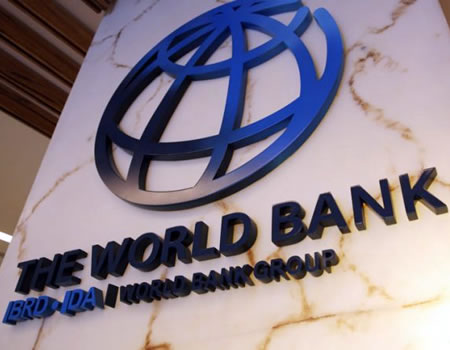
As Nigeria grapples with economic challenges, the World Bank has tied the release of a $750 million loan to a controversial condition: a presidential order to increase excise duties on “sin goods” like alcohol, tobacco, and sugary drinks. This requirement, detailed in the World Bank’s Implementation Status and Results Report for the Accelerating Resource Mobilisation Reforms Programme-for-Results (ARMOUR), effective from October 14, 2024, to November 2028, aims to boost Nigeria’s non-oil revenue while addressing health concerns. However, with only $1.88 million (0.25% of the loan) disbursed by May 2025, the push for higher taxes has sparked debate over its impact on an already strained economy.

A Push for Non-Oil Revenue
The ARMOUR program seeks to increase non-oil revenues from 5.3% of GDP in 2022 to 7.3% by 2025 while safeguarding oil and gas earnings, which rose from 1.8% to 2.7% of GDP in 2024. The World Bank’s report, obtained by The PUNCH, specifies that at least $10 million of the loan is linked to a presidential directive raising excise duties on sin goods, with verification pending. Six other disbursement-linked results (DLRs) worth $235 million have been achieved but await confirmation, delayed by the absence of an Independent Verification Agent.

Nigeria already imposes excise duties on sin goods: tobacco carries a 30% ad valorem tax plus a specific rate of ₦5.2 per stick in 2024, while alcoholic beverages face a 20% ad valorem tax and specific rates per liter (e.g., ₦0.35 per cl for beer, ₦1.50 per cl for wines). Non-alcoholic and sweetened beverages are taxed at ₦10 per liter. Posts on X indicate the World Bank is pushing for a 117% increase on alcohol and 50% on tobacco to align with inflation-adjusted 2016 levels, potentially generating significant revenue. However, the government has yet to adopt these reforms (DLR 3.1), risking subsequent revenue targets (DLR 3.2).

Telecom Tax Revival Adds Pressure
Compounding the sin tax debate, the Nigeria Tax Bill 2024, passed by the Senate on May 8, 2025, reintroduces a 5% excise duty on telecom services, previously suspended in July 2023 by President Bola Tinubu due to inflation concerns. This tax, first enacted in the 2020 Finance Act, will raise costs for calls, texts, and data, burdening consumers and threatening digital inclusion. Telecom operators and consumer groups warn that, combined with recent tariff hikes, this could exacerbate economic pressures in a country where inflation hit 31.7% in 2024.

Economic Context and Challenges
Nigeria’s economy, Africa’s second-largest in 2023, faces its worst downturn in decades, with inflation at a 28-year high of 28.9% and food inflation at 33.9% in December 2023. The banking sector, contributing 5.01% to GDP in 2024, has seen robust growth, with assets up 50.5% to ₦17.9 trillion, partly due to high interest rates (MPR at 27.5%) and FX gains. Meanwhile, Dangote Industries’ export plans, including 16,000 tonnes of fertilizer daily by 2027, could generate $7 million daily in FX earnings, supporting non-oil revenue goals.

However, the World Bank’s conditions come at a delicate time. The exit of multinationals like Unilever and GlaxoSmithKline, driven by high electricity tariffs and taxation reforms, underscores economic fragility. The failure to rationalize tax expenditures, such as the Pioneer Status Industry Tax Incentive Scheme (DLR 2.2), and delays in e-invoicing and data-sharing systems highlight slow reform progress. The World Bank rates ARMOUR’s implementation as “Moderately Satisfactory” but maintains a “High” risk rating due to political interference and fiduciary concerns.

Expert Warnings and Economic Implications
Development economist Dr. Aliyu Ilias of CSA Advisory called the World Bank’s push “pragmatic” but warned of Nigeria’s growing dependence on external directives. “It’s sad that they will continue to tell us what to do, sometimes to the detriment of our economy,” he told The PUNCH. He noted that higher excise duties could boost GDP but urged caution to avoid overburdening consumers.

Dr. Paul Alaje, Chief Economist at SPM Professionals, echoed this, warning that simultaneous reforms in a fragile economy could strain households and businesses. “The economy is not yet in a state of rest,” he said, emphasizing that while sin taxes aim to curb harmful consumption and raise revenue, they could increase costs for local producers, reducing competitiveness. For instance, taxing imported sin goods heavily could encourage local production, but higher duties on domestic goods might raise prices, impacting affordability.

Balancing Revenue and Stability
The World Bank’s push for green taxes, including a potential 10% carbon tax on petroleum products and duties on heavy vehicles, remains contentious, with no consensus among government agencies. Meanwhile, progress in oil revenue transparency, such as the Federal Account Allocation Committee’s enhanced NNPCL reporting template set for June 2025, offers hope for fiscal accountability.

As Nigeria navigates these reforms, the challenge lies in balancing revenue mobilization with economic stability. With non-oil revenues rising to 8.4% of GDP in 2024 and tax revenues from VAT, CIT, and Customs up to 5.0%, progress is evident. Yet, the reintroduction of telecom taxes and potential sin tax hikes risk exacerbating the cost-of-living crisis. As the government weighs its next steps, careful calibration will be crucial to avoid undermining the very economic recovery the World Bank loan aims to suppor
Previous Post

Dangote’s Ambitious Export Drive: A $7 Million Daily Boost for Nigeria’s Economy

Next Post

Global WhatsApp Outage, Nigerians are feeling the Heat

Related News

Crude Oil Prices Soar as Global Supply Shortage Intensifies.

Finance Ministry Denies Collapse of $5 Billion Oil-Backed Loan Deal

by Akpan Edidong
June 12, 2025
0

The Federal Ministry of Finance has dismissed reports claiming the collapse of a proposed $5 billion crude oil-backed loan involving...

GDP in Euro Area Declines by 0.1%, While EU Records a Modest 0.1% Increase

EU Fines Delivery Hero and Glovo €329M for Online Food Delivery Cartel

by Stephen Akudike
June 3, 2025
0

On June 2, 2025, the European Commission imposed a €329 million fine on Delivery Hero and its subsidiary Glovo for...

Airtel Nigeria Witnesses Surge in Data Consumption and Revenue Growth Amid 4G Expansion.

Airtel Drives Nigerian Stock Market to Record High, Surpassing N70 Trillion Mark

by Victoria Attah
May 28, 2025
0

On May 28, 2025, the Nigerian All-Share Index (NGX ASI) soared to a record high of 111,606.22, gaining 1,721.29 points...

“U.S. National Debt Rises By $1 Trillion Every 100 Days

Nigerian Students Face Visa Freeze as U.S. Tightens Grip on Social Media Vetting

by Jide Omodele
May 27, 2025
0

For thousands of Nigerian students dreaming of studying in the United States, the path just got rockier. On Tuesday, Secretary...

Next Post
NCC warns against the insecurity of WhatsApp.

Global WhatsApp Outage, Nigerians are feeling the Heat

Leave a Reply Cancel reply

Your email address will not be published. Required fields are marked *

Recommended

Naira Surges Against US Dollar, Falls Below N1,000 Mark

Naira Appreciates by 7% at Official Window as Reserves Grow in First Week of 2026

January 12, 2026
NDIC Begins Verification Exercise for Insured Depositors of Defunct Peak Merchant Bank.

Nigeria Deposit Insurer Declares N24.3 Billion Payout to Heritage Bank Depositors

January 12, 2026

Popular Story

  • Key Takeaways From President Tinubu Speech.

    Nigeria’s Debt Service Projected to Exceed N91 Trillion by 2028, Crowding Out Development Spending

    0 shares
    Share 0 Tweet 0
  • Nigeria Deposit Insurer Declares N24.3 Billion Payout to Heritage Bank Depositors

    0 shares
    Share 0 Tweet 0
  • Naira Appreciates by 7% at Official Window as Reserves Grow in First Week of 2026

    0 shares
    Share 0 Tweet 0
  • Nigeria’s Statistics Bureau to Brief Stakeholders Ahead of Key December Inflation Data

    0 shares
    Share 0 Tweet 0
  • World Bank Forecasts 22.1% Inflation for Nigeria in 2025 Amid Monetary Tightening

    0 shares
    Share 0 Tweet 0
RateCaptain

RateCaptain

We bring you the most accurate in new and market data. Check our landing page for details.

  • Home
  • About Us
  • Privacy Policy
  • Terms & Conditions
  • Disclaimer
  • Cookie Policy
  • Contact Us

Copyright © 2022 RateCaptain - All rights reserved by RateCaptain.

No Result
View All Result
  • Home
    • About Us
    • Contact Us
  • FX Rates
  • Money Market
  • Cryptocurrency
  • Commodities
  • Corporates

Copyright © 2022 RateCaptain - All rights reserved by RateCaptain.

RateCaptain
Manage Cookie Consent
To provide the best experiences, we use technologies like cookies to store and/or access device information. Consenting to these technologies will allow us to process data such as browsing behavior or unique IDs on this site. Not consenting or withdrawing consent, may adversely affect certain features and functions.
Functional Always active
The technical storage or access is strictly necessary for the legitimate purpose of enabling the use of a specific service explicitly requested by the subscriber or user, or for the sole purpose of carrying out the transmission of a communication over an electronic communications network.
Preferences
The technical storage or access is necessary for the legitimate purpose of storing preferences that are not requested by the subscriber or user.
Statistics
The technical storage or access that is used exclusively for statistical purposes. The technical storage or access that is used exclusively for anonymous statistical purposes. Without a subpoena, voluntary compliance on the part of your Internet Service Provider, or additional records from a third party, information stored or retrieved for this purpose alone cannot usually be used to identify you.
Marketing
The technical storage or access is required to create user profiles to send advertising, or to track the user on a website or across several websites for similar marketing purposes.
  • Manage options
  • Manage services
  • Manage {vendor_count} vendors
  • Read more about these purposes
View preferences
  • {title}
  • {title}
  • {title}
?>