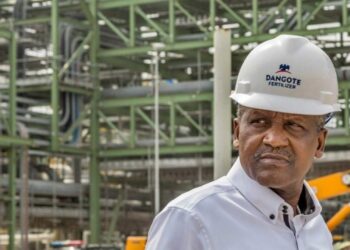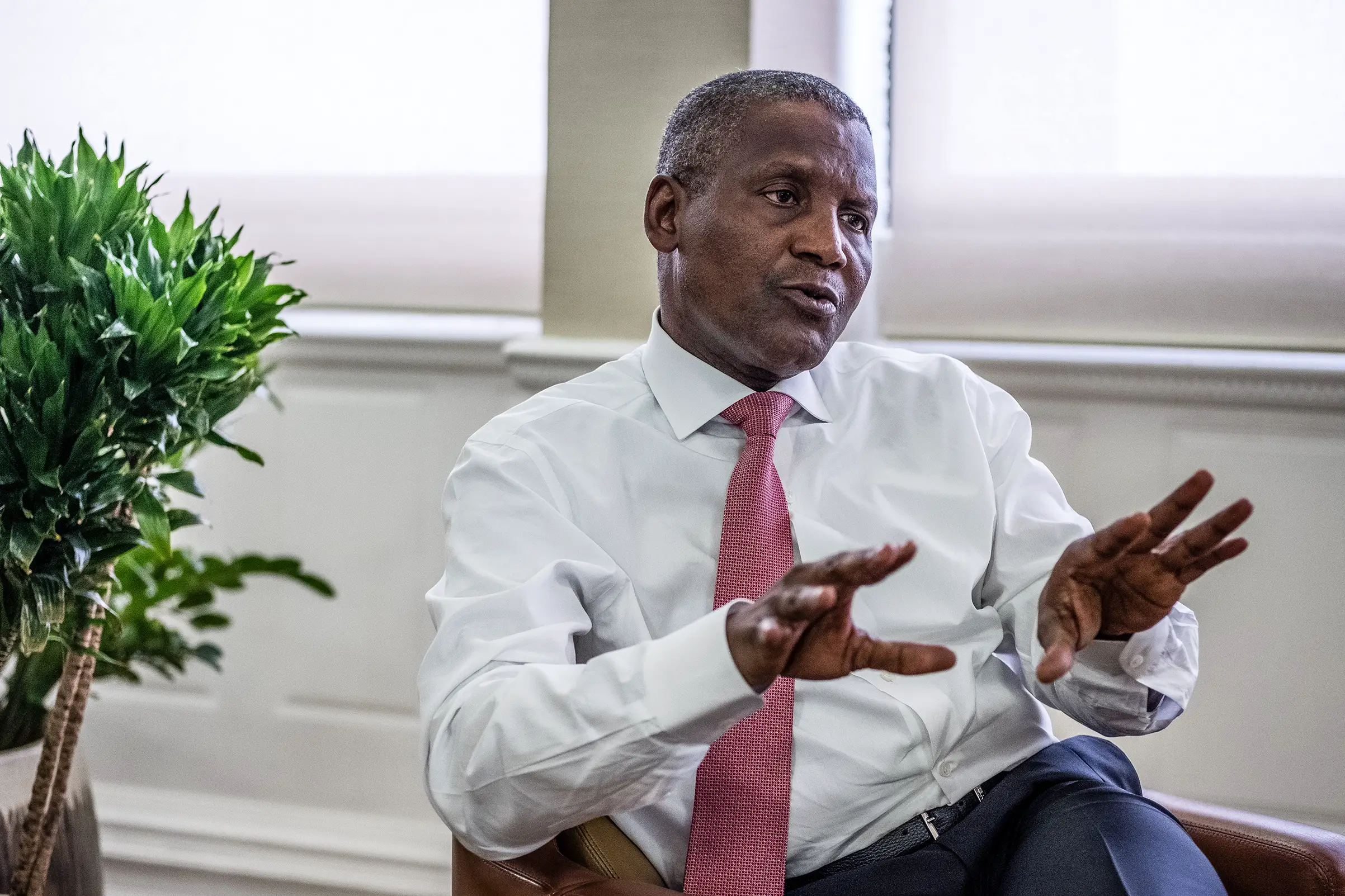
In a bold move to transform Nigeria into a global export powerhouse, Aliko Dangote, President of Dangote Industries Limited (DIL), has unveiled plans to generate up to $7 million daily in foreign exchange earnings through fertilizer exports within the next two years. Speaking during a courtesy visit to the Nigerian Ports Authority (NPA) headquarters in Lagos on May 26, 2025, Dangote outlined an ambitious export program that could position DIL as Nigeria’s leading supplier of foreign exchange, significantly bolstering the naira and the nation’s economy.
A Fertilizer Export Powerhouse
Dangote announced that DIL’s fertilizer plant, Africa’s largest granulated urea facility, is set to export 16,000 tonnes of fertilizer daily by 2027, generating between $6.5 million and $7 million in daily revenue. “With our export program, our company will be the major supplier of foreign exchange earnings in Nigeria,” he declared. The $2.5 billion plant, located in the Lekki Free Trade Zone, has a production capacity of 3 million metric tonnes of urea annually, far exceeding Nigeria’s domestic demand of 1.5 million tonnes. This surplus has already fueled exports to markets like the United States, Brazil, India, Mexico, and the European Union, capitalizing on global fertilizer shortages exacerbated by the Russia-Ukraine conflict.
The timing of DIL’s fertilizer plant, commissioned in March 2022, has proven fortuitous. With global fertilizer prices soaring—nitrogen fertilizers reaching €1,000 per ton in Europe—the plant’s output is meeting critical demand, positioning Nigeria as a key player in the global market. The facility, which supplies 120 trucks daily for domestic use, is poised to make Nigeria self-sufficient in fertilizer production while generating substantial export revenue, previously estimated at $5 billion annually.
Expanding Export Horizons
Dangote’s vision extends beyond fertilizers. Within weeks, DIL will begin exporting coal, followed by 600,000 to 700,000 metric tonnes of polypropylene annually. The company’s 650,000-barrel-per-day refinery, which began full operations in 2024, is expected to export 25 million tonnes of petroleum products yearly, including petrol, diesel, jet fuel, and naphtha. “We are going to be very big,” Dangote emphasized, noting that operations at Lekki alone will involve 240 crude oil vessels and over 600 product ships annually, alongside eight fertilizer ships. This scale, unprecedented in Nigeria, underscores DIL’s pivotal role in the nation’s export strategy.
Additionally, DIL’s cement division, already Africa’s largest, is set to double its export capacity with a dedicated 6-million-ton factory. These efforts align with Dangote’s broader goal of generating $30 billion in group revenue by the end of 2025, reducing Nigeria’s reliance on Central Bank foreign exchange and strengthening the naira.
Partnership with NPA: A Critical Enabler
Dangote stressed the importance of collaboration with the NPA to sustain DIL’s massive operations. “Our operations will sink if the NPA doesn’t give us the services we need,” he cautioned, urging the Federal Government to equip the NPA with additional tugboats and equipment to handle the projected 600+ vessels annually. The NPA’s “Naira for Crude” policy, launched in October 2024, has already facilitated 57 vessels monthly, surpassing DIL’s yearly projection and enhancing transaction efficiency.
NPA Managing Director Dr. Abubakar Dantsoho highlighted ongoing reforms, including the National Single Window, with 95% readiness for the Port Community System. He also announced Federal Executive Council approval for modernizing Tincan and Apapa ports starting in Q3 2025 and developing five new deep seaports—Ibom, Bakassi, Olokola, Ondo, and Badagry—to boost capacity. These initiatives are critical to accommodating DIL’s export volumes and supporting Nigeria’s Marine and Blue Economy.
Economic Impact and Challenges
Dangote’s export drive aligns with Nigeria’s push to diversify from oil dependency, a goal supported by the CBN’s efforts to reduce fertilizer imports. The banking sector, contributing 5.01% to Nigeria’s economy in 2024, has also benefited from high interest rates and FX gains, with combined assets of major banks reaching ₦17.9 trillion. However, challenges remain, including domestic fertilizer distribution constraints, with Nigeria’s usage at 17kg per hectare compared to the global average of 135kg. Non-performing loans in the banking sector, up to 4.5% in 2024, also signal risks from aggressive lending that could parallel DIL’s rapid expansion if not carefully managed.
Looking Ahead
As DIL prepares to list its refinery and fertilizer divisions on the Nigerian Exchange Group by Q1 2025, offering Nigerians investment opportunities, its export ambitions could reshape Nigeria’s economic landscape. With fertilizer, coal, polypropylene, and cement exports set to drive billions in foreign exchange, Dangote’s vision is not just about corporate growth but national transformation. However, success hinges on sustained government support, robust port infrastructure, and addressing domestic market gaps. As Nigeria navigates a high-interest-rate environment (MPR at 27.5%) and global economic shifts, Dangote’s bold bet could cement its role as a catalyst for a stronger, more diversified economy.
In a bold move to transform Nigeria into a global export powerhouse, Aliko Dangote, President of Dangote Industries Limited (DIL), has unveiled plans to generate up to $7 million daily in foreign exchange earnings through fertilizer exports within the next two years. Speaking during a courtesy visit to the Nigerian Ports Authority (NPA) headquarters in Lagos on May 26, 2025, Dangote outlined an ambitious export program that could position DIL as Nigeria’s leading supplier of foreign exchange, significantly bolstering the naira and the nation’s economy.
A Fertilizer Export Powerhouse
Dangote announced that DIL’s fertilizer plant, Africa’s largest granulated urea facility, is set to export 16,000 tonnes of fertilizer daily by 2027, generating between $6.5 million and $7 million in daily revenue. “With our export program, our company will be the major supplier of foreign exchange earnings in Nigeria,” he declared. The $2.5 billion plant, located in the Lekki Free Trade Zone, has a production capacity of 3 million metric tonnes of urea annually, far exceeding Nigeria’s domestic demand of 1.5 million tonnes. This surplus has already fueled exports to markets like the United States, Brazil, India, Mexico, and the European Union, capitalizing on global fertilizer shortages exacerbated by the Russia-Ukraine conflict.
The timing of DIL’s fertilizer plant, commissioned in March 2022, has proven fortuitous. With global fertilizer prices soaring—nitrogen fertilizers reaching €1,000 per ton in Europe—the plant’s output is meeting critical demand, positioning Nigeria as a key player in the global market. The facility, which supplies 120 trucks daily for domestic use, is poised to make Nigeria self-sufficient in fertilizer production while generating substantial export revenue, previously estimated at $5 billion annually.
Expanding Export Horizons
Dangote’s vision extends beyond fertilizers. Within weeks, DIL will begin exporting coal, followed by 600,000 to 700,000 metric tonnes of polypropylene annually. The company’s 650,000-barrel-per-day refinery, which began full operations in 2024, is expected to export 25 million tonnes of petroleum products yearly, including petrol, diesel, jet fuel, and naphtha. “We are going to be very big,” Dangote emphasized, noting that operations at Lekki alone will involve 240 crude oil vessels and over 600 product ships annually, alongside eight fertilizer ships. This scale, unprecedented in Nigeria, underscores DIL’s pivotal role in the nation’s export strategy.
Additionally, DIL’s cement division, already Africa’s largest, is set to double its export capacity with a dedicated 6-million-ton factory. These efforts align with Dangote’s broader goal of generating $30 billion in group revenue by the end of 2025, reducing Nigeria’s reliance on Central Bank foreign exchange and strengthening the naira.
Partnership with NPA: A Critical Enabler
Dangote stressed the importance of collaboration with the NPA to sustain DIL’s massive operations. “Our operations will sink if the NPA doesn’t give us the services we need,” he cautioned, urging the Federal Government to equip the NPA with additional tugboats and equipment to handle the projected 600+ vessels annually. The NPA’s “Naira for Crude” policy, launched in October 2024, has already facilitated 57 vessels monthly, surpassing DIL’s yearly projection and enhancing transaction efficiency.
NPA Managing Director Dr. Abubakar Dantsoho highlighted ongoing reforms, including the National Single Window, with 95% readiness for the Port Community System. He also announced Federal Executive Council approval for modernizing Tincan and Apapa ports starting in Q3 2025 and developing five new deep seaports—Ibom, Bakassi, Olokola, Ondo, and Badagry—to boost capacity. These initiatives are critical to accommodating DIL’s export volumes and supporting Nigeria’s Marine and Blue Economy.
Economic Impact and Challenges
Dangote’s export drive aligns with Nigeria’s push to diversify from oil dependency, a goal supported by the CBN’s efforts to reduce fertilizer imports. The banking sector, contributing 5.01% to Nigeria’s economy in 2024, has also benefited from high interest rates and FX gains, with combined assets of major banks reaching ₦17.9 trillion. However, challenges remain, including domestic fertilizer distribution constraints, with Nigeria’s usage at 17kg per hectare compared to the global average of 135kg. Non-performing loans in the banking sector, up to 4.5% in 2024, also signal risks from aggressive lending that could parallel DIL’s rapid expansion if not carefully managed.
Looking Ahead
As DIL prepares to list its refinery and fertilizer divisions on the Nigerian Exchange Group by Q1 2025, offering Nigerians investment opportunities, its export ambitions could reshape Nigeria’s economic landscape. With fertilizer, coal, polypropylene, and cement exports set to drive billions in foreign exchange, Dangote’s vision is not just about corporate growth but national transformation. However, success hinges on sustained government support, robust port infrastructure, and addressing domestic market gaps. As Nigeria navigates a high-interest-rate environment (MPR at 27.5%) and global economic shifts, Dangote’s bold bet could cement its role as a catalyst for a stronger, more diversified economy.