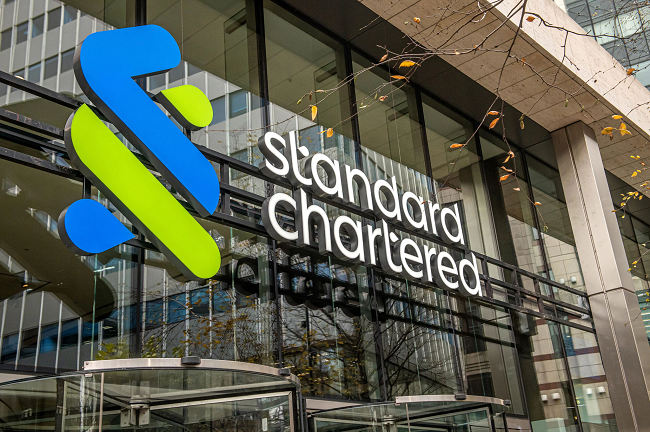
Standard Chartered Bank has announced plans to eliminate more than 7,800 jobs globally as it accelerates the adoption of Artificial Intelligence across its operations.
The London-headquartered bank, which currently employs nearly 82,000 people, said the job cuts form part of a strategic overhaul aimed at improving operational efficiency over the next four years.
CEO’s Position
Bill Winters, the bank’s Chief Executive Officer, clarified that the move goes beyond mere cost reduction. He described it as a deliberate investment in technology to replace lower-value roles with more advanced systems.
“It’s not cost-cutting. It’s replacing in some cases lower-value human capital with the financial capital and the investment capital we’re putting in,” Winters stated.
The layoffs are expected to hit back-office operations hardest, particularly in major processing hubs located in Chennai and Bengaluru (India), Kuala Lumpur (Malaysia), and Warsaw (Poland).
Support for Affected Staff
Despite the significant reduction in workforce, the bank has pledged to support employees who are willing to adapt. Winters noted that opportunities for reskilling and redeployment will be made available to staff ready to transition into new roles aligned with the bank’s evolving technological needs.
Real-Life Perspective and Predictions
This development reflects a growing trend across the global banking industry, where traditional back-office functions such as data processing, compliance checks, customer service support, and transaction monitoring are increasingly being automated through AI and machine learning tools.
Real-Life Impact:
For many mid-level and support staff in developing countries like India and Malaysia, where Standard Chartered has large operational centres, the job losses could be particularly painful. These roles have traditionally offered stable employment and career progression. While some employees may successfully reskill into higher-value areas such as AI oversight, data analytics, or digital product development, others especially older workers or those with limited technical backgrounds may struggle to make the transition.
Predictions:
Analysts expect this move by Standard Chartered to trigger similar restructuring announcements from other international banks in the coming 12–24 months. By 2030, the global banking sector could see between 20% and 30% of routine operational roles automated.
While this shift promises greater efficiency and potentially lower operational costs, it also raises important questions about workforce displacement, the future of white-collar jobs, and the need for large-scale reskilling programmes. Governments and educational institutions may need to respond faster to prepare workers for an AI-dominated financial services landscape.