RateCaptain
  • Home
    • About Us
    • Contact Us
  • FX Rates
  • Money Market
  • Cryptocurrency
  • Commodities
  • Corporates
No Result
View All Result
Subscribe
  • Home
    • About Us
    • Contact Us
  • FX Rates
  • Money Market
  • Cryptocurrency
  • Commodities
  • Corporates
No Result
View All Result
RateCaptain
No Result
View All Result
Home Economy

Is the World Underestimating Nigeria?

Long-term economic forecasts suggest Africa's largest population may become one of the world's biggest powers. But can projections survive reality?

Stephen Akudike by Stephen Akudike
May 21, 2026
in Economy
Reading Time: 3 mins read
A A
0
Exploring the data on multidimensional and monetary poverty in Nigeria.
Share on FacebookShare on TwitterShare on WhatsappShare on Telegram

For years, conversations about the future of global power have sounded familiar. China. The United States. India. Perhaps the European Union. These names dominate economic discussions, policy forums, and international strategy reports.

Nigeria rarely makes that list.

AlsoRead

Dangote Refinery Reduces Aviation Fuel Price to N1,650 per Litre

CBN Denies Heavy Intervention in FX Market, Highlights Minimal Participation

Global Carbon Pricing Revenue Surpasses $107 Billion in 2025 – World Bank

When it does appear in global headlines, the focus is often immediate and urgent: inflation, insecurity, political uncertainty, fuel reforms, or infrastructure struggles. The image many outsiders see is one of a country wrestling with problems rather than preparing for dominance.

Yet some researchers and long-term economic analysts are beginning to ask a different question entirely: What if the world is looking in the wrong direction?

According to long-range projections cited in a recent analysis by DX Research and Abolore Salami, Nigeria could emerge as one of the largest economies in the world by the second half of this century. Some forecasts suggest the country’s economy could reach approximately $13.1 trillion by 2075, potentially placing it among the world’s top five economies.
That prediction sounds ambitious perhaps even unrealistic to some observers.

But history has repeatedly shown that the future often looks impossible until it begins to happen.

Few people in the late 19th century looked at the United States and imagined a future global superpower. At the time, America was still industrializing, politically divided, and struggling with internal transformation.

China faced similar skepticism decades ago.

In the 1980s and early 1990s, many analysts underestimated China’s economic rise. Today it stands among the world’s largest economies and most influential geopolitical actors.

Supporters of Nigeria’s long-term outlook argue that the same mistake may be happening again.

Their argument begins with demographics.

While many developed nations are confronting aging populations and shrinking workforces, Nigeria is moving in the opposite direction. Population projections referenced in the report estimate that Nigeria could reach roughly 401 million people by 2050, surpassing the United States and becoming the world’s third most populous country. By 2100, that figure could stabilize around 477 million people.

For economists, those numbers are more than statistics.

Population creates markets. Markets create demand. Demand creates industries, investment opportunities, and labor capacity. In simple terms, countries with large productive populations often gain advantages that smaller economies struggle to match.

“If your competitors are running out of workers while your workforce continues growing, the long-term effects can be significant,” the report suggests. But population alone does not guarantee prosperity.

Nigeria’s own history offers reminders of that reality.
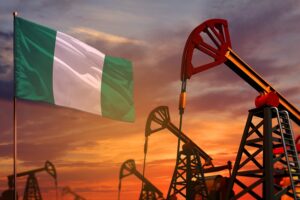
The country possesses significant oil wealth and vast natural resources, yet economic gains have not always translated into widespread prosperity. Growth has often been interrupted by governance challenges, infrastructure limitations, and policy inconsistency.

That is why even optimistic forecasts come with warnings attached.

The report itself acknowledges that institutional weakness, security concerns, and continued dependence on oil remain major obstacles.

“The gap between potential and reality is where nations often struggle,” the analysis notes.

Still, supporters of the long-term case believe Nigeria possesses other advantages that are frequently overlooked.

Lagos, already one of Africa’s largest urban centers, continues expanding as a center for technology, commerce, and culture. Nigeria’s startup ecosystem has produced successful technology firms across sectors such as fintech and digital services. Meanwhile, Nigerian music and film continue reaching audiences worldwide.

Beyond culture and technology, there is also the question of resources.

While oil traditionally shaped discussions about Nigeria’s economy, analysts increasingly point toward critical minerals such as lithium and tin  materials essential for batteries and green technologies. As countries race toward cleaner energy systems, access to such resources may become strategically important.

There is also a regional dimension.

The African Continental Free Trade Area has the potential to create one of the world’s largest trading networks. If integration efforts continue successfully, Nigeria could become one of its most influential economic centers.

Yet for all the optimism surrounding long-term forecasts, the central question remains unresolved.

Can Nigeria transform structural advantages into actual power?

Predictions can identify trends, but they cannot guarantee outcomes. For now, the country remains caught between two competing realities. One is the Nigeria seen in today’s headlines  a nation confronting serious economic and political pressures. The other is the Nigeria emerging from demographic charts, economic models, and long-term projections.

Perhaps both stories are true at the same time.

History rarely announces major turning points while they are happening. Most shifts become obvious only after they have already reshaped the world.

If Nigeria eventually becomes one of the defining powers of the century, future generations may look back and wonder whether the signs had been there all along.
 

Tags: #inflation#NigeriaDebtGoldmansachsWorldBank
Previous Post

End Times : Standard Chartered to Cut Over 7,800 Jobs Worldwide Due to AI

Related News

Airlines Implement Time-Saving Strategies for More Efficient Operations

Dangote Refinery Reduces Aviation Fuel Price to N1,650 per Litre

by Akpan Edidong
May 21, 2026
0

Dangote Petroleum Refinery & Petrochemicals has announced a significant reduction in the price of Jet A1 (aviation fuel), slashing it...

NEC Affirms CBN $3 Billion Loan for Naira Stability

CBN Denies Heavy Intervention in FX Market, Highlights Minimal Participation

by Jide Omodele
May 21, 2026
0

The Central Bank of Nigeria (CBN) has refuted allegations of aggressive intervention in the foreign exchange market, insisting that its...

World Bank Emphasizes Cash Transfers to Break Poverty Cycle in Nigeria

Global Carbon Pricing Revenue Surpasses $107 Billion in 2025 – World Bank

by Victoria Attah
May 20, 2026
0

The World Bank has reported that revenues generated from carbon pricing mechanisms worldwide exceeded $107 billion in 2025, marking another...

Oil Prices Reach $90 Following Supply Reduction by Saudi Arabia and Russia.

Nigerian Crude Oil Approaches $120 per Barrel as Middle East Tensions Escalate

by Akpan Edidong
May 20, 2026
0

Nigerian crude oil prices have climbed sharply, edging closer to the $120 per barrel mark as the conflict in the...

Leave a Reply Cancel reply

Your email address will not be published. Required fields are marked *

Recommended

Exploring the data on multidimensional and monetary poverty in Nigeria.

Is the World Underestimating Nigeria?

May 21, 2026
Standard Chartered Bank Job Opening: Data Analyst

End Times : Standard Chartered to Cut Over 7,800 Jobs Worldwide Due to AI

May 21, 2026

Popular Story

  • Oil Prices Reach $90 Following Supply Reduction by Saudi Arabia and Russia.

    Nigerian Crude Oil Approaches $120 per Barrel as Middle East Tensions Escalate

    0 shares
    Share 0 Tweet 0
  • Global Carbon Pricing Revenue Surpasses $107 Billion in 2025 – World Bank

    0 shares
    Share 0 Tweet 0
  • Access Bank Has Strong FX Liquidity to Service $1bn Debt Maturity – Fitch Ratings

    0 shares
    Share 0 Tweet 0
  • Naira Depreciates 0.7% in Official Market Amid Persistent Forex Pressure

    0 shares
    Share 0 Tweet 0
  • Shell Announces $2.4 Billion Exit from Nigerian Onshore Oilfields

    0 shares
    Share 0 Tweet 0

RateCaptain

We bring you the most accurate in new and market data. Check our landing page for details.

  • Home
  • About Us
  • Privacy Policy
  • Terms & Conditions
  • Disclaimer
  • Cookie Policy
  • Contact Us

Copyright © 2022 RateCaptain - All rights reserved by RateCaptain.

No Result
View All Result
  • Home
    • About Us
    • Contact Us
  • FX Rates
  • Money Market
  • Cryptocurrency
  • Commodities
  • Corporates

Copyright © 2022 RateCaptain - All rights reserved by RateCaptain.

RateCaptain
Manage Cookie Consent
To provide the best experiences, we use technologies like cookies to store and/or access device information. Consenting to these technologies will allow us to process data such as browsing behavior or unique IDs on this site. Not consenting or withdrawing consent, may adversely affect certain features and functions.
Functional Always active
The technical storage or access is strictly necessary for the legitimate purpose of enabling the use of a specific service explicitly requested by the subscriber or user, or for the sole purpose of carrying out the transmission of a communication over an electronic communications network.
Preferences
The technical storage or access is necessary for the legitimate purpose of storing preferences that are not requested by the subscriber or user.
Statistics
The technical storage or access that is used exclusively for statistical purposes. The technical storage or access that is used exclusively for anonymous statistical purposes. Without a subpoena, voluntary compliance on the part of your Internet Service Provider, or additional records from a third party, information stored or retrieved for this purpose alone cannot usually be used to identify you.
Marketing
The technical storage or access is required to create user profiles to send advertising, or to track the user on a website or across several websites for similar marketing purposes.
  • Manage options
  • Manage services
  • Manage {vendor_count} vendors
  • Read more about these purposes
View preferences
  • {title}
  • {title}
  • {title}
?>