RateCaptain
  • Home
    • About Us
    • Contact Us
  • FX Rates
  • Money Market
  • Cryptocurrency
  • Commodities
  • Corporates
No Result
View All Result
Subscribe
  • Home
    • About Us
    • Contact Us
  • FX Rates
  • Money Market
  • Cryptocurrency
  • Commodities
  • Corporates
No Result
View All Result
RateCaptain
No Result
View All Result
Home Economy

Nigeria Faces Widespread Blackout as National Grid Collapses

Victoria Attah by Victoria Attah
September 14, 2023
in Economy, Energy
Reading Time: 2 mins read
A A
0
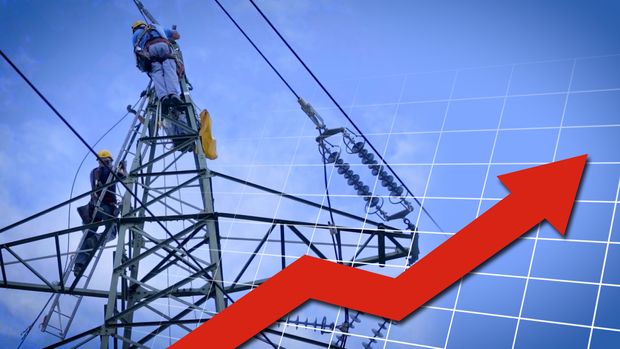
Electricity Tariffs Skyrocket to N10,000 for 100 Units- Expert
Share on FacebookShare on TwitterShare on WhatsappShare on Telegram

In a shocking turn of events, Nigeria was plunged into darkness as the national power grid experienced a complete collapse in the early hours of Thursday, September 14, 2023. The Enugu Electricity Distribution Company (EEDC) Plc reported that the grid failure occurred at approximately 12:40 am, leaving millions without electricity. The Transmission Company of Nigeria (TCN) confirmed the incident, attributing it to a system collapse and assuring the public that efforts were underway to restore power.

This incident marks the first time in over a year that Nigeria’s electrical system has suffered such a major disruption, raising concerns about the resilience and stability of the country’s power infrastructure.

AlsoRead

Nigerians Borrowed Record $3.18 Billion in Airtime Credit Last Year – Report

Nigeria’s External Debt Projected to Reach $72.6 Billion by 2027 – IMF

NGX Gains 0.53% as Airtel Africa and First Holdco Lead Market Rally

Impact on Enugu Business Growth:

The consequences of this nationwide blackout are particularly significant for Enugu and its business community. The EEDC, in a statement, indicated that the system failure was responsible for the loss of electricity supply in its service areas, affecting several states, including Abia, Anambra, Ebonyi, Enugu, and Imo. With all of its interface TCN stations left without power, the EEDC is unable to serve its consumers in these regions.

Emeka Ezeh, the head of corporate relations at EEDC, emphasized the critical role of the power supply for businesses and households. He stated, “The system failure has had a severe impact on our ability to provide electricity to our customers. Businesses in Enugu and neighboring states will face disruptions, leading to potential financial losses.”

Enugu, known for its thriving commercial and industrial sectors, heavily relies on a stable power supply to fuel its economic growth. The sudden blackout not only hampers productivity but also raises concerns about the reliability of infrastructure in the region.

Efforts to Restore Power:

Ndidi Mbah, the spokeswoman for TCN, highlighted the organization’s commitment to prioritizing the complete restoration of the power system. She stressed the importance of focusing on recovery rather than assigning blame in the aftermath of a disorder of this magnitude.

The incident comes as a setback for the TCN, which had reported more than 400 days of uninterrupted stability in the national electrical grid in August 2023. The sudden collapse underscores the need for ongoing infrastructure improvements and maintenance to ensure a consistent power supply for Nigeria.

Recent History of Grid Failures:

While this blackout is the most recent and severe, Nigeria has faced a series of grid collapses in recent years. In September 2022, major distribution companies (DisCos) reported a system failure. Notably, the TCN had documented a total of 46 grid collapses across the country between 2017 and 2022.

Earlier in January 2023, the national electricity grid suffered a series of collapses, with incidents occurring between January 1 and January 8. These disruptions resulted in a sharp decline in power generation, affecting industries, businesses, and households across the nation.

As Nigeria grapples with the consequences of yet another grid failure, attention remains focused on the efforts to restore power and the need for long-term solutions to ensure a reliable and resilient electrical grid, critical for the nation’s economic growth and stability.

Tags: economic impactelectricity supply disruptionEnugu business growthEnugu Electricity Distribution Company (EEDC)grid failure consequencesnational power grid collapseNigeria blackoutpower infrastructureTransmission Company of Nigeria (TCN)
Previous Post

UK Economy’s July Contraction Sparks Diverse Interpretations Amid Multiple Contributing Factors

Next Post

Shipping giant Maersk Unveils Groundbreaking Green Methanol-Powered Container Ship

Related News

Nigeria’s MTN and Airtel Record N403.2 Billion Data Revenue In Q3, 2023

Nigerians Borrowed Record $3.18 Billion in Airtime Credit Last Year – Report

by Victoria Attah
June 15, 2026
0

Mobile subscribers across Nigeria and other parts of Africa took a total of $3.18 billion worth of airtime on credit...

IMF Applauds Tinubu Policy Reforms While Lowering Growth Projections

Nigeria’s External Debt Projected to Reach $72.6 Billion by 2027 – IMF

by Jide Omodele
June 10, 2026
0

The International Monetary Fund (IMF) has projected that Nigeria’s public external debt will rise sharply to $72.6 billion by 2027,...

Liquidity Crunch: Banking Sector’s Borrowing from CBN Surges to N12 Trillion.

NGX Gains 0.53% as Airtel Africa and First Holdco Lead Market Rally

by Jide Omodele
June 10, 2026
0

The Nigerian equities market extended its positive performance on Tuesday, closing higher by 0.53% amid renewed buying interest in major...

Oil Prices Reach $90 Following Supply Reduction by Saudi Arabia and Russia.

Nigeria’s Crude Oil Exports Climb to N11.2 Trillion in First Quarter of 2026

by Akpan Edidong
June 9, 2026
0

Nigeria recorded crude oil exports worth N11.20 trillion in the first quarter of 2026, reinforcing oil’s position as the country’s...

Next Post
Shipping giant Maersk Unveils Groundbreaking Green Methanol-Powered Container Ship

Shipping giant Maersk Unveils Groundbreaking Green Methanol-Powered Container Ship

Leave a Reply Cancel reply

Your email address will not be published. Required fields are marked *

Recommended

Liquidity Crunch: Banking Sector’s Borrowing from CBN Surges to N12 Trillion.

 Banks Generate N224.69 Billion from E-Banking and ATM Charges in Q1 2026

June 15, 2026

Elon Musk’s Wealth Crosses $1 Trillion Mark, Overtaking Nigeria’s Entire Economy

June 15, 2026

Popular Story

  • Liquidity Crunch: Banking Sector’s Borrowing from CBN Surges to N12 Trillion.

     Banks Generate N224.69 Billion from E-Banking and ATM Charges in Q1 2026

    0 shares
    Share 0 Tweet 0
  • Nigerians Borrowed Record $3.18 Billion in Airtime Credit Last Year – Report

    0 shares
    Share 0 Tweet 0
  • Lagos Rolls Out Cybersecurity Guidelines to Tackle N250 Billion Annual Cybercrime Losses

    0 shares
    Share 0 Tweet 0
  • Elon Musk’s Wealth Crosses $1 Trillion Mark, Overtaking Nigeria’s Entire Economy

    0 shares
    Share 0 Tweet 0
  • New

    0 shares
    Share 0 Tweet 0

RateCaptain

We bring you the most accurate in new and market data. Check our landing page for details.

  • Home
  • About Us
  • Privacy Policy
  • Terms & Conditions
  • Disclaimer
  • Cookie Policy
  • Contact Us

Copyright © 2022 RateCaptain - All rights reserved by RateCaptain.

No Result
View All Result
  • Home
    • About Us
    • Contact Us
  • FX Rates
  • Money Market
  • Cryptocurrency
  • Commodities
  • Corporates

Copyright © 2022 RateCaptain - All rights reserved by RateCaptain.

RateCaptain
Manage Cookie Consent
To provide the best experiences, we use technologies like cookies to store and/or access device information. Consenting to these technologies will allow us to process data such as browsing behavior or unique IDs on this site. Not consenting or withdrawing consent, may adversely affect certain features and functions.
Functional Always active
The technical storage or access is strictly necessary for the legitimate purpose of enabling the use of a specific service explicitly requested by the subscriber or user, or for the sole purpose of carrying out the transmission of a communication over an electronic communications network.
Preferences
The technical storage or access is necessary for the legitimate purpose of storing preferences that are not requested by the subscriber or user.
Statistics
The technical storage or access that is used exclusively for statistical purposes. The technical storage or access that is used exclusively for anonymous statistical purposes. Without a subpoena, voluntary compliance on the part of your Internet Service Provider, or additional records from a third party, information stored or retrieved for this purpose alone cannot usually be used to identify you.
Marketing
The technical storage or access is required to create user profiles to send advertising, or to track the user on a website or across several websites for similar marketing purposes.
  • Manage options
  • Manage services
  • Manage {vendor_count} vendors
  • Read more about these purposes
View preferences
  • {title}
  • {title}
  • {title}
?>