Nigerian firms have emerged as one of the top global beneficiaries of World Bank-financed projects, securing more than $2.5 billion in contracts over the past five years and ranking fifth worldwide among suppliers from developing countries, the World Bank has revealed.
The disclosure was made on Tuesday during the World Bank Group Business Opportunities Seminar held in Lagos. Gallina Vincelette, Vice President for Operations Policy and Country Services at the World Bank, announced that Nigerian suppliers had won over 6,800 contracts funded by the institution. More than 60% of these awards were for civil works, including the construction of roads, bridges, hospitals, and schools.
“Nigeria ranks fifth globally in contracts awarded to locally based suppliers — a very big achievement,” Vincelette said. She added that the success positions Nigerian companies to compete effectively not only domestically but also across Africa.
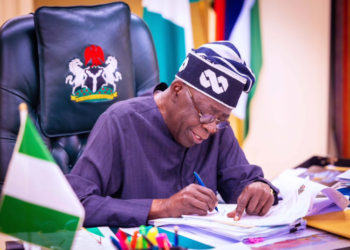
Minister of Budget and Economic Planning Atiku Bagudu attributed the growing access to World Bank procurement opportunities to Nigeria’s bold economic reforms over the past two and a half years. He praised President Bola Tinubu’s “courageous” policy choices, including subsidy removal, exchange rate unification, and other structural adjustments, which he said earned strong international support — particularly from the World Bank.
“Our president took what may be one of the most courageous combinations of choices ever made by a political leader,” Bagudu stated. “The World Bank stood by us, and that support has helped open these doors.”
Bagudu urged Nigerian contractors, artisans, and service providers to seize the opportunities, expressing confidence in their ability to expand globally. He also revealed that the World Bank, International Finance Corporation (IFC), and Multilateral Investment Guarantee Agency (MIGA) would soon sign an agreement to support project operations, enabling private entities to develop and finance initiatives that absorb capital and drive economic growth.
Vincelette highlighted the enormous scale of procurement opportunities available worldwide. The World Bank currently has $250 billion in approved net commitments ready for implementation across global projects, alongside more than 40,000 active procurement notices for companies to bid on.
In a move aimed at boosting local employment, the World Bank announced a mandatory local labour requirement in major contracts. This policy is expected to create significant jobs for Nigerian workers on Bank-funded infrastructure and development projects.
The seminar underscored Nigeria’s rising profile in international development finance and procurement. With strong reforms and international partnerships in place, Nigerian businesses are increasingly positioned to compete for high-value contracts across Africa and beyond, contributing to both national economic diversification and job creation.