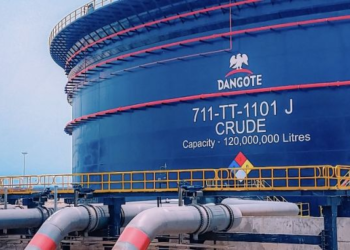
Nigerian Bonny Light crude steadied at approximately $67 per barrel as global oil markets rebounded from significant losses, driven by renewed optimism over potential U.S.-China trade talks. The recovery followed a sharp 4% decline in oil prices last Friday, which had pushed prices to their lowest since early May.
Global oil benchmarks also saw gains, with Brent crude reaching $63.76 and West Texas Intermediate (WTI) climbing 2% to $59.92. The uptick came as investors expressed cautious hope that upcoming discussions between U.S. President Donald Trump and Chinese President Xi Jinping at the Asia-Pacific Economic Cooperation (APEC) summit in South Korea could de-escalate trade tensions between the world’s two largest economies.
Last week’s price drop was triggered by heightened economic and geopolitical uncertainties, particularly after China tightened restrictions on rare earth exports in response to U.S. trade measures. President Trump’s announcement of stricter export controls on critical software and a proposed 100% tariff on Chinese goods further rattled markets. However, Trump’s recent comments on Truth Social, stating a desire to “help China, not hurt it,” have fueled speculation that both nations may seek a diplomatic resolution.
Analysts at Goldman Sachs suggested that the proposed trade restrictions might be a negotiating tactic, with both sides likely to moderate their stances. They noted that a May agreement to pause tariff escalations could be extended, further stabilizing markets. Bargain hunters also contributed to the rebound, capitalizing on what they viewed as an oversold market.
The Organization of the Petroleum Exporting Countries and its allies (OPEC+) continues to adopt a cautious approach, gradually easing voluntary production cuts to avoid oversupply. This strategy has helped maintain market stability despite uncertainties in global demand.
In Nigeria, the oil sector received a boost with the launch of the country’s first fully owned Floating Storage and Offloading (FSO) vessel near the Bonny export terminal. With a capacity of 2.2 million barrels, the facility, located in the Eastern Niger Delta, is set to enhance crude oil production and transportation from Oil Mining Lease 18 and surrounding assets. The FSO is expected to reduce dependence on pipelines, mitigating risks of oil theft and vandalism.
Additionally, oil markets found some relief following President Trump’s announcement that the Gaza conflict has ended, with a ceasefire now in its fourth day. The anticipated release of hostages and prisoners, coupled with Trump’s upcoming address to Israel’s parliament, has eased supply concerns, contributing to market stabilization.
While the oil market remains volatile, analysts suggest that a resolution to U.S.-China trade disputes and steady demand indicators could provide stronger support for crude prices in the near term. However, uncertainties persist, and traders are bracing for potential fluctuations in the weeks ahead.