RateCaptain
  • Home
    • About Us
    • Contact Us
  • FX Rates
  • Money Market
  • Cryptocurrency
  • Commodities
  • Corporates
No Result
View All Result
Subscribe
  • Home
    • About Us
    • Contact Us
  • FX Rates
  • Money Market
  • Cryptocurrency
  • Commodities
  • Corporates
No Result
View All Result
RateCaptain
No Result
View All Result
Home Corporates

 Nigerian Stock Market Loses N757 Billion in Two Days After FTSE Russell’s Downgrade

Stephen Akudike by Stephen Akudike
September 13, 2023
in Corporates, Money Market
Reading Time: 2 mins read
A A
0
Nigerian Stock Market Reaches 15-Year High, Banking Stocks Drive Surge
Share on FacebookShare on TwitterShare on WhatsappShare on Telegram

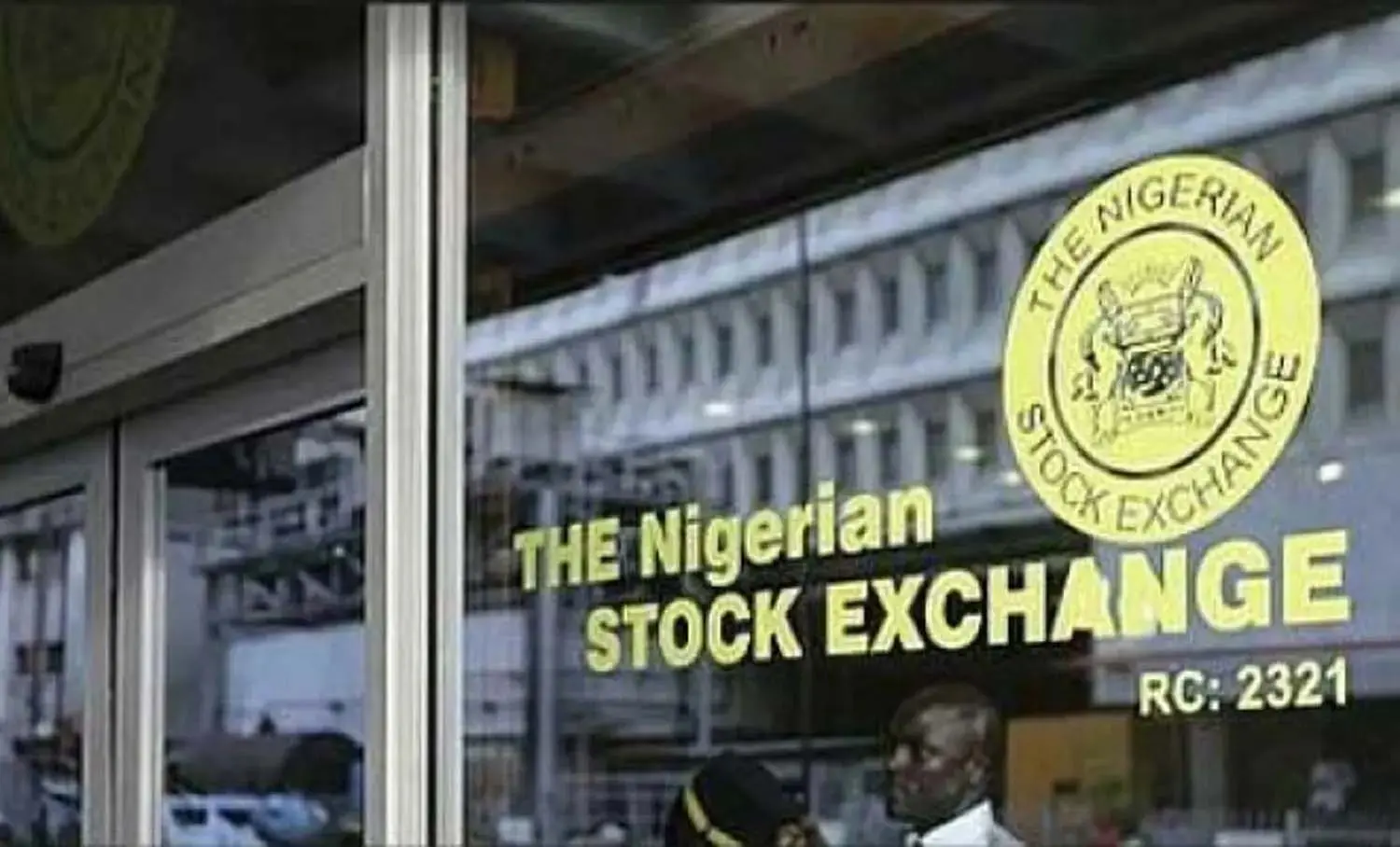
Investors on the Nigerian Exchange Limited (NGX) have experienced a significant setback, with a total loss of N757 billion over a span of just two days. This sharp decline in market value comes in the wake of FTSE Russell’s decision to downgrade the Nigerian market from frontier to unclassified status. FTSE Russell, a subsidiary of the London Stock Exchange Group (LSE), made this decision in light of Nigeria’s ongoing foreign exchange challenges, which have introduced a new wave of negative sentiment that threatens to trigger a mass sell-off on the stock market.

As of last week, the Nigerian stock market was valued at N37.295 trillion. However, in just two days, it saw a 2.07 percent decrease, resulting in a staggering N757 billion loss, bringing the market’s total capitalization down to N36.538 trillion. This downturn was further reflected in the NGX All Share Index (NGX ASI), which experienced a 2.03 percent drop, shedding 1,383.14 basis points to close at 66,760.20 basis points on Tuesday, compared to the 68,143.34 basis points it held at the end of the previous week.

AlsoRead

Oil Prices Surge Above Nigeria’s Budget Benchmark, Lifting Naira and Reserves

Nigeria’s External Reserves Hit 8-Year High of $46.11 Billion, Bolstering Naira Stability

NGX Gains N232 Billion in Market Capitalisation Despite Slower Trading Activity

The NGX banking Index, which had witnessed substantial foreign investor participation, also suffered a notable decline, plummeting by 8.54 percent over the course of two days, from 714.16 basis points at the start of the trading week to 653.15 basis points. This downturn in banking stocks contributed significantly to the overall market decline.

Despite the fact that local investors dominate the Nigerian stock market, accounting for 94 percent of market participants, foreign investors still play a crucial role. As of July 2023, foreign investors comprised six percent of the market, and the FTSE Russell’s downgrade has clearly had a noticeable impact on their sentiment, with many displaying negative reactions to the report.

David Adnori, Vice President of Highcap Securities Limited, attributed the stock market’s poor performance to the FTSE Russell report and its consequences, particularly the frustration experienced by foreign investors who have faced difficulties repatriating dividends for several years.

FTSE Russell, a renowned division of the London Stock Exchange Group, is known for producing, maintaining, licensing, and marketing stock market indices, including the FTSE 100 Index and Russell 2000 Index. Nigeria’s downgrade, which has already been ratified by the FTSE Russell Index Governance Board, will take effect on September 18, 2023.

This downgrade will result in Nigerian index constituents being removed from five FTSE Russell equity indices, including the FTSE Frontier Index Series, FTSE Frontier 50 Index, FTSE Ideal Ratings Islamic Index Series, and FTSE/JSE All Africa Index Series, among others. These constituents will be deleted at a nominal value of 0.0001 NGN.

FTSE Russell’s decision to downgrade Nigeria is based on its assessment of the country’s foreign exchange situation. Despite Nigeria’s adoption of a floating exchange rate regime for the naira in the Investors & Exporters’ (I&E) FX Window, which now operates on a “Willing Buyer, Willing Seller” basis, the lack of liquidity in this window continues to hinder international institutional investors’ ability to replicate benchmark changes.

FTSE Russell stated that the suspension of index changes for Nigeria within its equity indices since September 2022, coupled with no improvement in the ability of international institutional investors to repatriate capital at a foreign exchange rate used in FTSE Russell equity indices, made the downgrade inevitable.

Nigeria will, however, be retained in the FTSE ASEA Pan Africa Index Series, with certain corporate events suspended until further notice.

The downgrade by FTSE Russell has undoubtedly sent ripples through the Nigerian stock market, and market participants are now closely watching the local dynamics to assess the impact of this significant development on their investments.


Tags: downgradeforeign exchange challengesFTSE RussellMarket performanceNGX
Previous Post

Rising Rice Prices Highlight Climate Change’s Impact on Food Supplies

Next Post

Lionel Messi’s $10.8 Mansion Purchase Boosts South Florida’s Real Estate Market

Related News

Nigeria’s Opportunity: Navigating Global Oil Surge Amid Libya’s Top Oilfield Disruption

Oil Prices Surge Above Nigeria’s Budget Benchmark, Lifting Naira and Reserves

by Akpan Edidong
February 3, 2026
0

Global oil prices have climbed above Nigeria’s 2026 budget benchmark of $64.85 per barrel, delivering a timely boost to the...

Nigeria’s External Reserves Hit 8-Year High of $46.11 Billion, Bolstering Naira Stability

by Stephen Akudike
February 3, 2026
0

Nigeria’s gross external reserves have climbed to $46.11 billion as of January 28, 2026 — the highest level recorded in...

Nigerian Stock Market Witnesses N35 Billion Dip in Market Cap as Key Stocks Decline

NGX Gains N232 Billion in Market Capitalisation Despite Slower Trading Activity

by Stephen Akudike
January 30, 2026
0

The Nigerian Exchange Limited (NGX) ended Thursday’s session on a positive note, with total market capitalisation increasing by N232 billion...

Ghana Reaches Agreement on Eurobond Restructuring: Key Details Explained

Nigeria’s N501 Billion Power Sector Bond Fully Subscribed Amid Growing Controversy

by Stephen Akudike
January 29, 2026
0

The Federal Government has successfully raised N501 billion through a bond issuance aimed at settling long-standing debts owed to electricity...

Next Post
Lionel Messi’s $10.8 Mansion Purchase Boosts South Florida’s Real Estate Market

Lionel Messi's $10.8 Mansion Purchase Boosts South Florida's Real Estate Market

Leave a Reply Cancel reply

Your email address will not be published. Required fields are marked *

Recommended

Angola Surpasses Nigeria, Becomes Africa’s Largest Oil Producer in August

Naira Breaks Below N1,400 as Oil Rally and CBN Reforms Fuel Fresh Stability

February 5, 2026
Naira Surges Against US Dollar, Falls Below N1,000 Mark

Larger Disparities Boom Between Black Market and Official Rates

February 5, 2026

Popular Story

  • Zenith Bank Appoints Ebenezer Onyeagwu GMD/CEO

    0 shares
    Share 0 Tweet 0
  • Telecoms sector Q1 revenue hits N2tr

    0 shares
    Share 0 Tweet 0
  • India Raises Interest Rates For First Time In Four Years

    0 shares
    Share 0 Tweet 0
  • Alibaba breaks sales record on Singles Day

    0 shares
    Share 0 Tweet 0
  • Wema Bank shareholders approve N1.157m dividend after 14years

    0 shares
    Share 0 Tweet 0
RateCaptain

RateCaptain

We bring you the most accurate in new and market data. Check our landing page for details.

  • Home
  • About Us
  • Privacy Policy
  • Terms & Conditions
  • Disclaimer
  • Cookie Policy
  • Contact Us

Copyright © 2022 RateCaptain - All rights reserved by RateCaptain.

No Result
View All Result
  • Home
    • About Us
    • Contact Us
  • FX Rates
  • Money Market
  • Cryptocurrency
  • Commodities
  • Corporates

Copyright © 2022 RateCaptain - All rights reserved by RateCaptain.

RateCaptain
Manage Cookie Consent
To provide the best experiences, we use technologies like cookies to store and/or access device information. Consenting to these technologies will allow us to process data such as browsing behavior or unique IDs on this site. Not consenting or withdrawing consent, may adversely affect certain features and functions.
Functional Always active
The technical storage or access is strictly necessary for the legitimate purpose of enabling the use of a specific service explicitly requested by the subscriber or user, or for the sole purpose of carrying out the transmission of a communication over an electronic communications network.
Preferences
The technical storage or access is necessary for the legitimate purpose of storing preferences that are not requested by the subscriber or user.
Statistics
The technical storage or access that is used exclusively for statistical purposes. The technical storage or access that is used exclusively for anonymous statistical purposes. Without a subpoena, voluntary compliance on the part of your Internet Service Provider, or additional records from a third party, information stored or retrieved for this purpose alone cannot usually be used to identify you.
Marketing
The technical storage or access is required to create user profiles to send advertising, or to track the user on a website or across several websites for similar marketing purposes.
  • Manage options
  • Manage services
  • Manage {vendor_count} vendors
  • Read more about these purposes
View preferences
  • {title}
  • {title}
  • {title}
?>