RateCaptain
  • Home
    • About Us
    • Contact Us
  • FX Rates
  • Money Market
  • Cryptocurrency
  • Commodities
  • Corporates
No Result
View All Result
Subscribe
  • Home
    • About Us
    • Contact Us
  • FX Rates
  • Money Market
  • Cryptocurrency
  • Commodities
  • Corporates
No Result
View All Result
RateCaptain
No Result
View All Result
Home Economy

Nigeria’s External Debt Servicing Surges to $2.78 Billion Amid Economic Strain

Stephen Akudike by Stephen Akudike
September 3, 2024
in Economy, monetary policy, Money Market
Reading Time: 2 mins read
A A
0
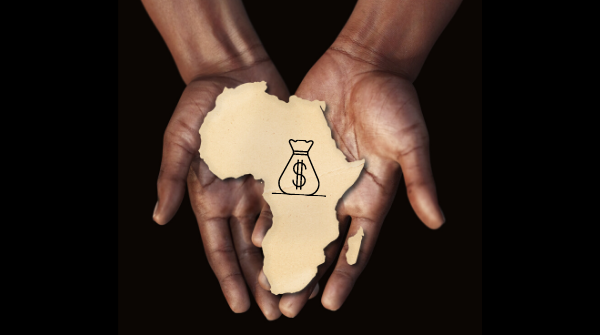
IMF Lists Top 10 African Nations with Highest Debt Burdens
Share on FacebookShare on TwitterShare on WhatsappShare on Telegram

In the first seven months of 2024, Nigeria’s expenditure on external debt servicing surged by 53.6% to $2.78 billion, up from $1.81 billion during the same period in 2023, according to the latest data from the Central Bank of Nigeria (CBN). This increase, detailed in the Weekly International Payments report, reflects a significant rise in Nigeria’s financial obligations to international creditors.

The highest debt servicing payments occurred in May, totaling $854.36 million, followed by January with $560.51 million and July with $542 million. Conversely, the lowest amount was recorded in June at $50.82 million. This pattern contrasts with the previous year, where the peak payment was $641.69 million in July 2023.

AlsoRead

Naira Breaks Below N1,400 as Oil Rally and CBN Reforms Fuel Fresh Stability

Larger Disparities Boom Between Black Market and Official Rates

Emefiele’s Naira Redesign Memo Takes Centre Stage in EFCC Trial

Nigeria’s growing debt burden is evident in recent figures from the Debt Management Office (DMO), which reported that the country’s total public debt reached N121.67 trillion ($91.46 billion) by March 31, 2024. This marks an increase from N97.34 trillion ($108.23 billion) at the end of 2023. The DMO attributed this rise to a combination of new borrowing and the depreciation of the naira.

Tajudeen Ibrahim, Director of Research and Strategy at Chapel Hill Denham, explained that the increase in debt servicing costs is due to both the rise in debt and the impact of currency devaluation. “There is a foreign currency translation effect on the debt servicing, alongside an actual increase in debt value,” Ibrahim noted.

Concerns are growing that Nigeria could face a debt trap if borrowing continues at high rates, especially given the country’s low credit rating, which restricts access to cheaper funding. Analysts suggest focusing borrowing on capital expenditures rather than consumption to mitigate these risks.

Fitch Ratings recently revised Nigeria’s outlook to positive from stable, while maintaining a ‘B-’ rating. The agency expects external debt servicing to hit $4.8 billion in 2024, with a slight increase to $5.2 billion in 2025. Fitch highlighted that Nigeria plans to meet its external financing obligations through a mix of multilateral loans, syndicated loans, and potentially commercial borrowing.

Despite these projections, President Bola Tinubu’s administration has committed to curbing excessive borrowing and addressing the associated fiscal pressures. The government’s strategy includes enhancing domestic borrowing and managing scarce resources more effectively.

At the subnational level, debt servicing remains a challenge, with 22 states collectively spending N251.79 billion on debt service from previous administrations within nine months, according to a recent report.

As Nigeria grapples with rising debt servicing costs, the government faces mounting pressure to balance fiscal stability with economic growth.


Tags: #NigeriaCentral Bank of Nigeriaexternal debt servicing
Previous Post

Nigeria Emerges as Most Cash-Dominant Economy Globally in 2023

Next Post

Banks’ Deposits with CBN Surge to N3.42 Trillion Amid Policy Changes

Related News

Angola Surpasses Nigeria, Becomes Africa’s Largest Oil Producer in August

Naira Breaks Below N1,400 as Oil Rally and CBN Reforms Fuel Fresh Stability

by Akpan Edidong
February 5, 2026
0

Nigeria’s naira has strengthened markedly in the official foreign exchange market, closing January at N1,386.55 per US dollar  its firmest...

Naira Surges Against US Dollar, Falls Below N1,000 Mark

Larger Disparities Boom Between Black Market and Official Rates

by Stephen Akudike
February 5, 2026
0

The gap between Nigeria’s official and parallel (black market) exchange rates has widened to over 6%, reviving fears of renewed...

U.S. Steps In on Emefiele Trial, Alleges Human Rights Violations

Emefiele’s Naira Redesign Memo Takes Centre Stage in EFCC Trial

by Victoria Attah
February 5, 2026
0

A 2022 memo from former Central Bank of Nigeria (CBN) Governor Godwin Emefiele seeking presidential approval for the controversial naira...

FG Allocates N5.1 Billion for Presidential Yacht and N5.5 Billion For Student Loans

Government Securities Now 11% of Nigerian Banks’ Assets as Credit Growth Lags

by Stephen Akudike
February 4, 2026
0

Nigerian banks’ exposure to government securities has risen sharply in recent years, now accounting for approximately 11% of their total...

Next Post
Leading Banks Struggle with Capital Deficits: Zenith Bank and Others Strive to Meet CBN Standards

Banks’ Deposits with CBN Surge to N3.42 Trillion Amid Policy Changes

Leave a Reply Cancel reply

Your email address will not be published. Required fields are marked *

Recommended

Angola Surpasses Nigeria, Becomes Africa’s Largest Oil Producer in August

Naira Breaks Below N1,400 as Oil Rally and CBN Reforms Fuel Fresh Stability

February 5, 2026
Naira Surges Against US Dollar, Falls Below N1,000 Mark

Larger Disparities Boom Between Black Market and Official Rates

February 5, 2026

Popular Story

  • Zenith Bank Appoints Ebenezer Onyeagwu GMD/CEO

    0 shares
    Share 0 Tweet 0
  • Telecoms sector Q1 revenue hits N2tr

    0 shares
    Share 0 Tweet 0
  • India Raises Interest Rates For First Time In Four Years

    0 shares
    Share 0 Tweet 0
  • Alibaba breaks sales record on Singles Day

    0 shares
    Share 0 Tweet 0
  • SEC Moves to Ban Companies from Distributing Gifts at Meetings

    0 shares
    Share 0 Tweet 0
RateCaptain

RateCaptain

We bring you the most accurate in new and market data. Check our landing page for details.

  • Home
  • About Us
  • Privacy Policy
  • Terms & Conditions
  • Disclaimer
  • Cookie Policy
  • Contact Us

Copyright © 2022 RateCaptain - All rights reserved by RateCaptain.

No Result
View All Result
  • Home
    • About Us
    • Contact Us
  • FX Rates
  • Money Market
  • Cryptocurrency
  • Commodities
  • Corporates

Copyright © 2022 RateCaptain - All rights reserved by RateCaptain.

RateCaptain
Manage Cookie Consent
To provide the best experiences, we use technologies like cookies to store and/or access device information. Consenting to these technologies will allow us to process data such as browsing behavior or unique IDs on this site. Not consenting or withdrawing consent, may adversely affect certain features and functions.
Functional Always active
The technical storage or access is strictly necessary for the legitimate purpose of enabling the use of a specific service explicitly requested by the subscriber or user, or for the sole purpose of carrying out the transmission of a communication over an electronic communications network.
Preferences
The technical storage or access is necessary for the legitimate purpose of storing preferences that are not requested by the subscriber or user.
Statistics
The technical storage or access that is used exclusively for statistical purposes. The technical storage or access that is used exclusively for anonymous statistical purposes. Without a subpoena, voluntary compliance on the part of your Internet Service Provider, or additional records from a third party, information stored or retrieved for this purpose alone cannot usually be used to identify you.
Marketing
The technical storage or access is required to create user profiles to send advertising, or to track the user on a website or across several websites for similar marketing purposes.
  • Manage options
  • Manage services
  • Manage {vendor_count} vendors
  • Read more about these purposes
View preferences
  • {title}
  • {title}
  • {title}
?>