RateCaptain
  • Home
    • About Us
    • Contact Us
  • FX Rates
  • Money Market
  • Cryptocurrency
  • Commodities
  • Corporates
No Result
View All Result
Subscribe
  • Home
    • About Us
    • Contact Us
  • FX Rates
  • Money Market
  • Cryptocurrency
  • Commodities
  • Corporates
No Result
View All Result
RateCaptain
No Result
View All Result
Home Commodities

Nigeria’s Oil Reserve May Only Last For 49 Years – World Bank

Rate Captain by Rate Captain
October 28, 2021
in Commodities, Economics, News
Reading Time: 2 mins read
A A
0
Share on FacebookShare on TwitterShare on WhatsappShare on Telegram

AlsoRead

Canada Names Eight Firms That Can Hire Nigerians Without LMIA 

US Makes Visa Bond of Up to $20,000 Permanent, Keeps Nigeria on Restricted List

Nigeria’s Average Petrol Price Rises to N1,288.54 in March 2026, Anambra Pays Highest

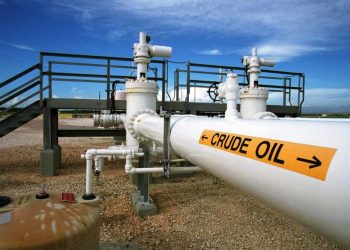
The World Bank published a report titled “The Changing Wealth of Nations 2021” on Wednesday, which stated that Nigeria’s current oil reserves would only last about 49 years unless new oil drills are made available.

Changing Wealth of Nations is the fourth World Bank report on global wealth accounting. It breaks new ground by expanding coverage and measures of capital assets, including natural capital. for the first time, Applying purchasing power parity (PPP) prices to wealth and decomposition analysis to understand the drivers of change in wealth.

“Oil-producing countries like Nigeria and Ecuador could entirely deplete their oil reserves in fewer than 50 years at current depletion rates, assuming no other significant oil fields are discovered or become commercially viable,” the authors of the report wrote.

The report also suggests that resource-rich countries such as Guinea, Sierra Leone, and Iraq require better wealth management to avoid disastrous consequences on their national wealth in the future.

“This is true not only for hydrocarbon-rich countries such as Iraq and Nigeria but also for some mineral-rich countries, such as Guinea and Sierra Leone. The negative adjusted net savings in these countries are a lead indicator of unsustainable wealth management. If continued, it will negatively impact the value of future wealth,” the report said.

Investments in renewable natural resources and human capital could help countries not rely so much on oil and gas but diversify their asset portfolio for a more sustainable future.

The report explained: “This is because the value of a depleting non-renewable asset is being consumed rather than being invested in offsetting asset accumulation, such as via human capital or productive capital investment. Therefore, governments may need to consider policies that would better preserve and build wealth or look for alternative sources of income to raise their net savings.”

Previous Post

All-Share Index Dropped Within A Narrow Margin During Mid-Week Trade

Next Post

NNPC Set To Construct 21 Roads For Infrastructural Development

Related News

10,180 Nigerians Immigrates to Canada Within H1 2023, IRCC Data Reveals

Canada Names Eight Firms That Can Hire Nigerians Without LMIA 

by Victoria Attah
August 5, 2026
0

Canada has designated eight high-growth companies authorised to hire eligible foreign professionals, including Nigerians, through a special work-permit pathway that...

US Makes Visa Bond of Up to $20,000 Permanent, Keeps Nigeria on Restricted List

by Victoria Attah
August 3, 2026
0

The United States has made permanent a visa bond programme that allows consular officers to require deposits of up to...

Debunking the Fuel Scarcity Myth and Its Impact on Financial Wellness

Nigeria’s Average Petrol Price Rises to N1,288.54 in March 2026, Anambra Pays Highest

by Akpan Edidong
May 6, 2026
0

The average retail price of Premium Motor Spirit (PMS) across Nigeria increased to N1,288.54 per litre in March 2026, according...

IMF Applauds Tinubu Policy Reforms While Lowering Growth Projections

IMF Refuses to Endorse External or Domestic Borrowing for Nigeria.

by Victoria Attah
April 17, 2026
0

The International Monetary Fund (IMF) has declined to recommend whether Nigeria should prioritise external or domestic borrowing, insisting instead that...

Next Post

NNPC Set To Construct 21 Roads For Infrastructural Development

Leave a Reply Cancel reply

Your email address will not be published. Required fields are marked *

Recommended

Nigerian Customs Deactivate Two Banks Over Failure to Remit Duties.

Apapa Customs Posts Record N28.10 Billion Daily Collection

August 20, 2026
Nigeria’s Public Debt Hits N46.25trn In Q4 2022 – NBS

Energy Inflation Falls to 4.37% in July, Lowest Level in Four Months

August 20, 2026

Popular Story

  • Navigating Inflation Crossroads: Nigeria’s Economic Odyssey Amidst Global Trends

    Food Inflation Climbs to 20.31% in July, Marking Fifth Straight Monthly Rise

    0 shares
    Share 0 Tweet 0
  • Inflation Rate Falls to 15.43% in July, NBS Reports

    0 shares
    Share 0 Tweet 0
  • CBN Reopens OMO Market to Retail Investors, Raising Pressure on Weak Equities

    0 shares
    Share 0 Tweet 0
  • NAFEM Turnover Climbs to $1.41 Billion, Highest Level in Five Weeks

    0 shares
    Share 0 Tweet 0
  • 31 Nigerian States Grapple with N2.57 Trillion Domestic Debt Amid No Foreign Inflows

    0 shares
    Share 0 Tweet 0

RateCaptain

We bring you the most accurate in new and market data. Check our landing page for details.

  • Home
  • About Us
  • Privacy Policy
  • Terms & Conditions
  • Disclaimer
  • Cookie Policy
  • Contact Us

Copyright © 2022 RateCaptain - All rights reserved by RateCaptain.

No Result
View All Result
  • Home
    • About Us
    • Contact Us
  • FX Rates
  • Money Market
  • Cryptocurrency
  • Commodities
  • Corporates

Copyright © 2022 RateCaptain - All rights reserved by RateCaptain.

RateCaptain
Manage Cookie Consent
To provide the best experiences, we use technologies like cookies to store and/or access device information. Consenting to these technologies will allow us to process data such as browsing behavior or unique IDs on this site. Not consenting or withdrawing consent, may adversely affect certain features and functions.
Functional Always active
The technical storage or access is strictly necessary for the legitimate purpose of enabling the use of a specific service explicitly requested by the subscriber or user, or for the sole purpose of carrying out the transmission of a communication over an electronic communications network.
Preferences
The technical storage or access is necessary for the legitimate purpose of storing preferences that are not requested by the subscriber or user.
Statistics
The technical storage or access that is used exclusively for statistical purposes. The technical storage or access that is used exclusively for anonymous statistical purposes. Without a subpoena, voluntary compliance on the part of your Internet Service Provider, or additional records from a third party, information stored or retrieved for this purpose alone cannot usually be used to identify you.
Marketing
The technical storage or access is required to create user profiles to send advertising, or to track the user on a website or across several websites for similar marketing purposes.
  • Manage options
  • Manage services
  • Manage {vendor_count} vendors
  • Read more about these purposes
View preferences
  • {title}
  • {title}
  • {title}
?>