Nigeria’s trade surplus surged by 44.3% to N7.46 trillion in the second quarter of 2025, up from N5.17 trillion in Q1, fueled by robust export growth, according to the National Bureau of Statistics’ latest Foreign Trade in Goods Statistics report. The increase reflects stronger export earnings outpacing a slight decline in imports, bolstering the nation’s external trade position.
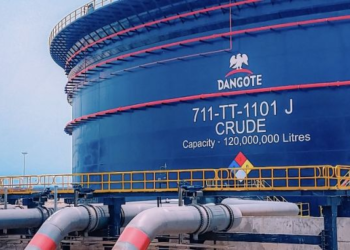
Total exports reached N22.75 trillion, up 10.5% from Q1 and 28.4% higher than Q2 2024, while imports dipped 0.9% to N15.29 trillion. Crude oil exports, valued at N11.97 trillion (52.6% of total exports), fell 5.1% year-on-year and 7.6% from Q1. However, other petroleum products, including gas and refined fuels, nearly doubled to N7.74 trillion, and non-oil exports rose to N3.05 trillion, accounting for 13.4% of exports. Manufactured goods exports soared by 173% to N803.8 billion, driven by vessels, floating platforms, and aluminum alloys sent to Europe and Asia. Solid minerals exports grew 31% to N77.3 billion, with cement clinkers and mineral substances shipped to China and Cameroon.
Imports were dominated by Asia, contributing N7.65 trillion (50%), with China supplying N4.96 trillion in goods, far outpacing the United States’ N2.16 trillion. Key imports included machinery, refined petroleum, wheat, and pharmaceuticals, with manufactured goods comprising N7.88 trillion. Agricultural imports, primarily wheat from Canada and Russia, rose to N1.18 trillion, underscoring Nigeria’s reliance on foreign inputs.
Spain led export destinations with N2.47 trillion (10.9%), followed by India, France, the Netherlands, and Canada, collectively accounting for nearly 40% of exports. Europe absorbed 38% of shipments, Asia 33%, the Americas 16%, and Africa 13%, with ECOWAS countries receiving N1.93 trillion in petroleum products. Apapa Port handled N17.93 trillion in exports and N6.96 trillion in imports, while Lekki Deep Sea Port’s role grew, managing over 10% of exports and 16% of imports.
The widened trade surplus strengthens Nigeria’s foreign reserves and eases naira pressure, but heavy reliance on petroleum exports highlights vulnerability to global shocks. Growth in manufactured and solid mineral exports signals diversification, yet high import costs for industrial goods underscore the need for deeper industrialization to sustain economic stability.