RateCaptain
  • Home
    • About Us
    • Contact Us
  • FX Rates
  • Money Market
  • Cryptocurrency
  • Commodities
  • Corporates
No Result
View All Result
Subscribe
  • Home
    • About Us
    • Contact Us
  • FX Rates
  • Money Market
  • Cryptocurrency
  • Commodities
  • Corporates
No Result
View All Result
RateCaptain
No Result
View All Result
Home Economy

Petrol Prices Climb 76.73% Year-on-Year in April 2025, Says NBS

Stephen Akudike by Stephen Akudike
May 23, 2025
in Economy, Energy
Reading Time: 2 mins read
A A
0
Share on FacebookShare on TwitterShare on WhatsappShare on Telegram

Nigeria has seen a significant surge in the cost of Premium Motor Spirit (PMS), with the average retail price rising by 76.73% in April 2025 compared to the same month last year, according to the latest figures from the National Bureau of Statistics (NBS).

The average pump price climbed to N1,239.33 per litre, up from N701.24 in April 2024. Despite this year-on-year increase, April saw a 1.77% month-on-month drop from N1,261.65 in March 2025.

AlsoRead

IMF Warns Rising Stablecoin Use Could Weaken Naira Demand and Monetary Policy

Nigeria’s Inflation Climbs to 15.93% in May as Price Pressures Persist

Nigerians Borrowed Record $3.18 Billion in Airtime Credit Last Year – Report

Regional Disparities: South East Most Affected

Among the six geopolitical zones, the South East recorded the highest average PMS price at N1,341.71, followed closely by the North West (N1,325.90) and North Central (N1,242.94). In contrast, the South West posted the lowest regional average at N1,138.64.

State-by-State Breakdown

Imo State emerged as the most expensive state for petrol buyers, with an average of N1,588.50 per litre, followed by Jigawa (N1,567.84) and Sokoto (N1,550.00). The lowest average prices were observed in Yobe (N970.00), Kwara (N1,014.85), and Osun (N1,042.49).

Refinery Pricing and Market Trends

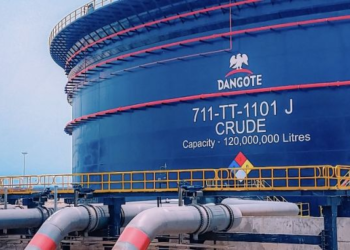
Fuel prices across major cities like Abuja and Lagos hovered around N935 and N880 per litre, respectively. The Dangote Refinery, in mid-April, slashed its ex-depot price to N835 per litre, marking its second price reduction in a single week, likely in a bid to ease market pressures.

Energy Costs Fuel Inflation Perception

A recent survey from the Central Bank of Nigeria (CBN) identified energy costs—specifically petrol, diesel, and electricity—as the most influential factor shaping inflation expectations. 91% of surveyed individuals cited energy prices as a primary driver of inflation concerns.

Additionally, transportation expenses—including road, air, rail, and water travel—were seen as a major contributor to rising costs, cited by 86.7% of respondents.

The rising transport costs have been further exacerbated by the removal of fuel subsidies, tolls, port charges, and logistics-related expenses.

Inflation Shows Modest Decline

Despite the surge in fuel prices, Nigeria’s inflation rate dipped slightly to 23.71% in April, down from 24.23% in March, offering a faint sign of economic relief. On a month-to-month basis, inflation eased to 1.86%, compared to 3.90% in the previous month.

Conclusion

The sharp rise in PMS prices continues to impact Nigerian households and businesses, especially in the South East and other high-cost regions. While recent data offers some hope of inflationary slowdown, energy and transportation costs remain major economic stressors. Policymakers and stakeholders will likely need to implement more targeted interventions to stabilize fuel prices and mitigate their broader effects.

 

Tags: petrol
Previous Post

Surge in Investor Appetite Sparks Vibrant Treasury Bills Market

Next Post

FirstHoldCo Shareholders Approve ₦25.1 Billion Dividend as Earnings Climb

Related News

IMF Warns Rising Stablecoin Use Could Weaken Naira Demand and Monetary Policy

by Bolarinwa Mathew
June 16, 2026
0

The International Monetary Fund (IMF) has raised concerns over the rapid adoption of U.S. dollar-denominated stablecoins in Nigeria, warning that...

Navigating Inflation Crossroads: Nigeria’s Economic Odyssey Amidst Global Trends

Nigeria’s Inflation Climbs to 15.93% in May as Price Pressures Persist

by Victoria Attah
June 16, 2026
0

Nigeria’s headline inflation rate rose for the second consecutive month, reaching 15.93% in May 2026, up from 15.69% recorded in...

Nigeria’s MTN and Airtel Record N403.2 Billion Data Revenue In Q3, 2023

Nigerians Borrowed Record $3.18 Billion in Airtime Credit Last Year – Report

by Victoria Attah
June 15, 2026
0

Mobile subscribers across Nigeria and other parts of Africa took a total of $3.18 billion worth of airtime on credit...

IMF Applauds Tinubu Policy Reforms While Lowering Growth Projections

Nigeria’s External Debt Projected to Reach $72.6 Billion by 2027 – IMF

by Jide Omodele
June 10, 2026
0

The International Monetary Fund (IMF) has projected that Nigeria’s public external debt will rise sharply to $72.6 billion by 2027,...

Next Post
 FBN Holdings Achieves N1 Trillion Market Cap Milestone

FirstHoldCo Shareholders Approve ₦25.1 Billion Dividend as Earnings Climb

Leave a Reply Cancel reply

Your email address will not be published. Required fields are marked *

Recommended

Dollar Index Loses Steam as Treasury Yields Drift Back to 4.8%

Naira Strengthens to N1,356 per Dollar in Official Market, Best Level Since April

June 16, 2026
World Bank Extends Nigeria’s Digital Identification Project Deadline Amid Missed Targets

Tin Can and Apapa Ports Rank Among World’s Top 20 Most Improved Container Ports

June 16, 2026

Popular Story

  • Liquidity Crunch: Banking Sector’s Borrowing from CBN Surges to N12 Trillion.

     Banks Generate N224.69 Billion from E-Banking and ATM Charges in Q1 2026

    0 shares
    Share 0 Tweet 0
  • Nigeria’s Inflation Climbs to 15.93% in May as Price Pressures Persist

    0 shares
    Share 0 Tweet 0
  • 31 Nigerian States Grapple with N2.57 Trillion Domestic Debt Amid No Foreign Inflows

    0 shares
    Share 0 Tweet 0
  • UK Inflation Eases Slightly in June 2023 Amid Falling Fuel Prices and Moderate Food Costs

    0 shares
    Share 0 Tweet 0
  • IMF Warns Rising Stablecoin Use Could Weaken Naira Demand and Monetary Policy

    0 shares
    Share 0 Tweet 0

RateCaptain

We bring you the most accurate in new and market data. Check our landing page for details.

  • Home
  • About Us
  • Privacy Policy
  • Terms & Conditions
  • Disclaimer
  • Cookie Policy
  • Contact Us

Copyright © 2022 RateCaptain - All rights reserved by RateCaptain.

No Result
View All Result
  • Home
    • About Us
    • Contact Us
  • FX Rates
  • Money Market
  • Cryptocurrency
  • Commodities
  • Corporates

Copyright © 2022 RateCaptain - All rights reserved by RateCaptain.

RateCaptain
Manage Cookie Consent
To provide the best experiences, we use technologies like cookies to store and/or access device information. Consenting to these technologies will allow us to process data such as browsing behavior or unique IDs on this site. Not consenting or withdrawing consent, may adversely affect certain features and functions.
Functional Always active
The technical storage or access is strictly necessary for the legitimate purpose of enabling the use of a specific service explicitly requested by the subscriber or user, or for the sole purpose of carrying out the transmission of a communication over an electronic communications network.
Preferences
The technical storage or access is necessary for the legitimate purpose of storing preferences that are not requested by the subscriber or user.
Statistics
The technical storage or access that is used exclusively for statistical purposes. The technical storage or access that is used exclusively for anonymous statistical purposes. Without a subpoena, voluntary compliance on the part of your Internet Service Provider, or additional records from a third party, information stored or retrieved for this purpose alone cannot usually be used to identify you.
Marketing
The technical storage or access is required to create user profiles to send advertising, or to track the user on a website or across several websites for similar marketing purposes.
  • Manage options
  • Manage services
  • Manage {vendor_count} vendors
  • Read more about these purposes
View preferences
  • {title}
  • {title}
  • {title}
?>