RateCaptain
  • Home
    • About Us
    • Contact Us
  • FX Rates
  • Money Market
  • Cryptocurrency
  • Commodities
  • Corporates
No Result
View All Result
Subscribe
  • Home
    • About Us
    • Contact Us
  • FX Rates
  • Money Market
  • Cryptocurrency
  • Commodities
  • Corporates
No Result
View All Result
RateCaptain
No Result
View All Result
Home Economy

Soaring Fuel Prices Trigger Concerns: is Natural Gas as an Alternative for Nigerian Consumers?

Akpan Edidong by Akpan Edidong
September 13, 2023
in Economy
Reading Time: 2 mins read
A A
0
Soaring Fuel Prices Trigger Concerns: is  Natural Gas as an Alternative for Nigerian Consumers?
Share on FacebookShare on TwitterShare on WhatsappShare on Telegram

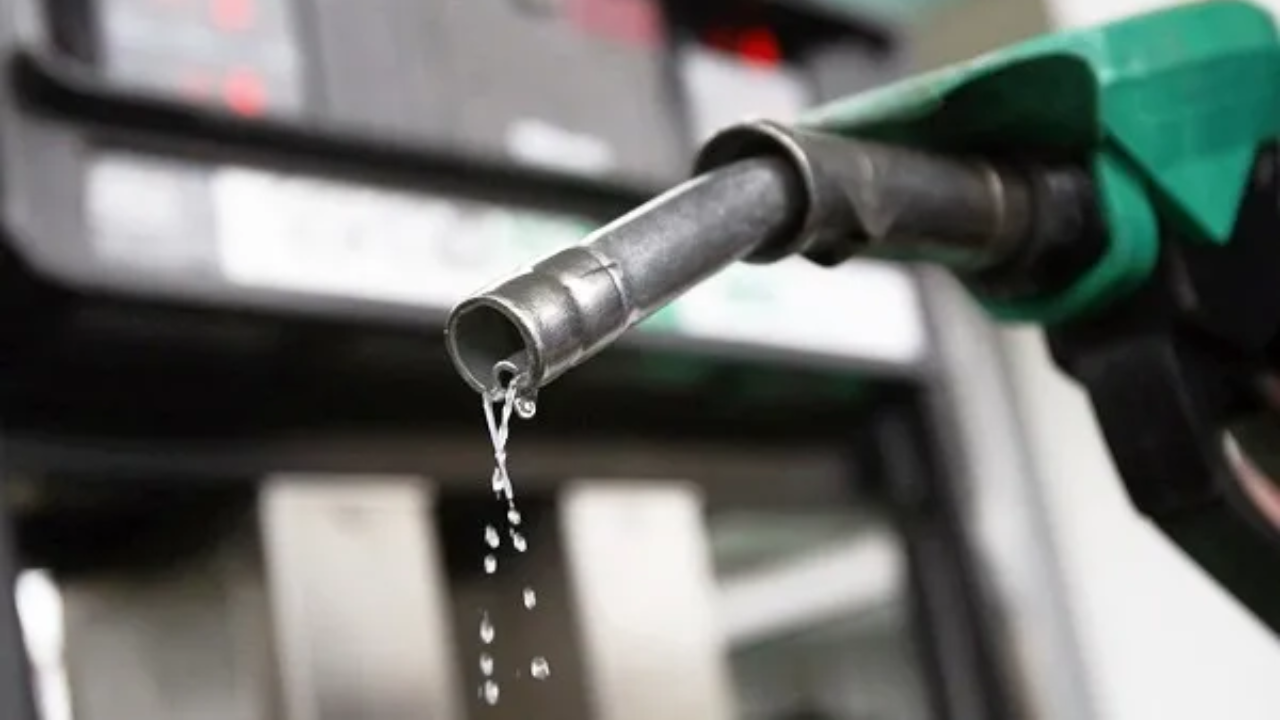
The cost of fuel in Nigeria continues to rise as depot prices reach N490 per litre, surpassing the fixed rate of N488 per litre. Private downstream companies in Lagos have responded by selling fuel at higher prices, causing concerns among consumers. With depot prices climbing and reports of hoarding, fuel prices are expected to increase further. In response to this situation, the Nigeria Labour Congress (NLC) is exploring natural gas alternatives as a means to alleviate the burden on everyday Nigerians. This article delves into the rising fuel prices, the NLC’s proposed solutions, and the potential of natural gas as a viable alternative for consumers.

Escalating Fuel Prices and Discrepancies:
Depot prices have soared to N490 per litre, prompting some private downstream companies in Lagos to sell fuel above the fixed rate of N488 per litre. While the Nigerian National Petroleum Company Limited (NNPCL) depot continues to sell fuel to major marketers at N466.52 per litre, private depots are selling fuel at N490 per litre. This disparity in pricing has led to an increase in fuel pump prices, with NNPCL stations adhering to the fixed rate of N488 per litre. Major marketers sell fuel between N488 and N492 per litre, while independent marketers purchasing from private depots at N490 per litre are selling fuel above N500 per litre. The situation is aggravated by black market traders who exploit hoarding by certain fuel stations, selling fuel at N550 per litre or higher prices.

AlsoRead

Nigerians Borrowed Record $3.18 Billion in Airtime Credit Last Year – Report

Nigeria’s External Debt Projected to Reach $72.6 Billion by 2027 – IMF

NGX Gains 0.53% as Airtel Africa and First Holdco Lead Market Rally

The NLC’s Pursuit of Alternatives:
The Nigeria Labour Congress (NLC) has expressed concerns about the rising fuel prices, particularly regarding the impact on everyday Nigerians. In response, the NLC is exploring natural gas alternatives as a means to provide relief. The abundance of natural gas deposits in Nigeria presents an opportunity to tap into this resource and create viable alternatives for consumers. The NLC highlights that fuel prices have become unaffordable for the majority, making the pursuit of natural gas alternatives a necessity.

The Potential of Natural Gas:
According to Joe Ajaero, the president of the NLC, natural gas can be a viable solution to alleviate the burden of high fuel prices. A pilot study conducted in the Edo area, where approximately 10,000 vehicles were converted to compressed natural gas (CNG), showed promising results. Former Minister of State Petroleum, Timipre Sylva, stated that a litre of compressed natural gas (CNG) would cost around N90. This significant cost difference compared to traditional fuel makes natural gas an attractive alternative. A switch to CNG could provide consumers with a more affordable and sustainable option for their vehicles.

Government Initiatives and Support:
The Nigerian government, aware of the challenges posed by escalating fuel prices, is already taking steps to explore natural gas alternatives. The Tinubu administration has announced plans to increase workers’ salaries and establish a framework for Nigerians to run their vehicles on natural gas. Additionally, Governor Godwin Obaseki of Edo State has emphasized the abundance of natural gas resources in the state. Encouraging more manufacturing companies to invest in the state and utilize natural gas as a fuel source could contribute to the adoption of natural gas alternatives on a larger scale.

Bottom line :
The continuous increase in fuel prices has raised concerns among Nigerian consumers. As depot prices reach N490 per litre, some private downstream companies are selling fuel above the fixed rate, exacerbating the situation. In response, the Nigeria Labour Congress (NLC) is exploring natural gas alternatives, recognizing the abundance of natural gas resources in the country.
Tags: #Nigeria#Sustainability.affordabilityalternativesblack marketCompressed Natural Gas (CNG)depot pricesfuel pricesgovernment initiativeshoardingnatural gasNigerian National Petroleum Company LimitedNLCpricing disparitiesrising costsvehicle fuel
Previous Post

Nigeria’s Forex Market Reacts to Exchange Rate Unification.

Next Post

ECOWAS Bank Signs $30M Credit Line with Access Bank in Ghana

Related News

Nigeria’s MTN and Airtel Record N403.2 Billion Data Revenue In Q3, 2023

Nigerians Borrowed Record $3.18 Billion in Airtime Credit Last Year – Report

by Victoria Attah
June 15, 2026
0

Mobile subscribers across Nigeria and other parts of Africa took a total of $3.18 billion worth of airtime on credit...

IMF Applauds Tinubu Policy Reforms While Lowering Growth Projections

Nigeria’s External Debt Projected to Reach $72.6 Billion by 2027 – IMF

by Jide Omodele
June 10, 2026
0

The International Monetary Fund (IMF) has projected that Nigeria’s public external debt will rise sharply to $72.6 billion by 2027,...

Liquidity Crunch: Banking Sector’s Borrowing from CBN Surges to N12 Trillion.

NGX Gains 0.53% as Airtel Africa and First Holdco Lead Market Rally

by Jide Omodele
June 10, 2026
0

The Nigerian equities market extended its positive performance on Tuesday, closing higher by 0.53% amid renewed buying interest in major...

Oil Prices Reach $90 Following Supply Reduction by Saudi Arabia and Russia.

Nigeria’s Crude Oil Exports Climb to N11.2 Trillion in First Quarter of 2026

by Akpan Edidong
June 9, 2026
0

Nigeria recorded crude oil exports worth N11.20 trillion in the first quarter of 2026, reinforcing oil’s position as the country’s...

Next Post
ECOWAS Bank Signs $30M Credit Line with Access Bank in Ghana

ECOWAS Bank Signs $30M Credit Line with Access Bank in Ghana

Leave a Reply Cancel reply

Your email address will not be published. Required fields are marked *

Recommended

Liquidity Crunch: Banking Sector’s Borrowing from CBN Surges to N12 Trillion.

 Banks Generate N224.69 Billion from E-Banking and ATM Charges in Q1 2026

June 15, 2026

Elon Musk’s Wealth Crosses $1 Trillion Mark, Overtaking Nigeria’s Entire Economy

June 15, 2026

Popular Story

  • Liquidity Crunch: Banking Sector’s Borrowing from CBN Surges to N12 Trillion.

     Banks Generate N224.69 Billion from E-Banking and ATM Charges in Q1 2026

    0 shares
    Share 0 Tweet 0
  • Nigerians Borrowed Record $3.18 Billion in Airtime Credit Last Year – Report

    0 shares
    Share 0 Tweet 0
  • Elon Musk’s Wealth Crosses $1 Trillion Mark, Overtaking Nigeria’s Entire Economy

    0 shares
    Share 0 Tweet 0
  • UK Inflation Eases Slightly in June 2023 Amid Falling Fuel Prices and Moderate Food Costs

    0 shares
    Share 0 Tweet 0
  • Naira Depreciates by N5.08 Week-on-Week as Dollar Liquidity Tightens

    0 shares
    Share 0 Tweet 0

RateCaptain

We bring you the most accurate in new and market data. Check our landing page for details.

  • Home
  • About Us
  • Privacy Policy
  • Terms & Conditions
  • Disclaimer
  • Cookie Policy
  • Contact Us

Copyright © 2022 RateCaptain - All rights reserved by RateCaptain.

No Result
View All Result
  • Home
    • About Us
    • Contact Us
  • FX Rates
  • Money Market
  • Cryptocurrency
  • Commodities
  • Corporates

Copyright © 2022 RateCaptain - All rights reserved by RateCaptain.

RateCaptain
Manage Cookie Consent
To provide the best experiences, we use technologies like cookies to store and/or access device information. Consenting to these technologies will allow us to process data such as browsing behavior or unique IDs on this site. Not consenting or withdrawing consent, may adversely affect certain features and functions.
Functional Always active
The technical storage or access is strictly necessary for the legitimate purpose of enabling the use of a specific service explicitly requested by the subscriber or user, or for the sole purpose of carrying out the transmission of a communication over an electronic communications network.
Preferences
The technical storage or access is necessary for the legitimate purpose of storing preferences that are not requested by the subscriber or user.
Statistics
The technical storage or access that is used exclusively for statistical purposes. The technical storage or access that is used exclusively for anonymous statistical purposes. Without a subpoena, voluntary compliance on the part of your Internet Service Provider, or additional records from a third party, information stored or retrieved for this purpose alone cannot usually be used to identify you.
Marketing
The technical storage or access is required to create user profiles to send advertising, or to track the user on a website or across several websites for similar marketing purposes.
  • Manage options
  • Manage services
  • Manage {vendor_count} vendors
  • Read more about these purposes
View preferences
  • {title}
  • {title}
  • {title}
?>