RateCaptain
  • Home
    • About Us
    • Contact Us
  • FX Rates
  • Money Market
  • Cryptocurrency
  • Commodities
  • Corporates
No Result
View All Result
Subscribe
  • Home
    • About Us
    • Contact Us
  • FX Rates
  • Money Market
  • Cryptocurrency
  • Commodities
  • Corporates
No Result
View All Result
RateCaptain
No Result
View All Result
Home Currencies

The Fate of Bureau De Change Companies in Nigeria Following Exchange Rate Unification.

Jide Omodele by Jide Omodele
September 13, 2023
in Currencies, Economy
Reading Time: 3 mins read
A A
0
The Fate of Bureau De Change Companies in Nigeria Following Exchange Rate Unification.
Share on FacebookShare on TwitterShare on WhatsappShare on Telegram

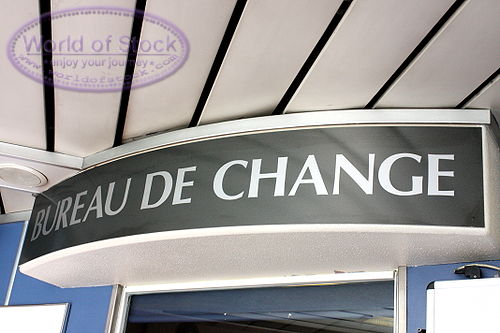
The unification of the exchange rate in Nigeria is set to have a wide-reaching impact on Bureau De Change (BDC) companies. This significant development has already posed challenges for BDCs, as the loosening of exchange rate controls has diminished their arbitrage advantage and caused license prices to drop significantly. This article explores the consequences, outcomes, and business implications for BDCs in Nigeria following the unification of the exchange rate.

Consequences of Exchange Rate Unification

AlsoRead

Nigeria’s FATF Grey List Exit Propels Naira to 10-Month Peak, Reserves Top $43 Billion

Nigeria to Roll Out Equity Fund for Local Oil Firms in December Boost

Pension Watchdog PenCom Bows to Industry Pressure, Rewrites Tough Capital Rules

The cost of obtaining a BDC license is undergoing a noticeable decline in response to Nigeria’s move towards a single exchange rate. While the Central Bank of Nigeria (CBN) has yet to officially confirm the policy stance, the Naira experienced a sharp decline of up to 38% on the Investors’ and Exporters’ (I&E) window, representing its largest slide in four years. The pursuit of a free or managed float by the CBN remains uncertain, but concerns are already emerging regarding the potential impact of a single exchange rate on the profitability of BDC operators.

Historically, BDCs in Nigeria have thrived on arbitrage opportunities and the existence of multiple exchange windows. However, the unification of the exchange rate will effectively close this gap, making the business of BDC operators significantly less profitable. As a result, interest in BDC licenses has already started cooling off, with reports suggesting that individuals holding multiple licenses are selling them off due to anticipated limited profitability, as banks regain their position in the foreign exchange market.

Outcomes for BDC Companies

The market is already reacting to the unification of the exchange rate, with significant implications for BDC companies. Previously, BDCs received a weekly allocation of $20,000 at the official exchange rate, allowing them to sell at a considerable margin on the parallel market. This lucrative arbitrage opportunity attracted a record number of BDC dealers. However, with the rates now unified, the motivation to hold onto BDC licenses has significantly diminished. Sources indicate that individuals are selling their licenses at reduced prices, with current transactions occurring at around ₦15 million, a substantial drop from the previous capital deposit requirement of ₦35 million.

Business Implications for BDCs

BDCs have been considered “insanely profitable” businesses, evident in the fact that the CBN receives 500 requests for BDC licenses weekly. However, the unification of the exchange rate will bring about a paradigm shift in the market dynamics. The parallel market, previously run by BDCs, will experience a significant slowdown as rate parity between BDCs and banks becomes the norm. Naira floating ensures that whatever FX BDCs offer will be similar to what banks offer, eroding the monopoly of BDCs in providing readily available FX. Customers can now access the same foreign exchange at any bank, reducing the need for BDC services. Furthermore, the convenience of online transactions adds to the diminishing incentives for engaging with BDCs.

Moving Forward

While a unified exchange rate holds potential benefits for the market in the long run, it poses significant challenges for BDCs that heavily rely on arbitrage opportunities. The CBN’s threat to halt the issuance of BDC licenses in 2021 was an attempt to address the issue. However, even with a unified exchange rate, the backlog of foreign exchange demand in Nigeria remains unresolved.

BDC operators will need to adapt their strategies to navigate the changing landscape. Exploring alternative avenues for sustainable growth and diversification will be crucial for their survival in a market where arbitrage advantages are diminishing. As the unification of the exchange rate takes effect, BDCs will face an uphill battle to redefine their role and value proposition in Nigeria’s evolving financial ecosystem.

In conclusion, the fate of BDC companies in Nigeria hangs in the balance following the unification of the exchange rate. While the move holds potential benefits for the overall market, the consequences, outcomes, and business implications for BDCs are significant. It remains to be seen how BDCs will adapt to this new reality and find their place in a transformed financial landscape.

Tags: Adaptation StrategiesArbitrage AdvantageBureau De ChangeBusiness ImplicationsCapital DepositCentral Bank of Nigeria (CBN)Exchange Rate UnificationFinancial Industry Transformationfinancial regulationsForeign Exchange (FX) MarketMarket Disruptionmarket dynamicsNigerian Financial MarketParallel MarketProfitability Challenges
Previous Post

FG Partners with Oando Clean Energy to Advance Renewable Energy Access.

Next Post

US holds interest rates steady for the first since 2022, Assessing Inflation Impact.

Related News

Naira Steadies on Parallel Market as CBN Clears Backlog

Nigeria’s FATF Grey List Exit Propels Naira to 10-Month Peak, Reserves Top $43 Billion

by Victoria Attah
November 17, 2025
0

Nigeria's departure from the Financial Action Task Force (FATF) grey list has triggered a surge in the naira, pushed foreign...

IMF Lists Top 10 African Nations with Highest Debt Burdens

Nigeria to Roll Out Equity Fund for Local Oil Firms in December Boost

by Akpan Edidong
November 14, 2025
0

The Nigerian Content Development and Monitoring Board (NCDMB) has revealed plans for a dedicated equity financing vehicle aimed at injecting...

PenCom Denies Allegations of Lending N10 Trillion to Federal Government

Pension Watchdog PenCom Bows to Industry Pressure, Rewrites Tough Capital Rules

by Victoria Attah
November 14, 2025
0

In a striking about-face, Nigeria’s pension regulator has handed operators a lifeline by loosening the capital screws it tightened just...

Nigeria Halts 15% Import Levy on Petrol and Diesel, Vows Steady Fuel Supply

by Akpan Edidong
November 14, 2025
0

The Nigerian Midstream and Downstream Petroleum Regulatory Authority (NMDPRA) has officially canceled plans for a 15 percent ad-valorem duty on...

Next Post
US holds interest rates steady for the first since 2022, Assessing Inflation Impact.

US holds interest rates steady for the first since 2022, Assessing Inflation Impact.

Leave a Reply Cancel reply

Your email address will not be published. Required fields are marked *

Recommended

Food inflation and energy costs have eroded global living standards – IMF

Nigeria’s Headline Inflation Falls to 16.05% in October 2025, Lowest in Over a Decade

November 17, 2025
Naira Steadies on Parallel Market as CBN Clears Backlog

Nigeria’s FATF Grey List Exit Propels Naira to 10-Month Peak, Reserves Top $43 Billion

November 17, 2025

Popular Story

  • Naira Steadies on Parallel Market as CBN Clears Backlog

    Nigeria’s FATF Grey List Exit Propels Naira to 10-Month Peak, Reserves Top $43 Billion

    0 shares
    Share 0 Tweet 0
  •  Nigeria Allocates Close to $3 Billion for Eurobond Debt Servicing

    0 shares
    Share 0 Tweet 0
  • Nigerian Bourse Dips 1.7% Amid CGT Hike Fears, Rebounds on Finance Minister’s Pledge

    0 shares
    Share 0 Tweet 0
  • Dangote Refinery Denies Involvement in Motorcycle Petrol Delivery Scheme

    0 shares
    Share 0 Tweet 0
  • FG Takes Governors to Supreme Court Over Local Government Allocations

    0 shares
    Share 0 Tweet 0
RateCaptain

RateCaptain

We bring you the most accurate in new and market data. Check our landing page for details.

  • Home
  • About Us
  • Privacy Policy
  • Terms & Conditions
  • Disclaimer
  • Cookie Policy
  • Contact Us

Copyright © 2022 RateCaptain - All rights reserved by RateCaptain.

No Result
View All Result
  • Home
    • About Us
    • Contact Us
  • FX Rates
  • Money Market
  • Cryptocurrency
  • Commodities
  • Corporates

Copyright © 2022 RateCaptain - All rights reserved by RateCaptain.

RateCaptain
Manage Cookie Consent
To provide the best experiences, we use technologies like cookies to store and/or access device information. Consenting to these technologies will allow us to process data such as browsing behavior or unique IDs on this site. Not consenting or withdrawing consent, may adversely affect certain features and functions.
Functional Always active
The technical storage or access is strictly necessary for the legitimate purpose of enabling the use of a specific service explicitly requested by the subscriber or user, or for the sole purpose of carrying out the transmission of a communication over an electronic communications network.
Preferences
The technical storage or access is necessary for the legitimate purpose of storing preferences that are not requested by the subscriber or user.
Statistics
The technical storage or access that is used exclusively for statistical purposes. The technical storage or access that is used exclusively for anonymous statistical purposes. Without a subpoena, voluntary compliance on the part of your Internet Service Provider, or additional records from a third party, information stored or retrieved for this purpose alone cannot usually be used to identify you.
Marketing
The technical storage or access is required to create user profiles to send advertising, or to track the user on a website or across several websites for similar marketing purposes.
Manage options Manage services Manage {vendor_count} vendors Read more about these purposes
View preferences
{title} {title} {title}
?>