RateCaptain
  • Home
    • About Us
    • Contact Us
  • FX Rates
  • Money Market
  • Cryptocurrency
  • Commodities
  • Corporates
No Result
View All Result
Subscribe
  • Home
    • About Us
    • Contact Us
  • FX Rates
  • Money Market
  • Cryptocurrency
  • Commodities
  • Corporates
No Result
View All Result
RateCaptain
No Result
View All Result
Home Economics

Why CBN’s Interest Rate Hikes Have Failed to Tame Nigeria’s Rising Inflation 

Rate Captain by Rate Captain
September 9, 2022
in Economics
Reading Time: 3 mins read
A A
0
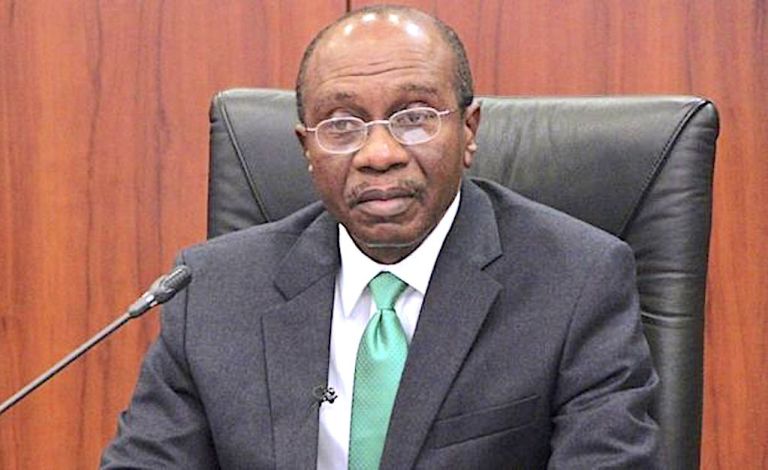
Why CBN’s Interest Rate Hikes Have Failed to Tame Nigeria’s Rising Inflation 
Share on FacebookShare on TwitterShare on WhatsappShare on Telegram

Nigeria’s inflation has been on the rise, reaching a 17-years high of 19.64 percent in July 2022, and having severe implications for businesses and households.

With the inflation pressure in the country intensifying month-on-month in 2022 (NBS data shows that inflation has increased steadily year-to-date), the Central Bank of Nigeria (CBN) pivoted toward a tightened monetary policy.

AlsoRead

Nigeria’s Inflation Eases to 20.12% in August, Prompting Calls for CBN Rate Cuts

African Nations Grapple with Soaring Borrowing Costs in 2025 Amid Inflation Surge

CBN Holds Policy Rates Steady Amid Global Economic Challenges

Although the CBN’s interest rate hikes have been in sync with the resolve of many other Central Banks that have raised benchmark rates in curtailing inflation, an important question to raise is, whether monetary policy tools (interest rate hikes) are still effective for taming Nigeria’s inflation.

Higher interest rates mean higher borrowing costs. In theory, it clamps down on investment activities, slows down the economy, reduces spending, and ultimately deflates price levels.

But the reality playing out in Nigeria does not align with this economic theory. In May 2022, Nigeria’s Central Bank raised interest rates after inflation trajected upward from the beginning of the year. The action was expected to contain the rising inflation in the country, however, inflation maintained its pace. The apex bank still pushed up the benchmark rate in July as it aimed at stabilizing price levels, unfortunately, inflation rose again and still tends to move upward.

Nigeria’s inflation has become unsusceptible to CBN’s interest rate hikes as it continues rising unabatedly. In our opinion, the monetary rate has reached a saturation point in effectively taming Nigeria’s inflation.


Taking a Closer Look at Nigeria’s Inflation Indices

According to the July Consumer Price Index (CPI) data released by the National Bureau of Statistics (NBS), core inflation, which stood at 16.26%, rose on the wings of rising prices of gas, liquid and solid fuel, passenger transport by road, passenger transport by Air, Garments, Cleaning, Repair and Hire of clothing.

Food inflation was caused by the increasing prices for bread and cereal, food products n.e.c, Potatoes, yam and other tubers, meat, fish, oil, and fat. However, on a month-on-month basis, food inflation had a decline of 0.01 percent as a result of the reduction in the prices of tubers (yam, potatoes, and other tubers), vegetables, maize and garri. What this means is that the prices of bread and cereal were still souring high when the prices of other food items are coming down.

Also, urban inflation is 20.09% while the rural index is 19.22%. We can see here that the difference between the two indices is fuel, which is one of the key reasons behind the difference in Urban and Rural inflation (remember NBS highlighted passenger transport as part of the causes of core inflation). Generally, the cost of transporting items from rural areas to urban areas has raised the urban index above the composite index (headline inflation).

Notably, there is a substantial degree of imported inflation in Nigeria as the uplifted oil prices in the global market, together with the prices of commodities like wheat are fueling Nigeria’s inflation. It is important to note that global commodity prices are coming down; wheat has dropped in price following the grain shipment from Ukraine; OPEC basket price currently stands at $99.66 p/b, however, these prices are still above the pre-war period in Ukraine.

There are also cost push factors driving inflation in Nigeria. Security issues are a major problem as well. These highlighted factors fueling inflation are not demand-driven, and as such will require the right policy to tackle them.

Even though raising interest rates can slow overall demand to address demand-related inflationary pressures, interest rate hikes cannot resolve the remaining pandemic-related bottlenecks in global supply chains and disruptions in commodities markets due to the war in Ukraine. Raising interest rates cannot solve Nigeria’s import dependency, and neither can it remedy the increasing cost of production that is feeding inflation in Nigeria.


What Should Nigeria Do to Dial Down Inflation

A high level of importation opens up Nigeria to global economic shocks. For every supply chain disruption and geopolitical tension in the west, Nigerians are hit severely as they are on the receiving end. The country needs to stimulate the domestic production of these commodities that transmit inflation.

The manufacturing sector in Nigeria has to be strengthened. The high-level importation of finished goods not only exposes the country to external shocks but also contributes to the depletion of the foreign reserve. Regulatory authorities in the sector have a lot of work to do in stimulating local manufacturing to effectively substitute a wide range of imported products for locally produced ones.

Also, the security in the country has to be strengthened as the shrinking agricultural footprint resulting from insecurity of farmers is a major problem.


Previous Post

Naira Climbs to N429.05/$1 at the I&E Window Forex Liquidity Shrinks

Next Post

Russian Caught Mining Crypto in Covid-19 Clinic

Related News

Nigeria’s Inflation Eases to 20.12% in August, Prompting Calls for CBN Rate Cuts

by Stephen Akudike
September 16, 2025
0

Nigeria’s headline inflation rate dropped to 20.12% in August 2025, marking its fifth consecutive month of decline from 21.88% in...

IMF Lists Top 10 African Nations with Highest Debt Burdens

African Nations Grapple with Soaring Borrowing Costs in 2025 Amid Inflation Surge

by Akpan Edidong
August 6, 2025
0

Across Africa, central banks are wielding high Monetary Policy Rates (MPRs) as a weapon against persistent inflation, currency volatility, and...

NEC Affirms CBN $3 Billion Loan for Naira Stability

CBN Holds Policy Rates Steady Amid Global Economic Challenges

by Stephen Akudike
July 31, 2025
0

The Central Bank of Nigeria (CBN) maintained its key monetary policy instruments at the July 2025 Monetary Policy Committee (MPC)...

Nigeria and UK Set to Sign Enhanced Trade Investment Partnership Agreement

UK-Nigeria Standards Partnership Boosts Nigerian Exports with Zero Tariffs for 3,500 Products

by Akpan Edidong
July 25, 2025
0

Nigeria’s export sector received a significant lift with the launch of the third phase of the UK-Nigeria Standards Partnership Programme,...

Next Post
Bitcoin to end year at $25,473

Russian Caught Mining Crypto in Covid-19 Clinic

Leave a Reply Cancel reply

Your email address will not be published. Required fields are marked *

Recommended

World Bank Emphasizes Cash Transfers to Break Poverty Cycle in Nigeria

Nigerian Companies Secure Over $2.5 Billion in World Bank Contracts, Rank Fifth Globally

January 28, 2026
Nigeria Plans New FX Rules, Targeting 750 Naira Exchange Rate

Naira Strengthens to N1,400.66/$ in Official Market as US Dollar Weakens Globally

January 28, 2026

Popular Story

  • 2024 Budget Outline: Oil Price Set at $77.96, Naira Stands at 750 Against the Dollar

    Nigeria and UAE Sign Landmark Trade Deal to Eliminate Tariffs on Thousands of Products

    0 shares
    Share 0 Tweet 0
  • US Records $1.45 Billion Trade Surplus with Nigeria in First 10 Months of 2025 as Exports Surge 60%

    0 shares
    Share 0 Tweet 0
  • Dangote Refinery Suspends Petrol Sales and Cancels Contracts as Crude Supply Issues Bite

    0 shares
    Share 0 Tweet 0
  • National Grid Collapses Again, Plunging Nigeria into Nationwide Blackout

    0 shares
    Share 0 Tweet 0
  • Nigeria Customs Service Surpasses N7.2 Trillion Revenue Target in 2025

    0 shares
    Share 0 Tweet 0
RateCaptain

RateCaptain

We bring you the most accurate in new and market data. Check our landing page for details.

  • Home
  • About Us
  • Privacy Policy
  • Terms & Conditions
  • Disclaimer
  • Cookie Policy
  • Contact Us

Copyright © 2022 RateCaptain - All rights reserved by RateCaptain.

No Result
View All Result
  • Home
    • About Us
    • Contact Us
  • FX Rates
  • Money Market
  • Cryptocurrency
  • Commodities
  • Corporates

Copyright © 2022 RateCaptain - All rights reserved by RateCaptain.

RateCaptain
Manage Cookie Consent
To provide the best experiences, we use technologies like cookies to store and/or access device information. Consenting to these technologies will allow us to process data such as browsing behavior or unique IDs on this site. Not consenting or withdrawing consent, may adversely affect certain features and functions.
Functional Always active
The technical storage or access is strictly necessary for the legitimate purpose of enabling the use of a specific service explicitly requested by the subscriber or user, or for the sole purpose of carrying out the transmission of a communication over an electronic communications network.
Preferences
The technical storage or access is necessary for the legitimate purpose of storing preferences that are not requested by the subscriber or user.
Statistics
The technical storage or access that is used exclusively for statistical purposes. The technical storage or access that is used exclusively for anonymous statistical purposes. Without a subpoena, voluntary compliance on the part of your Internet Service Provider, or additional records from a third party, information stored or retrieved for this purpose alone cannot usually be used to identify you.
Marketing
The technical storage or access is required to create user profiles to send advertising, or to track the user on a website or across several websites for similar marketing purposes.
  • Manage options
  • Manage services
  • Manage {vendor_count} vendors
  • Read more about these purposes
View preferences
  • {title}
  • {title}
  • {title}
?>