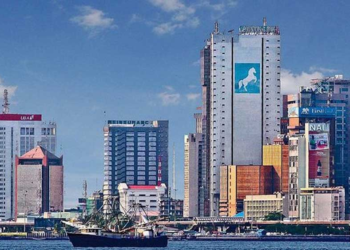
Nigeria’s five largest banks, collectively known as FUGAZ, faced significant asset quality challenges in 2025, setting aside a massive N2.36 trillion in loan impairment charges a sharp 64% increase from N1.44 trillion booked in 2024.
This represents the highest level of provisions in recent years and highlights intensifying repayment difficulties among borrowers, even as the banks’ combined loan book expanded modestly by 8% to N43 trillion.
Diverging Fortunes Among Tier-1 Lenders
Performance varied considerably across the group:
– Zenith Bank recorded the highest provisions at N843.4 billion, followed closely by FirstHoldco with N786.8 billion.
– UBA provisioned N381 billion, while Access Holdings set aside N287 billion.
– GTCO was the clear outlier, achieving a remarkable 51.4% reduction in impairment charges to N66.4 billion, despite growing its loan portfolio.
The surge in provisions was largely driven by increases in Stage 2 and Stage 3 (credit-impaired) loans, pointing to broader economic headwinds affecting corporate and individual borrowers. Many analysts link the sharp rise to the expiration of the Central Bank of Nigeria’s regulatory forbearance measures introduced during the COVID period.
Strong Interest Income, But Shifting Priorities
Despite the pressure on asset quality, the banks collectively generated robust N7.1 trillion in interest income from customer loans out of total interest income of N14.5 trillion. However, there are clear signs of a strategic shift: a growing portion of earnings is now coming from investments in government securities such as Treasury bills and bonds, rather than traditional lending.
This cautious approach reflects banks’ preference for lower-risk, high-yield government instruments in the prevailing high-interest-rate environment.
Mixed Impact on Capital Positions
The heavy provisioning took a toll on capital adequacy ratios for most banks. FirstHoldco’s ratio dropped significantly to 10.95%, while UBA and Zenith also saw declines. GTCO, however, strengthened its position, with its capital adequacy ratio rising to an impressive 43.82%.
Early 2026 results suggest the trend of elevated provisions has continued, with combined impairment charges for the five banks rising 36% year-on-year in the first quarter.
What It Means for the Sector
The 2025 results paint a picture of a banking sector caught between strong top-line growth driven by elevated interest rates and rising credit risks. While the banks remain profitable and systemically resilient, the sharp increase in bad loan provisions underscores the difficult operating environment characterised by high inflation, currency pressures, and weaker consumer and corporate repayment capacity.
As banks recalibrate their lending strategies and allocate more capital to safer assets, questions remain about the pace of credit growth to the real sector in 2026. The performance of GTCO offers a glimmer of optimism that strong risk management can deliver better outcomes even in challenging times.